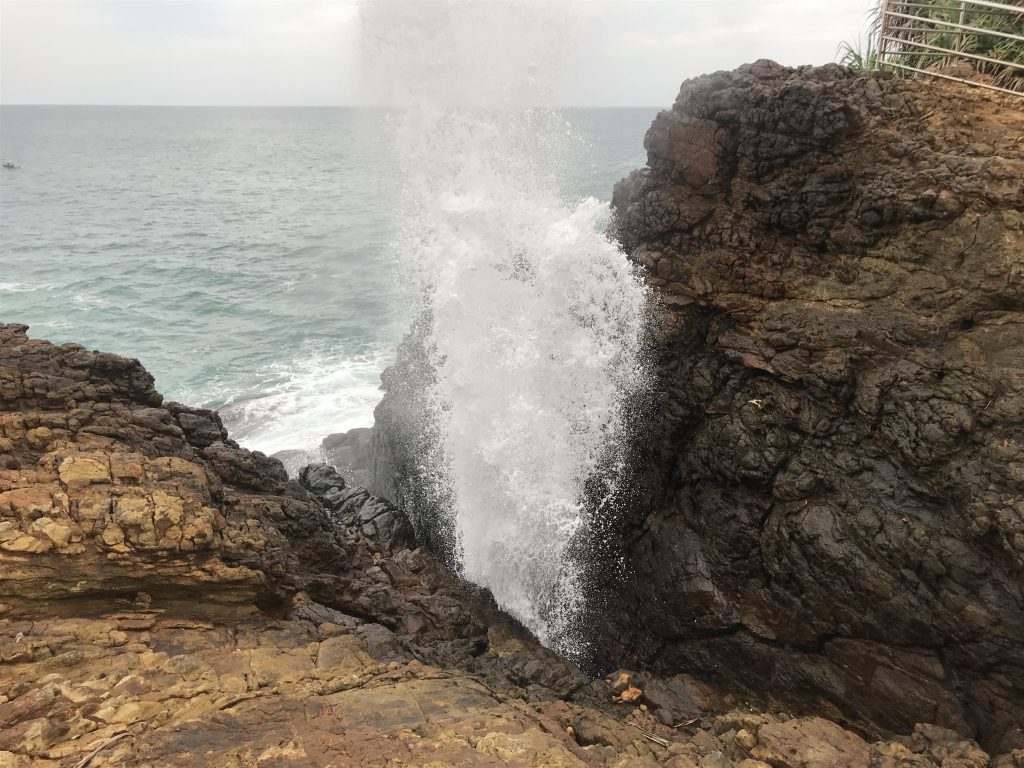
Hummanaya is a blowhole on the rocky shore at Kudawella, a few kilometres past Dikwella on the south coast road. Waves push into a cave and burst out of a gap in the cliff top as a column of spray. A deep rumble goes with it, and that rumble gave the place its name. It is a short stop, but how good it is depends on the sea.
Is it worth visiting?
Go if you are staying around Dikwella, Tangalle or Mirissa. You get a quick look at something the sea does here. When the swell is up, the spray is dramatic and you can feel the thump in the rock.
Think twice if the sea is calm. Recent visitors (2025–26) say the spray is weak in quiet conditions and the sound barely there. A visit in flat weather can therefore disappoint. It is also not worth a long detour on its own.
How it works
The Sunday Times, quoting a researcher, describes waves rolling through a deep, narrow channel in a fissured cliff and into a cave. Once the sea is inside, the water forces its way out through a small opening in the cliff top. The name comes from the rumbling noise, hummanaya in Sinhala. Locals have also called the place Velle-kele.
How high the spray goes depends on the waves, and the published figures vary a lot. The Sunday Times gives about 60 feet, while Wikipedia and Time Out give 25–30 metres. One visitor who saw it once reported almost 120 feet. We don’t give a single number, because none of them is official. Treat it as a column several storeys high on a good day.
When to go
Reports agree that rougher seas make a better show. The Sunday Times says it is most dramatic in the south-west monsoon, especially around June. Two travel sites put the best months at roughly May to August and April to October. Recent visitors also say eruptions come every ten minutes or so when the water builds up. So wait a few minutes before judging it.
So check the weather and sea conditions the same morning. Rough seas are also the time to be most careful. So heed any local warnings and keep back from the edge. Our safety guide covers general safety in Sri Lanka.
Getting there and what to expect
The blowhole is at Kudawella, off the Matara–Hambantota road. Visitors report turning off towards the sea at Kudawella, after Dikwella. A tuk-tuk from Dikwella is about 15 minutes, according to one travel site.
- The walk: from where you leave the vehicle, recent visitors report a walk of roughly 5 to 20 minutes to the cliff. You go on steps and rocky ground, past kiosks selling drinks and snacks.
- Costs: there are no official fees we could verify. Visitors report small payments for entry and for parking. The amounts differ between reports, so carry small notes in cash.
- Safety: stay behind the railings and heed warning signs, since the rocks are slippery and wet. Keep children close, and expect to get wet near the edge.
- Footwear: shoes with grip are better than flip-flops, because the rocks are wet.
- How long: half an hour is enough for most people.
Around Hummanaya
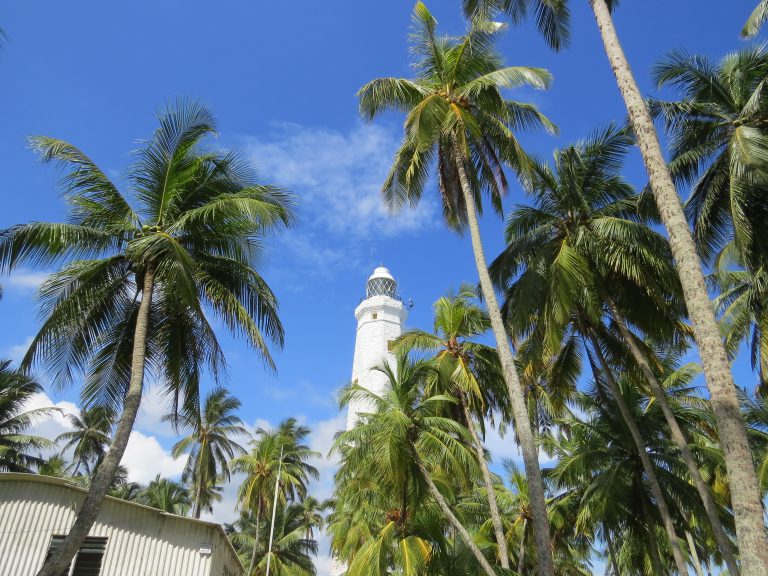
Dondra Head lighthouse is not far off, and our Dondra Head Lighthouse guide covers it. For beaches, surf and places to stay, see Dikwella and Hiriketiya. For the bigger town and the old fort, see Matara. Coming from the west, Mirissa is the usual base.
Frequently asked questions (FAQs)
Where is Hummanaya blowhole?
At Kudawella, a few kilometres past Dikwella, off the Matara–Hambantota road in Matara District.
Why is it called Hummanaya?
The name comes from the rumbling sound the blowhole makes, according to the Sunday Times.
When is the best time to see it?
When the sea is rough. Reports point to the south-west monsoon months, roughly May to August or April to October. However, conditions change from day to day.
How high does the spray go?
Sources disagree, from about 60 feet to 25–30 metres, with one visitor reporting almost 120 feet once. It varies with the waves.
Is it safe?
Stay behind the railings, watch for slippery rock and keep children close. If the sea looks very rough, keep further back.
Header photo: Thilanka Kasunjith / Wikimedia Commons, CC BY-SA 4.0.