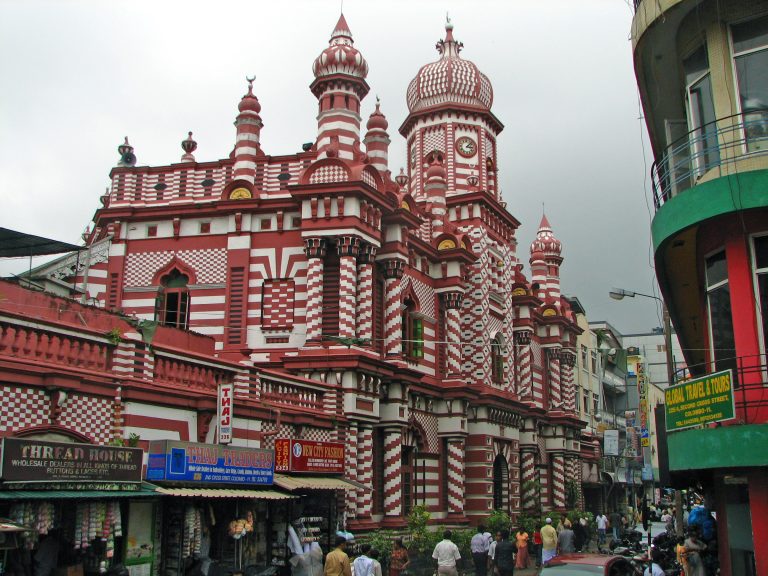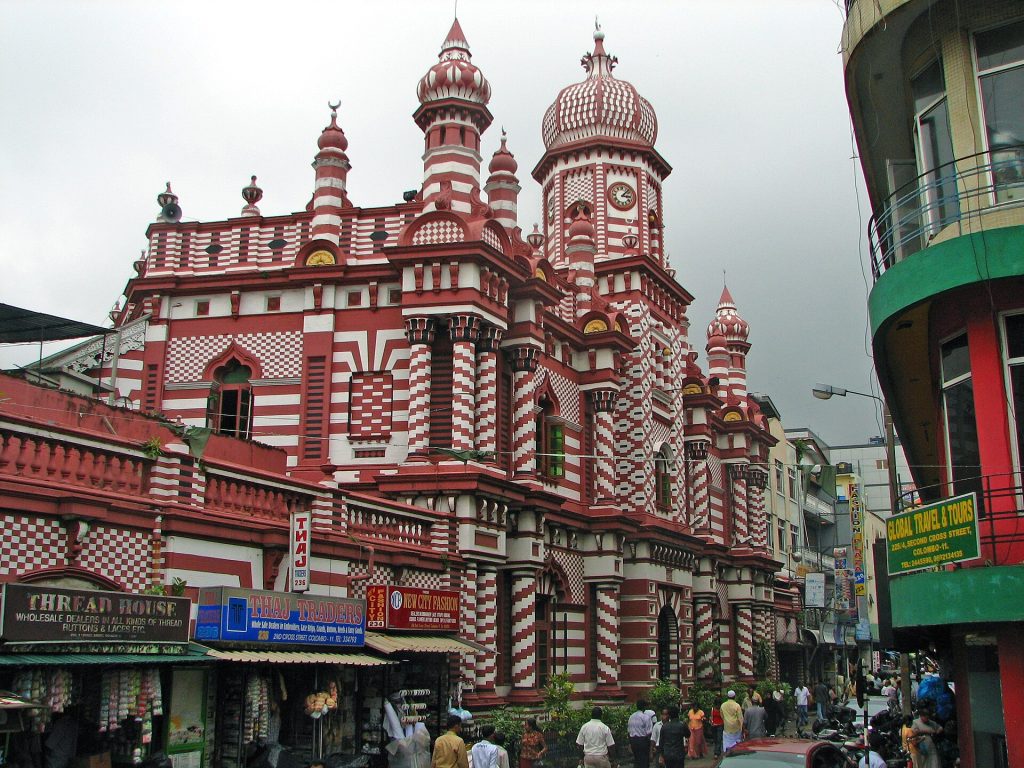

The Jami Ul-Alfar Mosque, better known as the Red Mosque, stands on Second Cross Street in Pettah, Colombo, near the Fort railway station. Red and white bands wrap its walls, towers and domes like candy stripes. It is a working mosque, built in 1908–09, and it is open to visitors outside prayer times.
Is it worth visiting?
Go if you are already in Pettah and want to see one of Colombo’s most striking buildings. It is also a good stop if you are curious about the city’s Muslim community and its history. The exterior alone is worth a look, and the interior is calm after the market lanes outside.
Think twice if you only have a short, fixed window of time. No official source publishes visiting hours. The mosque is also closed to sightseers at prayer times, so you may need to come back. Women should also be ready for stricter rules than men (see below).
Who built it, and how
South Indian Muslim traders in Pettah commissioned the mosque to serve their five daily prayers and Friday congregation. The builder was Habibu Lebbe Saibu Lebbe, usually described as an architect with no formal training. Wikipedia says the traders gave him pictures of Indo-Saracenic buildings to work from. As a result, the building mixes that style with Gothic Revival and Neoclassical touches. Construction began in 1908 and finished in 1909.
The stripes give the mosque its nickname. One account says the builder took the colours from a cut pomegranate, with red seeds against white flesh. The domes also echo the fruit’s shape. Some sources add that sailors approaching Colombo harbour used the building as a landmark. The original building had two storeys and a clock tower. The clock tower is still the part you notice from the street.
Capacity figures vary a great deal between sources, so we do not quote one. The mosque has also been extended more than once. Wikipedia says an expansion began in 1975, after the mosque bought neighbouring properties.
Visiting the Red Mosque
The mosque is an active place of worship, so the rules matter more here than at most sights.
- When: visitor guides give about 9.30 am to 5.30 pm, entering through Gate No. 3. However, they disagree on the days. One says Saturday to Monday, while another says Saturday to Thursday. Friday is the main congregational prayer day, and guides say sightseers are not admitted for part of the day. So avoid all five prayer times.
- Cost: visitor guides report no entrance fee. They also say a mosque guide accompanies you.
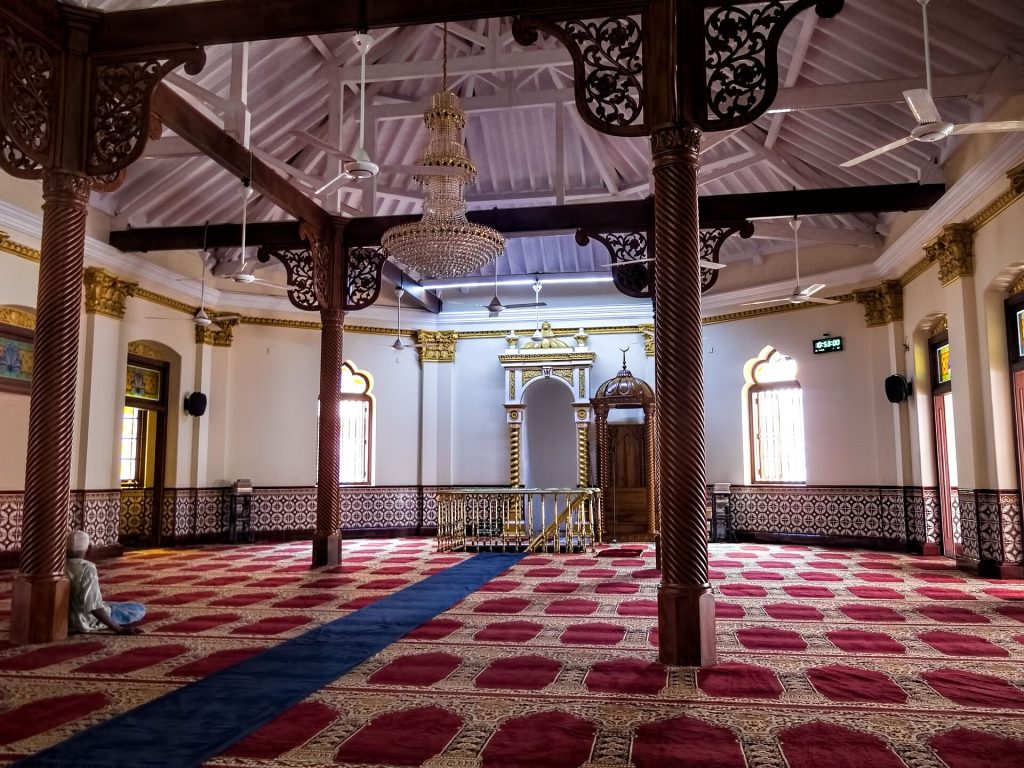
- Dress: shoulders and knees covered for everyone. Men wear long trousers and a sleeved shirt. Visitor guides say women should also cover their hair and arms. They add that sarongs and scarves are available at the entrance.
- Women: a 2016 Life.lk article says women are not permitted in the prayer halls. Lonely Planet also warns that women may sometimes be turned away. So ask politely at the gate and accept the answer.
- Shoes and bags: shoes come off at the entrance. Visitors also report leaving large bags at a counter.
- Photos: guides say photography is generally fine, but ask before photographing worshippers.
We found no official hours page, so treat the times above as visitor reports and confirm at the gate.
Around the Red Mosque
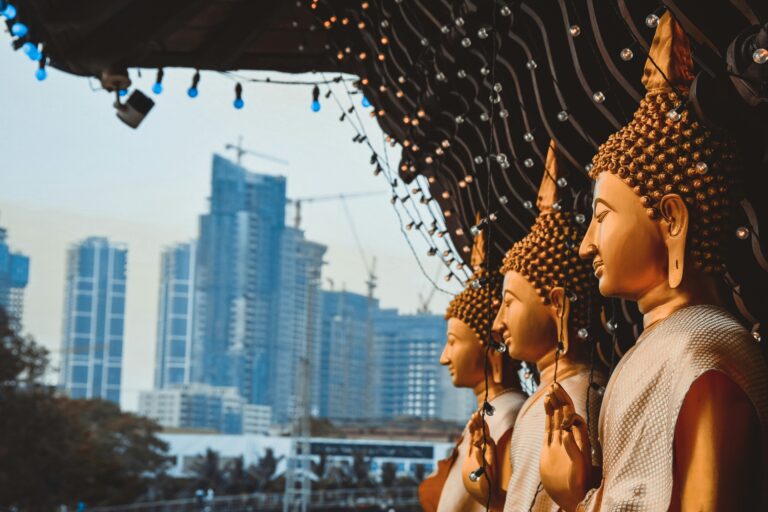
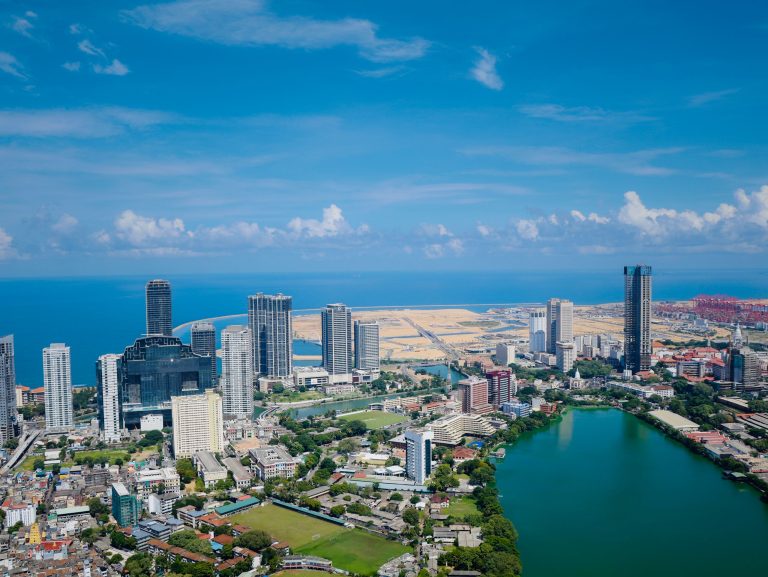
The mosque sits in the middle of Pettah’s wholesale streets, so allow time for Pettah Market before or after your visit. For a quiet contrast afterwards, Gangaramaya Temple and its lake pavilion are a short ride away. Our Colombo guide shows how the city fits together.
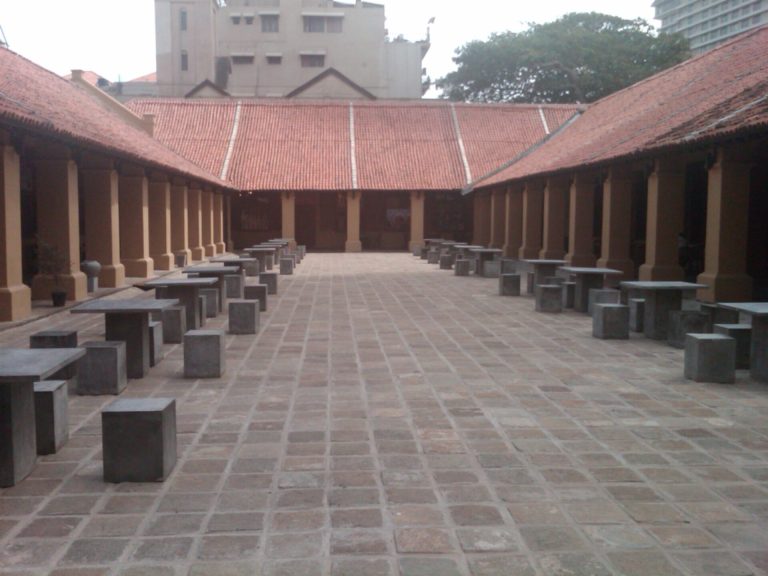
The Old Dutch Hospital, now a dining complex, is also in the Fort area of Colombo.
Frequently asked questions (FAQs)
Can tourists visit the Red Mosque in Colombo?
Yes, outside prayer times. Visitor guides say you enter through Gate No. 3 and a mosque guide accompanies you. They give about 9.30 am to 5.30 pm, but the days differ between guides, so check at the gate.
Is there an entrance fee?
Visitor guides report none. However, we found no official page that states a fee.
What should I wear?
Cover your shoulders and knees. Men should wear long trousers and a sleeved shirt, while women should cover their hair and arms. Visitor guides say sarongs and scarves are available at the entrance.
When was the Red Mosque built?
Construction began in 1908 and finished in 1909.
Who designed it?
Habibu Lebbe Saibu Lebbe, usually described as an architect without formal training.
Header photo: McKay Savage / Wikimedia Commons, CC BY 2.0.