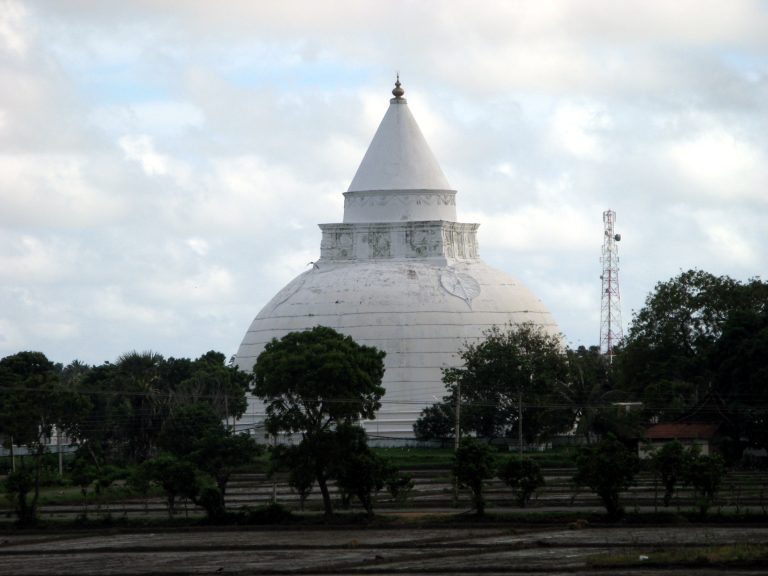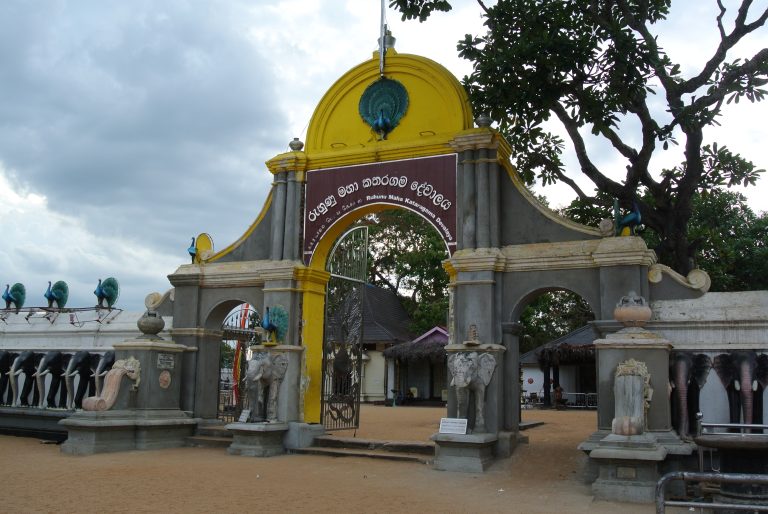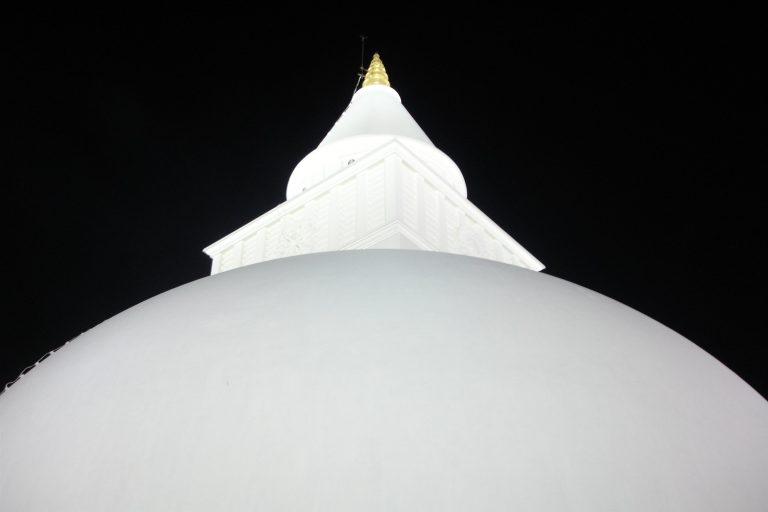
Kiri Vehera is a large white stupa in Kataragama, in Monaragala District, about 800 m north of the Ruhunu Maha Kataragama Devalaya. Its name means “milk stupa”. It is one of the Solosmasthana, the 16 most sacred Buddhist pilgrimage sites of ancient Sri Lanka. It is also a calmer neighbour to the busy shrines by the river.
Is it worth visiting?
Go if you are already in Kataragama and want a quieter stop. The stupa is big, clean and easy to walk around. It also makes a good break between the devalaya and the rest of the day.
Think twice if you are looking for ruins, carvings or paintings to study. This is a living place of Buddhist worship, so what you see is a white dome on a platform. What you gain is atmosphere. Our Kataragama guide covers the rest of the town.
History and what the sources say
Accounts differ on who built Kiri Vehera and when, so we leave the date open. What is better established is that inscriptions from the 2nd century CE turned up at the site. One of them calls it the Mangalamahaseya of the Kajaragama raja maha vehera. A BuddhaNet pilgrim guide notes that ancient sources use the name Magulmahasaya. It adds that nobody is sure how the name “Kirivehera” came into use.
Tradition adds more. According to the Dhatuvamsa, the Buddha stopped here briefly during his third visit to the island. Meanwhile, a legend says the stupa holds the sword Prince Siddhattha used to cut his hair at his renunciation. These are beliefs, but archaeology has not confirmed them.
What you see
Wikipedia and Sri Lanka Tourism both give the stupa as about 95 ft (roughly 29 m) tall, with a circumference of about 280 ft. It stands on a raised platform, which the BuddhaNet guide gives as 130 ft square. A path leads to it from the devalaya area, and the distance is about 800 m.
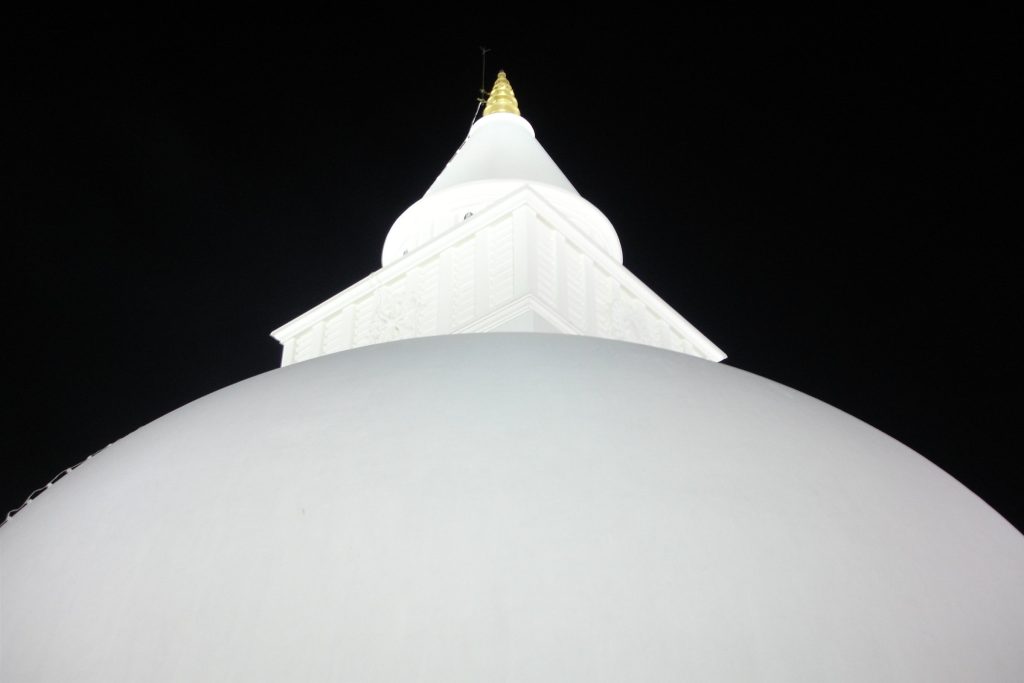
Recent visitors (2025–26) report that devotees walk around the stupa clockwise. They also say people bring flowers, incense or water as offerings. One visitor wrote that the white dome glowed gold in the late afternoon, so that is a good hour for photographs.
According to the devalaya’s website, the last of the great processions at the Kataragama festival, the Maha Perahera, travels to Kiri Vehera before it returns to the Maha Devalaya. Expect crowds at that time. The dates change each year, so check the news or the devalaya’s site before planning around it.
Practical tips
- Dress: cover your shoulders and legs, and take off your shoes and hat before you step onto the platform. Carrying your shoes in a small bag saves leaving them at the foot.
- Phones: some visitor guides suggest silencing your phone near the stupa.
- Hours and fees: we found no official opening times or entry charge for Kiri Vehera, so ask locally.
- Timing: the devalaya’s website lists its evening puja at 6.30 pm. So you can see the stupa before or after it.
- Photos: take pictures of the building, but not of worshippers at prayer unless they agree.
Buddhist monks run the monastery, and Wikipedia names Venerable Kobawaka Dhamminda Thera as its chief prelate.
Getting there and around Kiri Vehera
You reach Kataragama by road, and Sri Lanka Tourism puts it 19 km inland from Tissamaharama. From the devalaya you can then walk to the stupa.
While you are in the area, Yala National Park is close. So is the Tissamaharama Raja Maha Vihara, another important Buddhist stupa.
The Ruhunu Maha Kataragama Devalaya is about 800 m away.
Frequently asked questions (FAQs)
Where is Kiri Vehera?
In Kataragama, Monaragala District, about 800 m north of the Ruhunu Maha Kataragama Devalaya.
What does Kiri Vehera mean?
“Milk stupa”. Ancient sources call it Magulmahasaya, and nobody is sure how the present name came into use.
How tall is Kiri Vehera?
Wikipedia and Sri Lanka Tourism give about 95 ft (roughly 29 m), with a circumference of about 280 ft.
Who built Kiri Vehera?
Sources disagree, so the date and builder are uncertain. Inscriptions of the 2nd century CE mention it, so it is clearly old.
What should I wear?
Cover your shoulders and legs, and take off your shoes and hat before you go onto the platform.
Header photo: Nipuna Gamage / Wikimedia Commons, CC BY-SA 4.0.