Ussangoda is a small national park of red earth and short grass on a sea-facing rise near Ambalantota, in Hambantota District. It lies beside the Colombo–Kataragama road, and the Department of Wildlife Conservation looks after it. Most people stop for the unusual colour, the sea view and the Ravana legend, not for wildlife.
Is it worth visiting?
Go if you are already driving the southern coast road between Tangalle and Hambantota and want a short, odd stop. The bare red ground looks unlike the rest of the coast, so it makes a good short break from the road.
Think twice if you are expecting a safari or a big attraction. It covers 349 hectares of mostly grass, so visitors come for the scenery and the stories. Give it a short stop of an hour or so rather than a half-day.
Why the ground is red
The park dates from 2010. Its soil is hard and reddish, and it sits over a body of serpentinite. This is a rock from deep in the earth’s crust that has risen to the surface. Peer-reviewed studies of Ussangoda describe an iron-rich lateritic soil cap over it. They also measure high levels of nickel, chromium and cobalt. Metal-rich soils like this are hard for most plants to live in. That may also help explain why the ground stays so bare.
You will often hear that a meteorite caused the barren patches. Yet Wikipedia notes that nobody has properly tested this idea. The geology studies, however, describe the soil without it, so treat the meteor story as a story. The vegetation is mostly grass, with small pockets of stunted forest.
The Ravana legend
Local lore treats the place as sacred. One popular belief also links it to the demi-god Mangara. Many guides also tell the story from the Ramayana tradition that this was where King Ravana landed his flying chariot, the Pushpaka Vimana. It is a legend, not something archaeologists have shown. Also, different guides also tell it differently. Our other Ravana story is Ravana Falls near Ella.
Practicalities
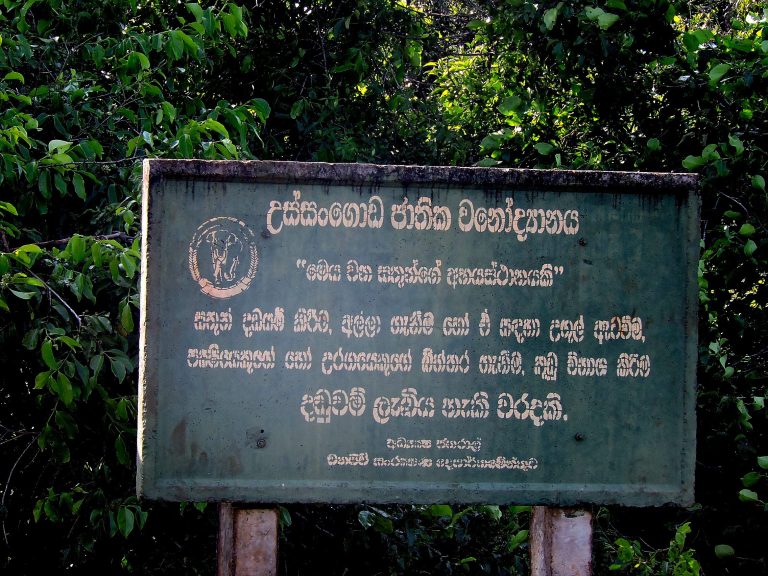
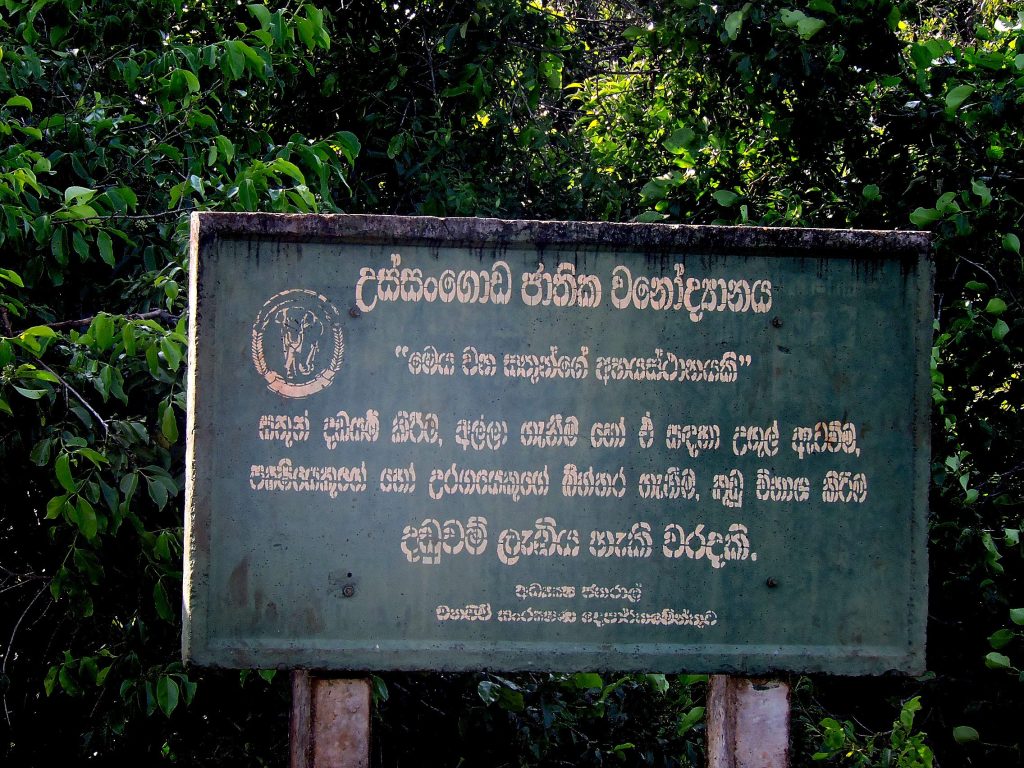
As a national park, Ussangoda needs a Department of Wildlife Conservation (DWC) permit. The DWC says a DWC officer issues the permit at a set fee. However, we could not find an amount, hours or any rules for Ussangoda on the DWC website. So before you go, ask the department (dg@dwc.gov.lk, +94 11 2 888 585) or check at the entrance, because we would rather leave a gap than guess.
- Getting there: the park is on the Colombo–Kataragama road near the Ambalantota–Nonagama junction. It also borders Kalametiya Wildlife Sanctuary to the east.
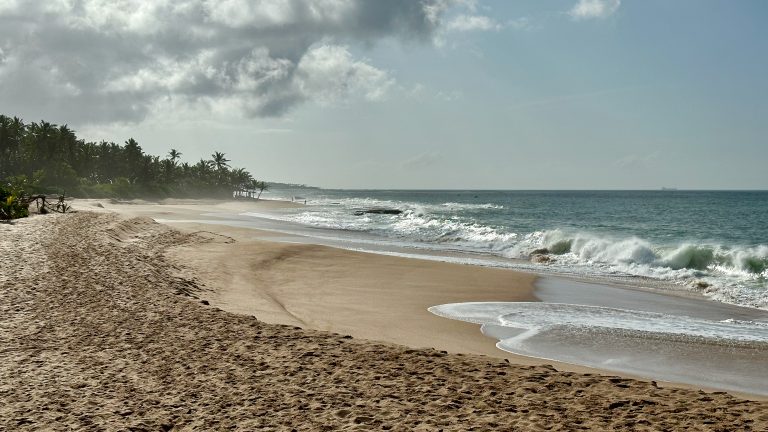
- Sea view: according to Ceylon Expeditions, a trail leads to the coast and ends at a cliff edge overlooking the beach and sea. So keep well back from the edge.
- Heat and shade: the ground is open, so there is little shade. So go early or late, and bring water and a hat.
- Leave it as you found it: don’t take soil or rock, and don’t leave litter.
Around Ussangoda
The nearest town stop is Tangalle. Also, our Mulkirigala Rock Temple guide covers the Mulkirigala cave temple. Wildlife visitors then usually head on to Tissamaharama for the Yala and Bundala parks.
Frequently asked questions (FAQs)
Where is Ussangoda National Park?
In Hambantota District, Southern Province, on the Colombo–Kataragama road near the Ambalantota–Nonagama junction.
Why is the soil red at Ussangoda?
Studies describe iron-rich soil over a serpentinite rock body, with high nickel and chromium. A meteor impact is often suggested, but nobody has properly tested this.
What is the Ravana legend at Ussangoda?
Local tradition says King Ravana landed his Pushpaka Vimana chariot here. It is a legend, but guides tell it in different ways.
When did Ussangoda become a national park?
In 2010. It covers 349 hectares, and the Department of Wildlife Conservation manages it.
Do I need a ticket for Ussangoda?
The DWC says visitors to national parks need a permit from a DWC officer. The DWC pages we checked list no fee for Ussangoda, so ask the department or the staff on site.
Header photo: Dinil Samarasinha / Wikimedia Commons, CC BY-SA 4.0.