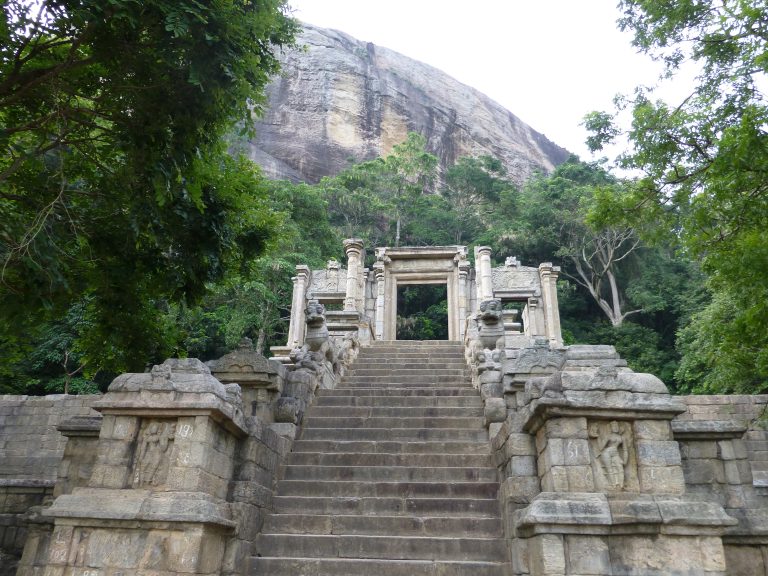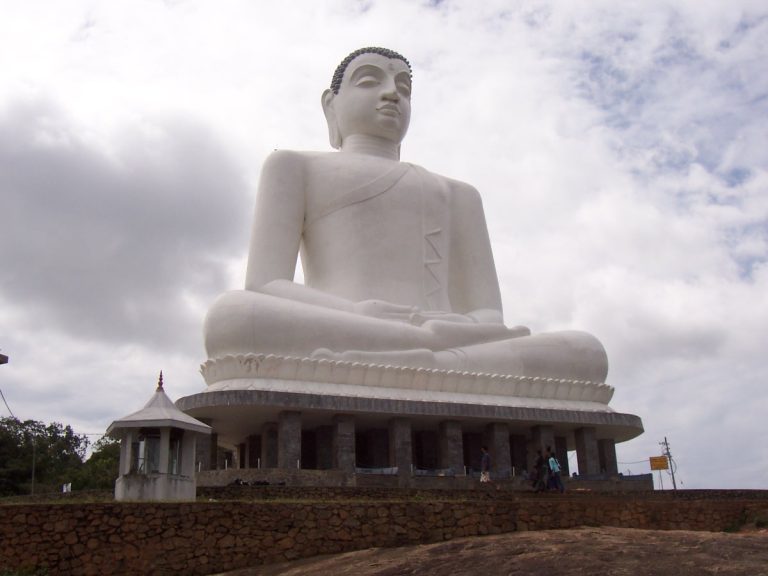

Dambadeniya is a rock-top ruin in the North Western Province, where Sri Lanka’s kings held court for several decades in the 13th century. The remains of a royal palace and its defensive walls still sit on the outcrop. Nearby stands the temple built to house the Tooth Relic of the Buddha. The site is about 30 km from Kurunegala and 4 km from Giriulla.
Is it worth visiting?
Go if you want to see one of Sri Lanka’s medieval capitals at your own pace. You climb an old stone stairway to the top, look at the walls and inscriptions, and get a wide view over the paddy fields below.
Think twice if you’re expecting the scale of Polonnaruwa or Anuradhapura. Dambadeniya is modest by comparison, and much of what you see is walls, steps and foundations rather than standing buildings.
A fortress capital
In the early 13th century the invader Kalinga Magha held Polonnaruwa. King Vijayabahu III needed a capital that was easier to defend, and he chose this granite outcrop. The Central Cultural Fund puts it at roughly 500 feet above the surrounding plain.
The king built his palace on the summit. Around it rose defensive walls, audience halls and guard houses, and their ruins survive today. Under his son, Parakramabahu II, Dambadeniya reached the height of its glory. Later in the century the capital moved on to Yapahuwa, and the Tooth Relic went with it.
The Temple of the Tooth Relic
Dambadeniya’s biggest claim to fame is that it once held Sri Lanka’s most sacred Buddhist object, the Tooth Relic. The Vijayasundararama temple was built to enshrine it. It’s a two-storey temple with Buddha images, and it is still an active place of worship. Inside, look for the wall paintings, which date from the 18th century. The relic itself has long since moved on, and today it is enshrined in Kandy.
A golden age for Sinhala writing
The Dambadeniya period produced many important works in Sinhala, Pali and Sanskrit. Parakramabahu II was a poet himself and is credited with the Kavsilumina. The Dalada Sirita, an account of the Tooth Relic, also dates from this era. None of that survives on site, but it’s worth knowing as you walk round. For a few decades, this small rock was the cultural centre of the island.
What you’ll see today

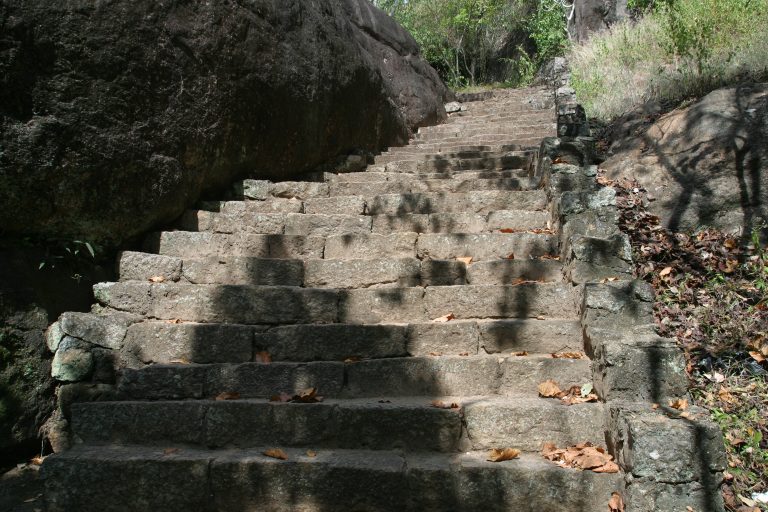
A stone stairway climbs the rock between boulders. At the top you’ll find the remains of the palace, defensive walls and gateways, with stone inscriptions among the ruins. The summit is open rock, so bring a hat and water.
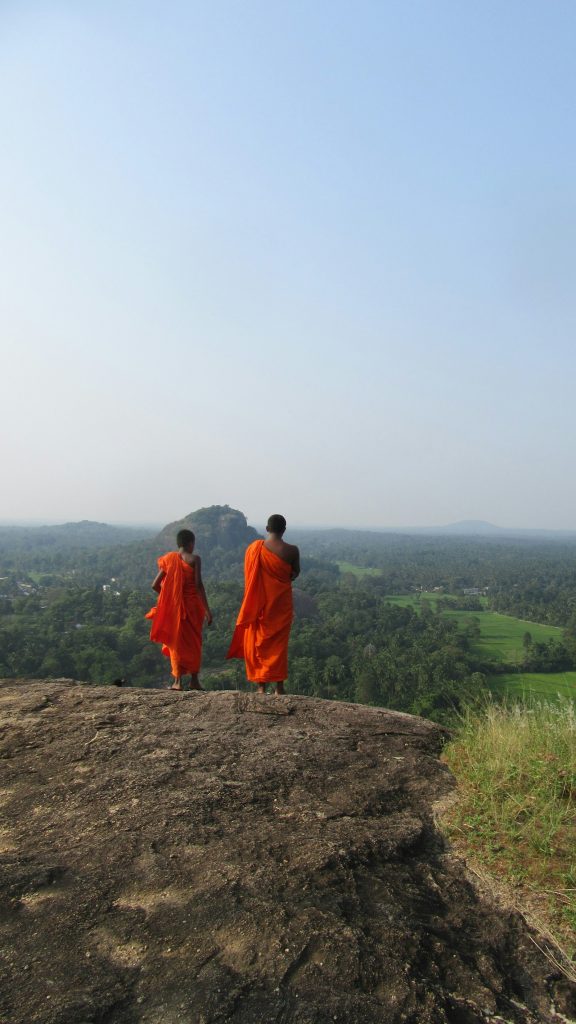
The view explains why the site was chosen. From the top you look out over paddy fields, coconut groves and villages, with another rock hill rising from the plain nearby. Whoever held this rock could see trouble coming from a long way off.
Getting there
- From Kurunegala: Dambadeniya is about 31 km away, 4 km from Giriulla. Most visitors come by private vehicle or tuk-tuk, as there’s no station nearby.
- Fees and hours: no official source gives an entrance fee or opening hours. The temple is a working place of worship, so dress modestly when you visit the Vijayasundararama.
- Combine it with: the town of Kurunegala, or the stone staircase and lion reliefs at Yapahuwa Rock Fortress, the kingdom’s next capital.
Frequently asked questions (FAQs)
What was Dambadeniya?
The capital of Sri Lanka for several decades in the 13th century. King Vijayabahu III chose it, and under his son Parakramabahu II it reached its peak, before the capital moved to Yapahuwa.
Is the Tooth Relic still at Dambadeniya?
No. The Vijayasundararama temple was built to enshrine it during the Dambadeniya period. It moved on with the capital, and today it is enshrined in Kandy.
How do I get to Dambadeniya?
It’s about 31 km from Kurunegala and 4 km from Giriulla. There’s no station nearby, so most visitors arrive by private vehicle or tuk-tuk.
Is there an entrance fee?
No official source confirms a fee or opening hours. The Vijayasundararama temple is an active place of worship, so dress modestly.
What can you see at Dambadeniya today?
A stone stairway up the rock, the ruins of the palace, defensive walls, audience halls and guard houses, stone inscriptions, and the Vijayasundararama temple with its 18th-century wall paintings.
Header photo: cerno / Flickr, public domain.