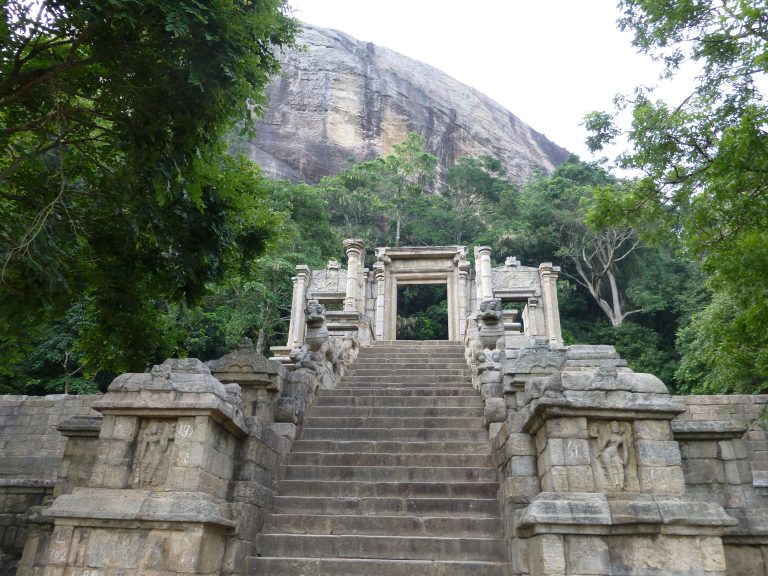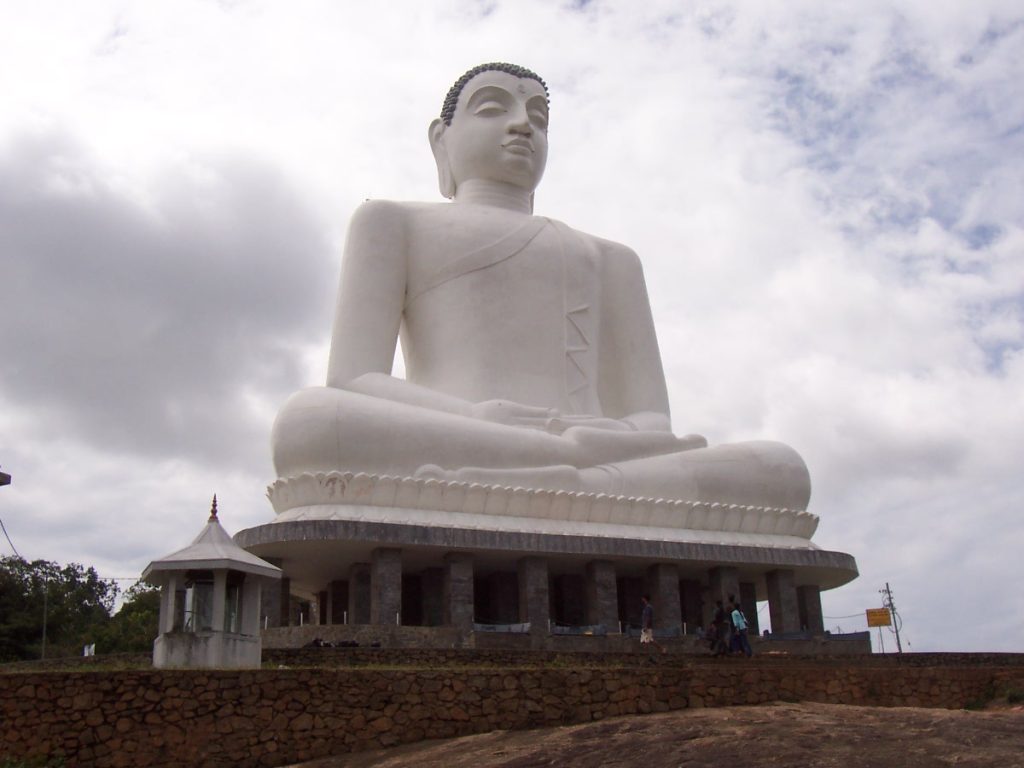
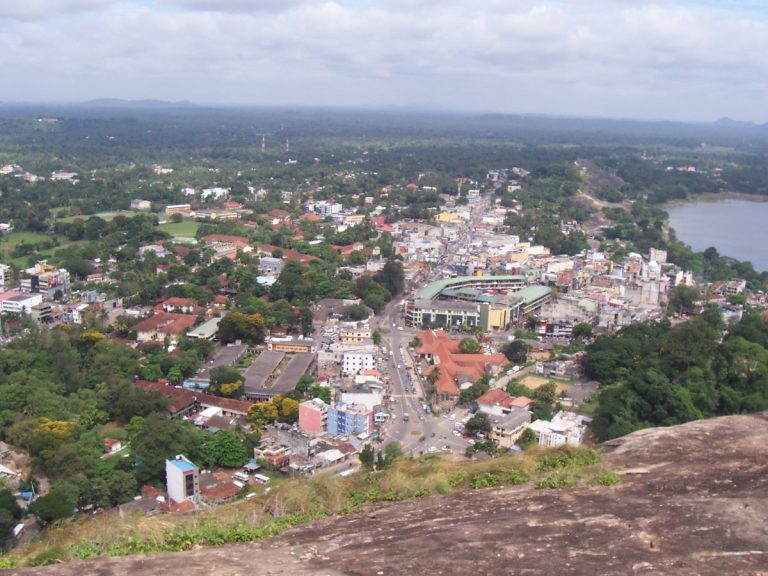
Ethagala, the Elephant Rock, is the bare granite hump that rises straight out of Kurunegala, with a giant white Buddha sitting on its summit. You can climb a stairway cut into the rock or ride a winding road to the top, and either way the reward is a wide view over the town, its lake and the plain beyond.
Is it worth visiting?
Go if you are passing through Kurunegala on the way north and want a short, steep climb with a big view, ideally late in the afternoon when the rock has started to cool and the Buddha is lit up after dark.
Think twice if you are hoping for an ancient monument, because the temple and the statue on top are modern and the rock’s long history survives mainly in local legend rather than in ruins you can see.
Two ways up
The walkers’ route is a steep flight of steps cut into the rock. Visitors report that it takes between 15 and 30 minutes, depending on how often you stop to look back, and the upper part crosses open, bare granite. Wear shoes with a decent grip, because smooth granite is slippery after rain.
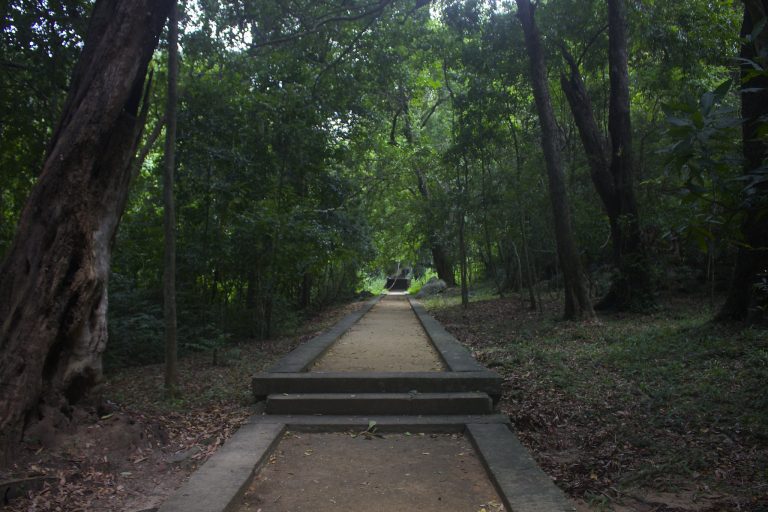
Alternatively, a road of about 1.9 km winds up through the trees to the summit. It is paved but steep, with sharp hairpin bends, so a tuk-tuk is the easiest way to ride it. A good plan is to walk up and take a tuk-tuk down, or the other way round if the afternoon is very hot.
On both routes, watch out for monkeys. Visitors regularly mention troops on the rock, so keep food and drink out of sight, zip up your bag and keep the car windows closed if you drive.
On the summit
At the top you come out beside Athugala Viharaya, the temple on the rock, and the huge seated Buddha in meditation that you have been seeing from all over town. It sits on a pillared base on the summit, and it is big enough to stand out on the skyline from the streets below.
Then walk round to the edges for the view. On one side, the town’s roofs and main roads spread out beneath you; on the other, Kurunegala Lake fills the foreground, with forest, paddy and the other granite rocks that ring the town beyond it. On a clear day, ranges of hills line the horizon. The rock drops away steeply in places, so keep well back from the edges, especially with children or when the stone is wet.

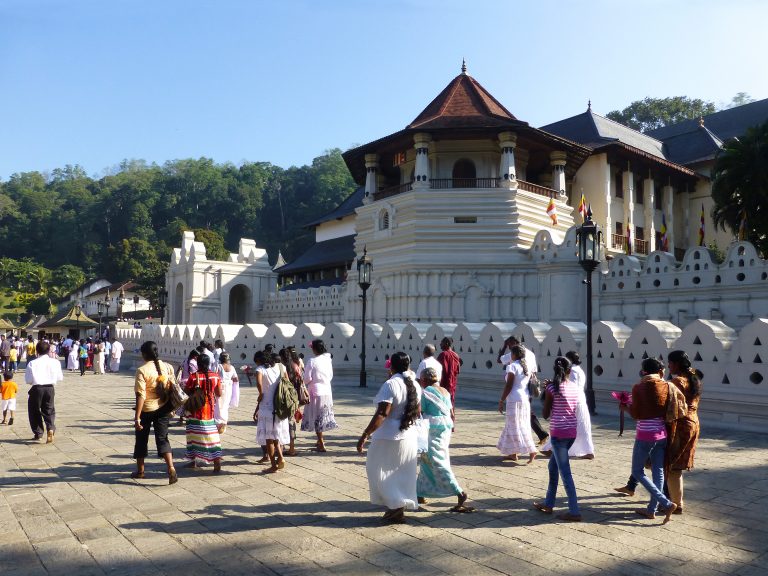
This is a working temple, so dress for it. Cover your shoulders and knees, take off your shoes and hat where you see others doing so, and never pose with your back to the Buddha. Our guide to temple etiquette in Sri Lanka explains the customs. There is no ticket. Instead, visitors report a donation desk near the temple that gives a receipt for whatever you choose to give.
The prince who fell from the rock
Ask anyone in Kurunegala about Ethagala and you may hear the story of Vathimi Bandara. According to local tradition, he was the son of a king and a Muslim consort, and he was raised among his mother’s people. When he came to the throne, the Sinhala court turned against him. His enemies invited him to a pirith chanting ceremony on top of Ethagala, sat him on a specially prepared seat at the edge of the cliff, and sent him over the edge.
The versions differ on almost every detail, even on which king was his father. However, they agree on what happened next. The dead prince came to be worshipped as Galé Bandara, the god of the rock, and people in Kurunegala say he still rides a white horse across the top of the rock from time to time. Today two shrines in town keep his memory: one is a Sinhala devale, while the other, kept by Muslims, is believed to hold his tomb. Remarkably, Buddhists and Muslims visit both.
When to go
Kurunegala gets very hot, and bare granite soaks up the sun, so a climb in the middle of the day is hard work. Early morning is cooler. Even so, most local people come up in the evening, and visitors suggest starting the climb in the late afternoon and staying until it begins to get dark. After dark the statue is floodlit, so from below it seems to float above the town. If you plan to walk down the steps after sunset, bring a torch.
Getting there
Ethagala is about 1 km from the centre of Kurunegala, so it is a short tuk-tuk ride from the bus stand or the railway station, and walkable if it is not too hot. It fits easily into a night in town, and it combines well with day trips to Yapahuwa Rock Fortress or the forest paths of Arankele Forest Monastery.
Frequently asked questions (FAQs)
How long does it take to climb Ethagala?
Visitors report 15 to 30 minutes on the steps cut into the rock. You can also go up the 1.9 km road by tuk-tuk.
Is there an entrance fee for Ethagala?
There is no ticket. Visitors report a donation desk near the temple on the summit, which gives a receipt.
What is the best time to climb Ethagala?
Early morning or late afternoon, because the bare rock gets very hot around midday. Stay until dusk to see the floodlit Buddha, and bring a torch for the steps.
What should I wear at Ethagala?
The summit is a working temple, so cover your shoulders and knees and take off your shoes and hat where others do. Shoes with a good grip help on the rock.
Who is Galé Bandara?
He is the god of the rock in Kurunegala’s folklore: a prince called Vathimi Bandara who, the story goes, was thrown from the top of Ethagala. Both Buddhists and Muslims honour him at two shrines in town.
Header photo: Kurun / Wikimedia Commons, public domain.