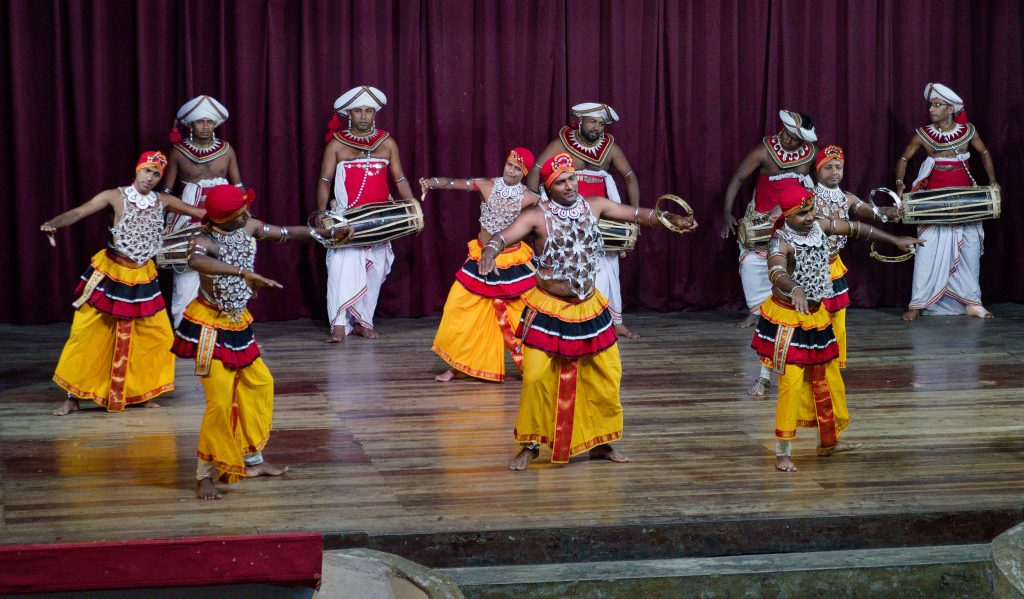
Drums start before the lights go down. Then the dancers come on in silver headdresses and beaded breastplates, spinning, leaping and stamping in time with the drummers. An evening Kandyan dance show is one of the easiest ways to see something of the island’s living culture: an hour in a hall in Kandy, with drumming, masked and costumed dances, and a fire-walking finale.
It is a show for visitors, not a temple ritual. Even so, the dances and drumming come from real traditions. This page explains what you’ll see and how to choose a show.
Is it worth it?
For a free evening in Kandy, yes: it’s a lively, colourful hour and a good introduction to the music and dance you’ll meet at temple festivals. Just know what it is. It’s touristic, and the halls can be stuffy and packed in the high season. Also, if you’re in Kandy in July or August, the real thing, the Esala Perahera, is far more spectacular.
Where and when
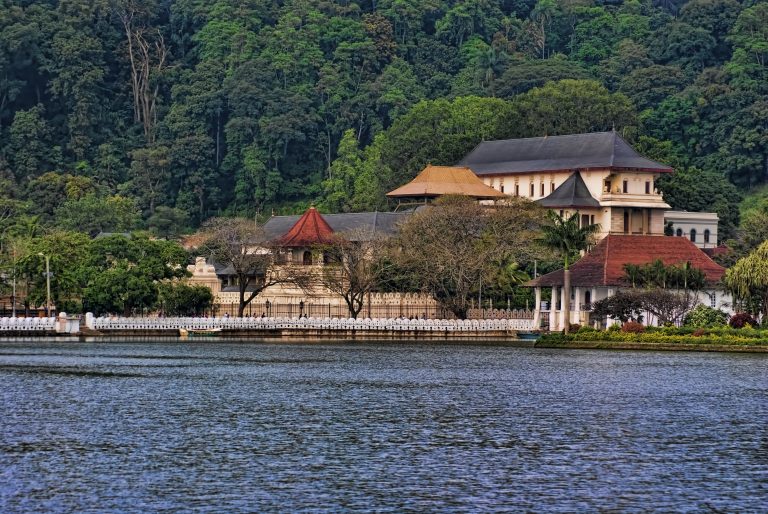
Several halls in Kandy put on a show every evening, most of them close to the lake and the Temple of the Sacred Tooth Relic. Recent visitors (2025–26) report that shows start at about 5 pm and last around an hour. They also report that halls sell tickets at the door, and that some take reservations by phone or messaging app. Reported prices vary from venue to venue and change from year to year, so check at the hall or with your guesthouse.
Arrive 20 minutes early for a seat near the front. Also check whether you have to buy a separate ticket for photography. As the show finishes around 6 pm, it fits neatly between an afternoon by Kandy Lake and an evening visit to the Temple of the Tooth.
What you’ll see
A typical show strings together short pieces, which may include:
- Ves dance. The best known of the Kandyan dances, performed by men in the elaborate ves costume: a silver headdress, beaded breastplate, arm and ankle ornaments. It grew out of an ancient purification ritual, the Kohomba Kankariya, and tradition holds the headdress to be sacred.
- Vannam. Dances set to recitations that describe animals and birds. There are 18 vannam in the Kandyan tradition, among them the elephant (gajaga), the monkey (hanuma) and the eagle (ukusa). Traditionally, a dancer had to master them all before receiving the ves costume.
- Udekki and pantheru. Dances named after the instruments the dancers play: the udekki, a small hourglass-shaped hand drum, and the pantheruwa, a ring of small cymbals dedicated to the goddess Pattini.
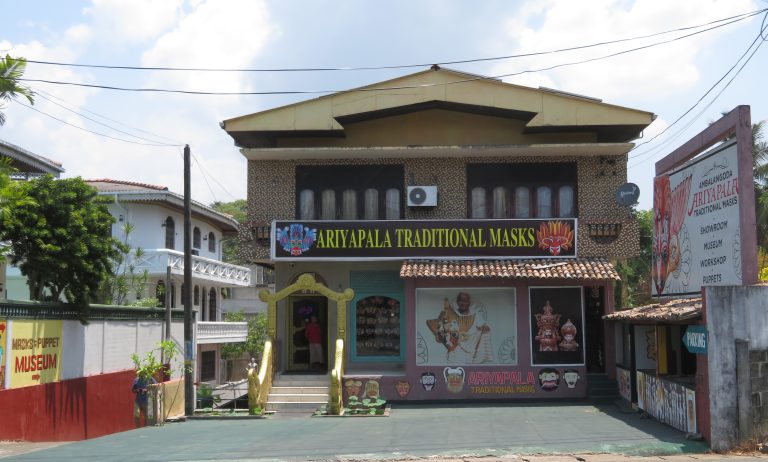
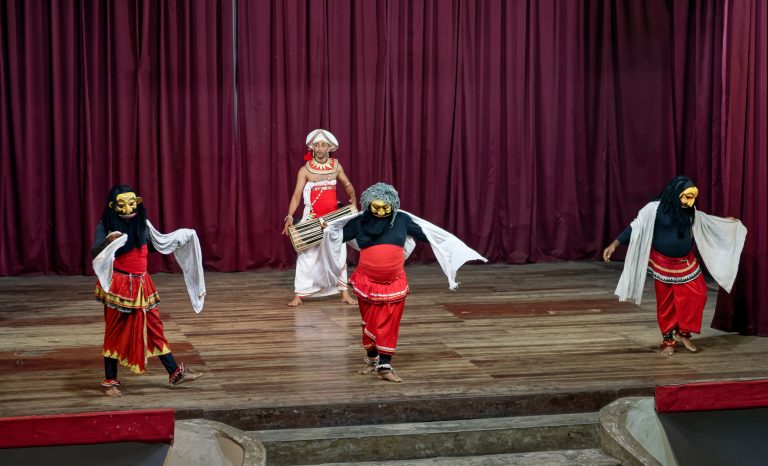
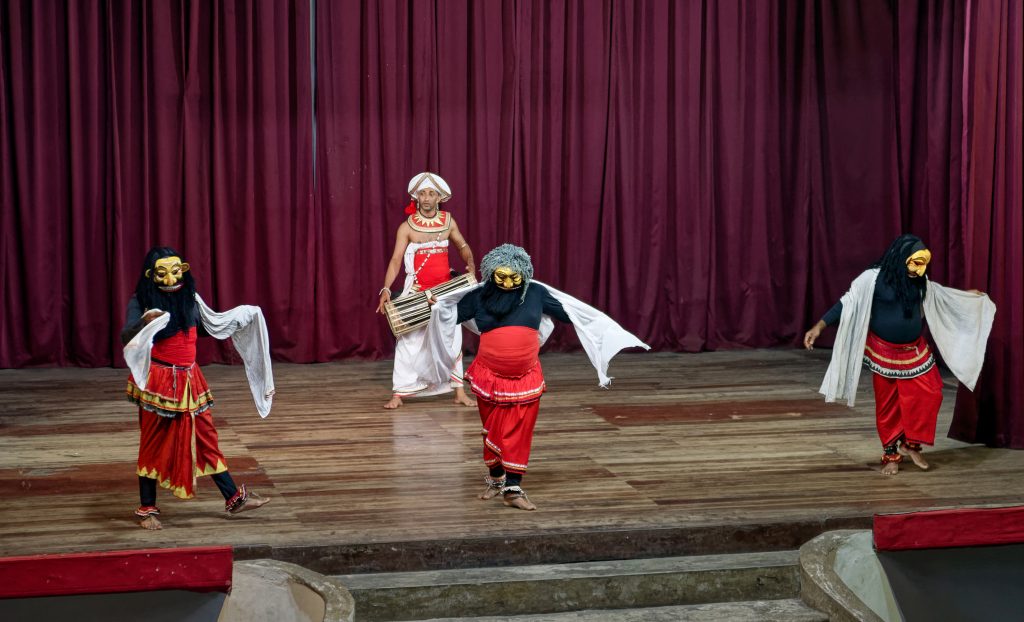
- Other traditions. Recent visitors also describe dances from around the island. If masks appear, they come from the southern tradition you can see at Ambalangoda’s mask museum.
- Fire-walking. The finale, usually outside: performers walk barefoot across glowing coals. Watch from where the staff ask you to stand.
Photos and manners
Flash is distracting for the dancers and spoils the view for everyone else, so turn it off. Recent visitors report that some halls charge extra for cameras or video. At the end, performers sometimes come round for tips; give if you enjoyed it, but you’re not obliged.
Seeing the dances in their real setting
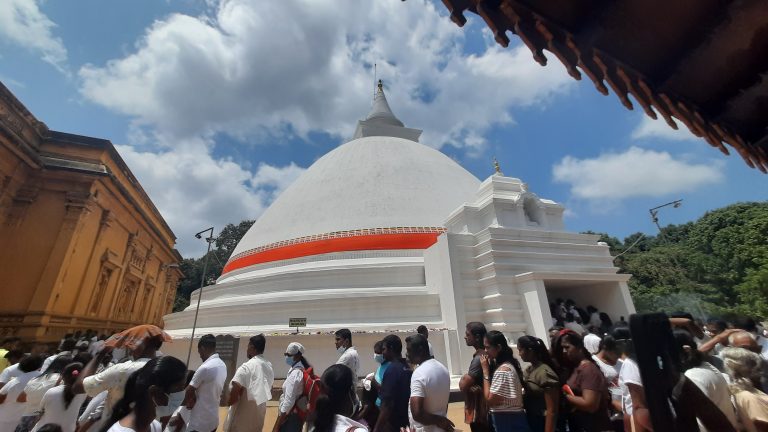
In short, the show is a sampler. The dancers and drummers on stage come from the same traditions that lead the Esala Perahera every July or August. They also appear at temple festivals and Poya celebrations across the hill country. If your dates allow, see a perahera too: our festival and Poya calendar lists them.
Frequently asked questions (FAQs)
What time is the Kandyan dance show?
Recent visitors report shows starting at about 5 pm and lasting around an hour. Several halls near Kandy Lake hold one every evening.
How much is a Kandyan dance show ticket?
Prices differ between venues and change from year to year, so check at the hall or with your guesthouse. Halls usually sell tickets at the door.
What is the Ves dance?
The best-known Kandyan dance, performed by men in a silver headdress and beaded costume. It grew out of an ancient purification ritual, the Kohomba Kankariya.
Is the Kandy cultural show worth it?
For a lively hour of drumming and dance, yes. If you’re in Kandy in July or August, the Esala Perahera shows the same traditions on a much bigger scale.
Is there fire-walking at the Kandy dance show?
Most shows finish with performers walking across hot coals, usually outside the hall.
Header photo: Jakub Hałun / Wikimedia Commons, CC BY 4.0.