Eating vegetarian in Sri Lanka is easy, and vegan is manageable, because so much of everyday food is already built on rice, coconut, lentils and vegetables. Rice and curry, the meal you’ll eat most days, usually comes with several vegetable and lentil curries around one of fish or meat. Ask for it without the fish or meat and you still have a full plate.
The catch is a single ingredient you can’t see: Maldive fish. Once you know about it, ordering gets much simpler.
The hidden fish
Maldive fish is smoked, cured tuna, broken into flakes or ground up, and it’s widely used to season vegetable curries and pol sambol, the coconut relish that comes with almost everything. It doesn’t look like fish once it’s cooked in, and it often doesn’t taste like it either. A “vegetable curry” can contain it.
So ask every time, even for dishes that look plant-based. Recent visitors (2025–26) report that some cooks don’t think of dried fish as meat, and that if you ask simply for “vegetarian” you may still be offered a fish gravy. Be specific: no meat, no fish, no Maldive fish.
Vegans have a few more things to check. Visitor reports mention ghee or butter on some dishes, such as a plain dosa served with butter on top, and shrimp paste in some curries. Ask for those to be left out too.
What you can eat
These are the everyday dishes that work well, with the usual caveat about Maldive fish in the curries and sambols that come with them.
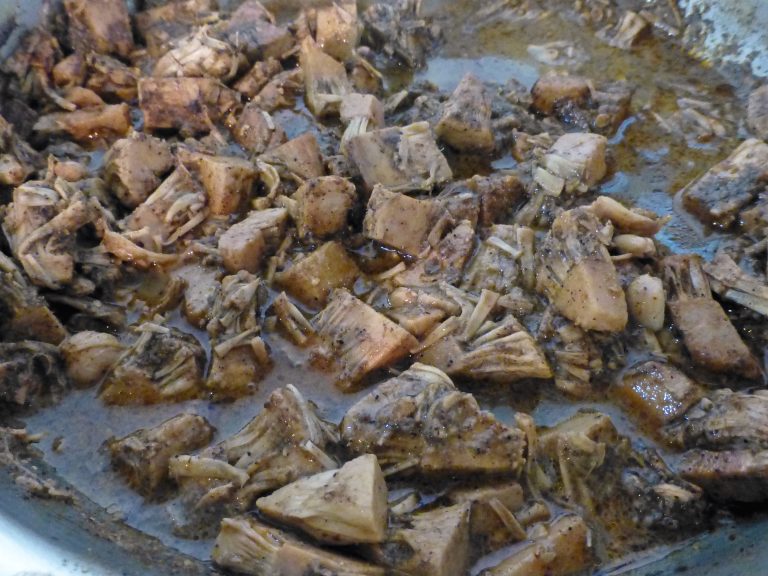
- Rice and curry. Dhal (parippu), jackfruit, green beans, potatoes, chopped greens: the vegetable curries change with the season and the cook. Lunchtime is when it’s freshest, recent visitors say.
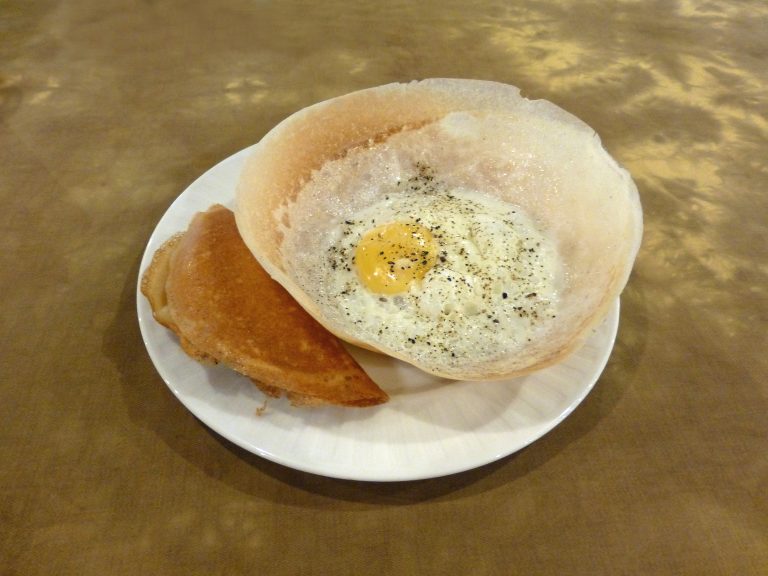
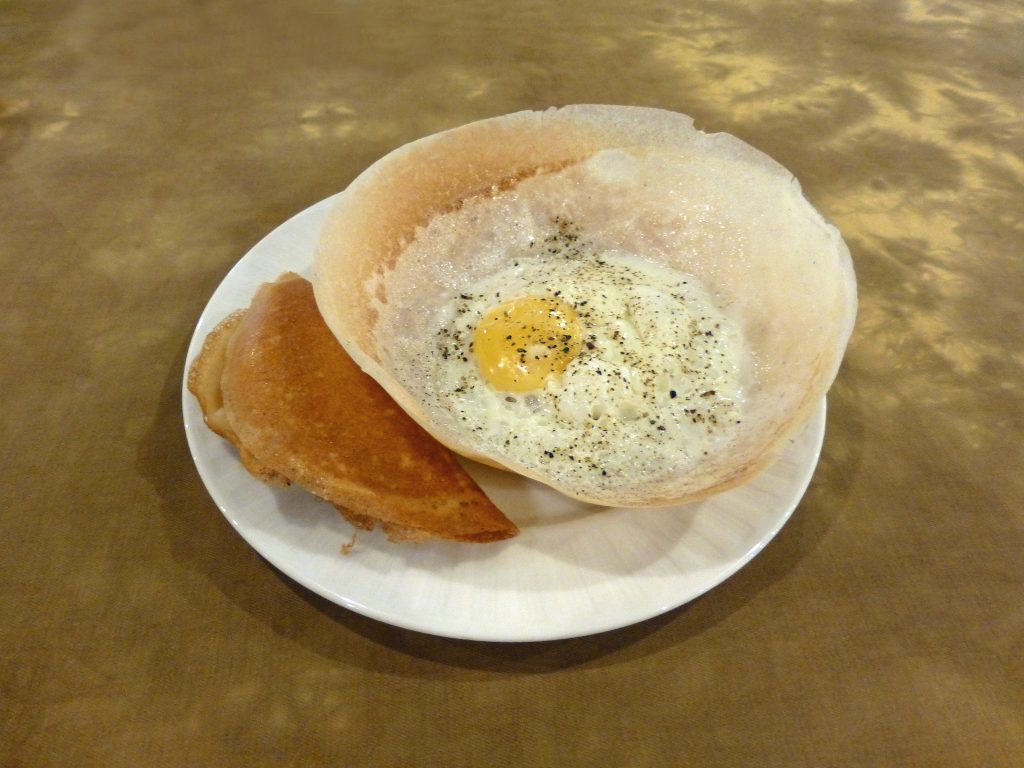
- Hoppers and string hoppers. Hoppers are bowl-shaped pancakes of fermented rice flour and coconut milk, and string hoppers are nests of steamed rice-flour noodles. Both are eaten at breakfast and dinner with dhal or a curry. An egg hopper has an egg cooked into it, so vegans should ask for plain ones.
- Kiribath. Rice cooked in coconut milk, pressed flat and cut into diamonds, eaten for breakfast and at New Year with lunu miris, a chilli and onion relish, or with jaggery and bananas.
- Roti and dhal. Recent visitors report that roti with dhal turns up at any meal, and that fried lentil fritters (vadai) are a common snack.
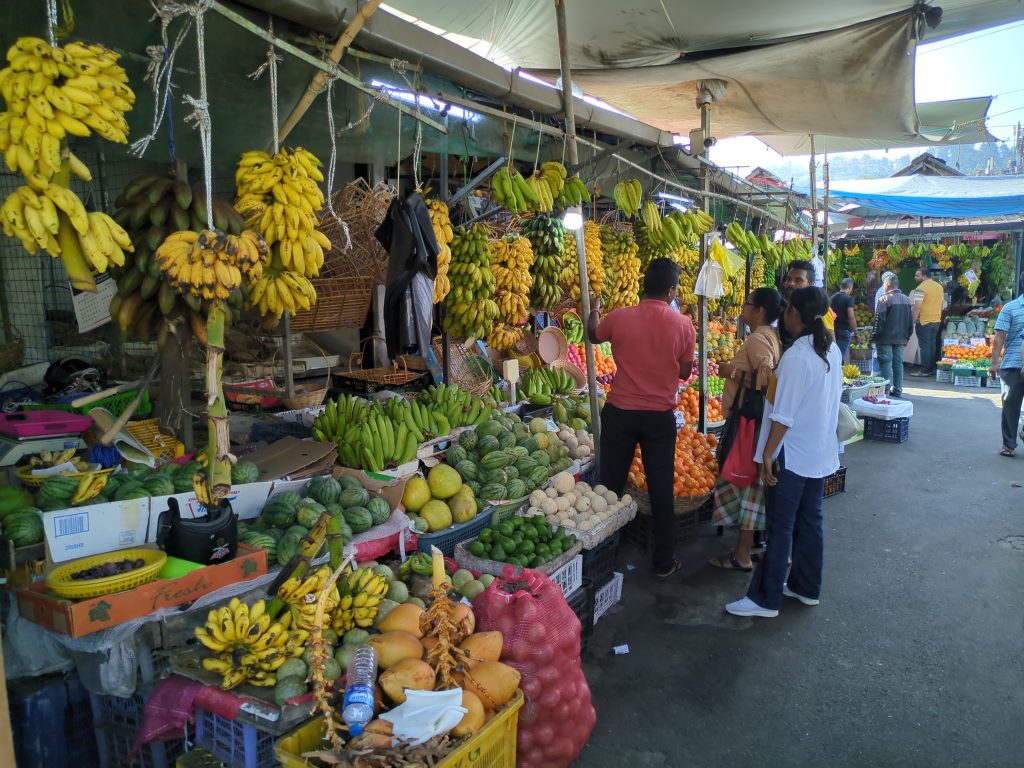
- Fruit and drinks. Fruit stalls are everywhere. Try king coconut (thambili) for its water, and wood apple, usually drunk as a sweetened juice.
Kottu, the chopped-roti street food, usually comes with egg and meat. A vegetable version is easy to ask for, but say “no egg” if you’re vegan.
Where it’s easiest
- Local rice-and-curry places, where the food is cooked fresh in the morning and you can see what’s in the pots. Recent visitors who eat vegan say small local places were the most accommodating.
- Pure-vegetarian South Indian and Tamil restaurants. In Colombo, recent visitors and local food guides list several, many with “Saiva” or “vegetarian” in their names, serving dosa, thali and rice and curry with no fish or meat in the kitchen.
- Tourist towns such as Ella and Hiriketiya, where visitors report cafés with vegan, Western-style dishes, at higher prices.
- Your guesthouse. If your guesthouse cooks for you, tell them on the first evening that you don’t eat fish, including Maldive fish.
Northern food is a different story. Jaffna’s cooking is built around seafood and the palmyra palm, and its famous dishes, crab curry and odiyal kool, are anything but vegetarian. See our Sri Lankan food guide for what’s on the menu.
Poya days and temple food
On every full-moon Poya day, Sri Lanka’s Holidays Act bars slaughtering animals for sale and selling meat, and Sri Lanka Tourism says fish isn’t sold either. Our festival and Poya calendar has the dates.
Some Hindu temples serve free meals to devotees. Munneswaram serves lunch every day and allows no meat on its premises, and the Nagapooshani Amman Temple on Nainativu serves a rice meal at noon. These are offerings for pilgrims, so join in only if you’re invited.
Learning to cook it
A cooking class is a good way to learn which dishes are naturally vegetarian and how to make them at home. Classes usually cook a dhal, two or three vegetable curries and a sambol. Say you’re vegetarian or vegan when you book, so the Maldive fish is left out. Our guide to Sri Lankan cooking classes covers what to expect.

Useful habits
- Ask, every time. “No meat, no fish, no Maldive fish” covers most of it.
- Watch the sambol. Pol sambol is the most common place for Maldive fish to hide.
- Eat where it’s busy. Recent visitors report that busy stalls with a quick turnover are the safest bet for street food.
- Snacks on the move. Visitors report vegan snacks sold on trains, at bus stops and by street vendors, and fruit stalls are easy to find.
For food and water safety, see our health guide.
Frequently asked questions (FAQs)
Is Sri Lanka good for vegetarians?
Yes. Most meals already include several vegetable and lentil curries. Ask whether they contain Maldive fish, which is widely used in vegetable dishes and pol sambol.
What is Maldive fish?
Smoked, cured tuna, used in flakes or ground to season curries and sambols. It’s often hidden in dishes that look vegetarian.
Is Sri Lankan food vegan?
Much of it can be. Rice, coconut, lentils and vegetables are the base of most meals. Ask about Maldive fish, ghee, butter, egg and shrimp paste.
Are hoppers vegan?
Plain hoppers are made from fermented rice flour and coconut milk. Egg hoppers have an egg cooked in, and the curries and sambols served with hoppers may contain Maldive fish.
Is meat sold on Poya days?
No. On full-moon Poya days, slaughtering animals for sale and selling meat are barred, and Sri Lanka Tourism says fish isn’t sold either.
Header photo: Bergentroll / Wikimedia Commons, CC0.