
Sri Lanka has more national parks than most visitors could see in a month: leopard country in the dry south-east, elephant grasslands around ancient reservoirs, lagoons full of birds, a highland plateau you walk across, and reefs off the coast. The national parks in Sri Lanka are run by the Department of Wildlife Conservation (DWC), and in all but the walking and marine parks you go in by safari jeep with a driver.
The trick is to pick by what you want to see, and by when you’re travelling, rather than by fame.
If you want leopards
- Yala, in the south-east, has one of the highest leopard densities in the world. It’s also the busiest park, and it has traditionally closed around September and October.
- Wilpattu, in the north-west, is the largest park, about 1,317 km² of forest around natural lakes. Leopards are here in good numbers but harder to see; the reward is fewer jeeps.
Our guides to Wilpattu or Yala and where to see leopards go into the detail.
If you want elephants
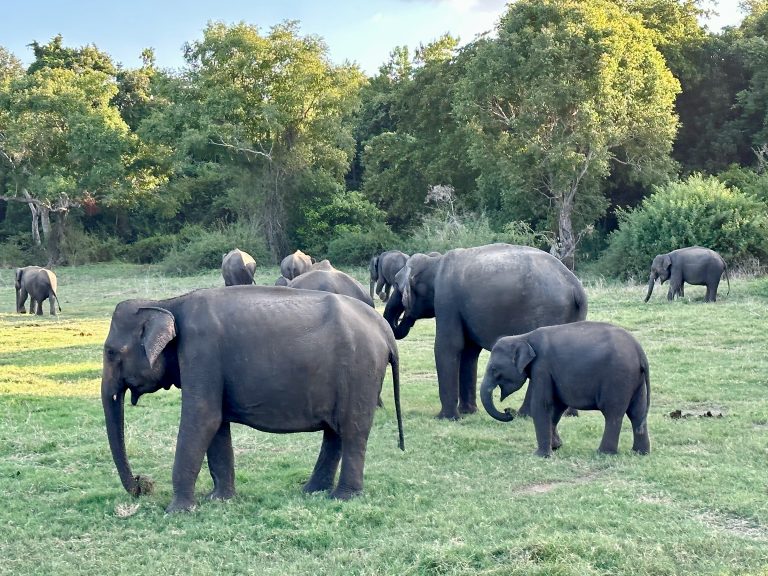
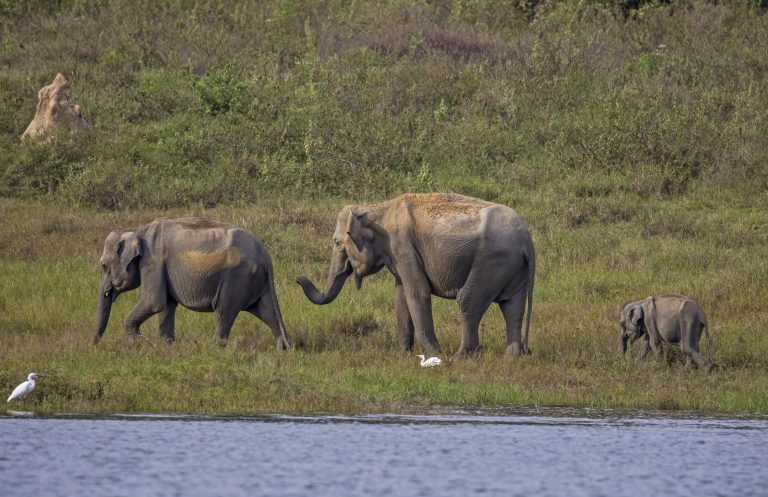
Elephants are the easiest big animals to see in Sri Lanka, and several parks are built around them.
- Udawalawe, open grassland around a reservoir, about 165 km by road from Colombo. Elephants all year, and an easy detour between the hills and the south coast.
- Minneriya and Kaudulla, near Habarana and Polonnaruwa, for the Gathering: in the dry season, large herds come to graze on the shores of the reservoirs. Sri Lanka Tourism names May to October as the popular time, and around September many elephants move on to Kaudulla.
- Wasgamuwa, off the main circuit, with about 150 resident elephants and very few jeeps. Sri Lanka Tourism names November to May as the best months for big herds.
- Gal Oya, in the east, seen by boat across the Senanayake Samudraya reservoir. With luck you see elephants swimming out to the islands at dusk.
- Maduru Oya and Lunugamvehera, big, quiet parks for people who’d rather not queue.
Not sure which? Udawalawe or Minneriya and Yala or Udawalawe compare the main choices.

If you love birds
- Bundala, between Hambantota and Tissamaharama, was Sri Lanka’s first Ramsar wetland. Lagoons, salt pans and dunes, best from September to March when migrant birds are in.
- Kumana, next to Yala on the east side, has a mangrove swamp where large flocks of waterbirds gather to breed from about April to July.
- Chundikkulam, near Kilinochchi in the north, a lagoon-and-mangrove reserve known for flamingos and painted storks. It isn’t set up for tourists, so arrange it yourself.
Most of the elephant parks are good for birds too. Our birdwatching guide covers the rest.
If you’d rather walk
Horton Plains is the park you explore on foot: a high plateau of grassland and cloud forest south of Nuwara Eliya, part of a UNESCO World Heritage Site. The main loop of about 9 km takes in World’s End and Baker’s Falls in around three hours. Start early, because cloud usually covers World’s End later in the morning. Polythene is banned, and bags are checked.
If you want the sea
- Pigeon Island, about 1 km off Nilaveli near Trincomalee, protects two small islands and their reef. Snorkellers often see blacktip reef sharks and turtles. Rough seas often close it from about October to January.
- Hikkaduwa National Park is the reef lagoon off Hikkaduwa’s beach, seen by glass-bottom boat or with a snorkel. Much of the coral is dead or recovering, but sea turtles graze close to the sand.
A quick stop
Ussangoda, beside the coast road near Ambalantota, is a small park of red earth and short grass above the sea. People stop for the colour, the view and the Ravana legend, not for wildlife. An hour is plenty.
Which park, which month?
The island has two monsoons, so some park is always in season.
- January to April: Yala, and Wilpattu from February; Wasgamuwa for elephants; Bundala for migrant birds.
- May to August: the Gathering builds at Minneriya; Kumana’s nesting season; Wilpattu (Sri Lanka Tourism gives February to October); Pigeon Island’s calm season.
- September and October: the Gathering moves to Kaudulla. Yala has traditionally closed in this period, so check before you build a route around it.
- November and December: rainy months for much of the island, and parks can close after heavy rain. In late November 2025, during Cyclone Ditwah, the DWC closed several parks to visitors.
Udawalawe is open all year, which makes it the safest choice if your dates are fixed. Our best time to visit Sri Lanka guide explains the weather.

Permits, jeeps and costs
You need a DWC permit for every national park, and you can reserve a day permit online. The DWC website doesn’t currently show a fee table, so confirm the price when you book. Recent visitors (2025–26) report that jeeps are priced per vehicle, not per person, and that a jeep quote often covers only the vehicle and driver, not the park ticket, so ask what’s included. Our travel costs guide explains the charges.
The same rules apply in every park:
- Stay in the jeep. Visitors have been arrested in Yala for walking outside their vehicles.
- Ask your driver to keep a distance and not to chase sightings.
- Don’t feed anything.
- Leave pork at home: since October 2024 the DWC has banned raw pork and pork products in all national parks.
For more on watching wildlife well, see responsible travel in Sri Lanka, and for a two-week route through the best parks, our wildlife safari itinerary.
Frequently asked questions (FAQs)
Which is the best national park in Sri Lanka?
It depends on what you want. Yala for leopards, Udawalawe or Minneriya for elephants, Bundala or Kumana for birds, and Horton Plains for a walk.
What is the largest national park in Sri Lanka?
Wilpattu, at about 1,317 km², on the north-west coast between Puttalam and Anuradhapura.
Can you drive your own car into Sri Lankan national parks?
Safaris are by jeep with a driver; at Wilpattu, recent visitors report that you can’t drive your own vehicle in. Horton Plains is explored on foot, and Gal Oya by boat.
Which national park is open all year?
Udawalawe is open all year. Yala has traditionally closed around September and October, and any park can close after heavy rain.
Where can I see elephants in Sri Lanka?
Udawalawe all year, Minneriya and Kaudulla for the Gathering in the dry season, and Wasgamuwa from November to May.
Header photo: dronepicr / Wikimedia Commons, CC BY 2.0.