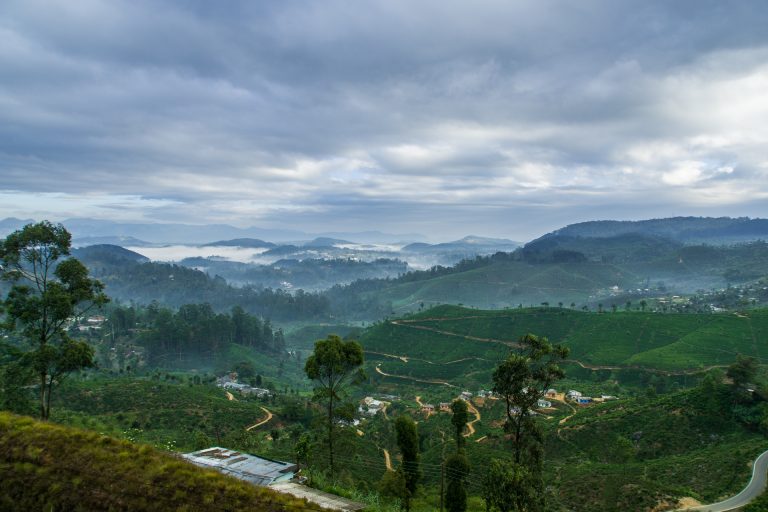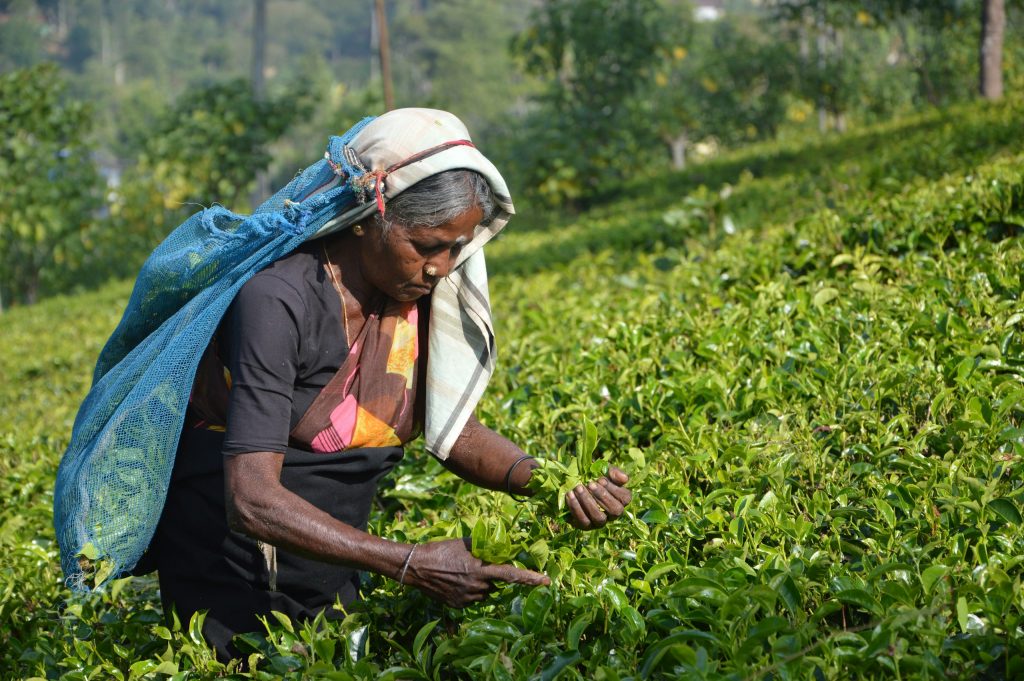
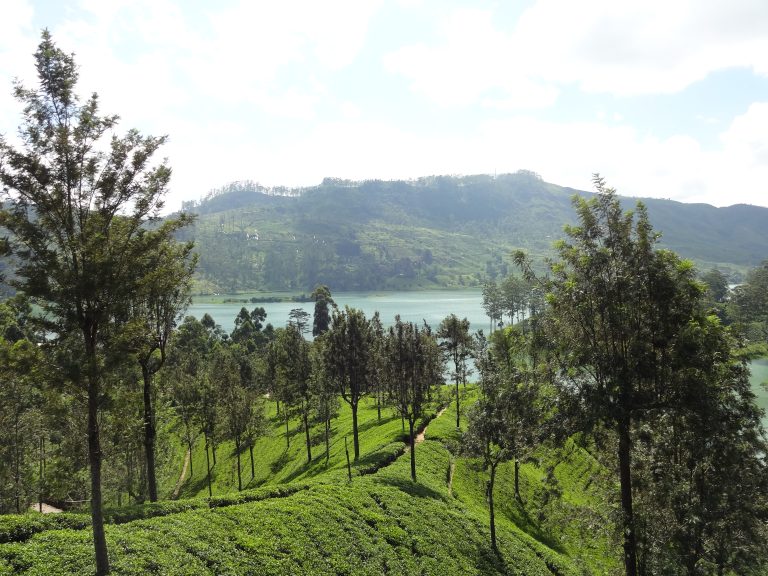
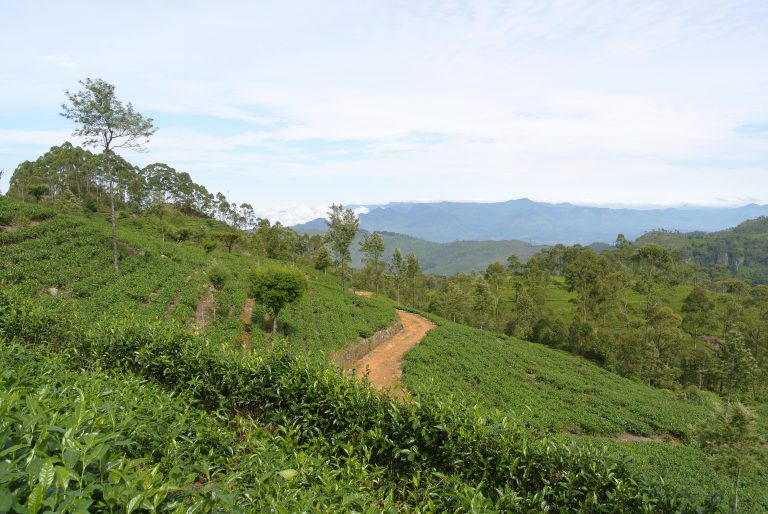
The Sri Lanka Tea Board divides the island’s tea country into seven districts, and the Board says each of the Ceylon tea regions has its own character in the cup. For a traveller, the regions also explain the landscape: why the tea around Nuwara Eliya grows on cold, misty slopes, why Uva’s estates face the dry south-east winds, and why there’s tea in the warm lowlands near Galle too.
You don’t need to know any of this to enjoy a cup on an estate terrace. But it helps you choose where to stay, which factory to visit and when to go.
High, mid and low grown
The Tea Board groups tea by the height it grows at:
- High-grown: Nuwara Eliya, Dimbula, Uda Pussellawa and Uva, mostly above about 1,000 m. Light, fragrant teas from the cool hill country.
- Mid-grown: Kandy, between 650 m and 1,300 m. Bright, full-bodied teas.
- Low-grown: Sabaragamuwa and Ruhuna, below about 600 m. Fast-growing bushes, long leaves and strong, dark teas.
Ruhuna and Sabaragamuwa together produce around 60% of the island’s tea, the Tea Board says, even though most visitors only see the high-grown districts.
Nuwara Eliya
The Tea Board calls Nuwara Eliya probably the best-known tea district, and the most rugged, with the highest average elevation. The town sits at 1,868 m below Pidurutalagala, and nights are cold and sometimes frosty. Its tea is the palest of all Ceylon teas, golden in the cup and delicately fragrant. The dry season runs from February to April.
Visit: Pedro Tea Estate, just outside town, with a walk up towards Lover’s Leap Falls. Base yourself in Nuwara Eliya.
Dimbula
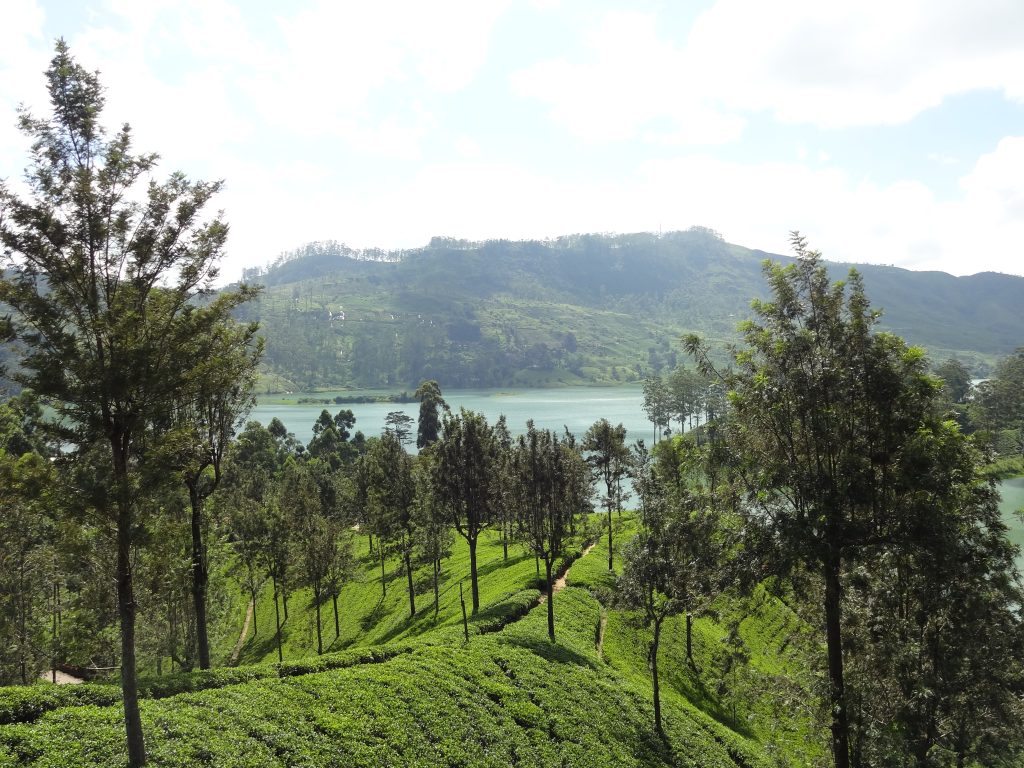
Dimbula lies between the Nuwara Eliya plateau and Horton Plains, with estates between 1,100 m and 1,600 m around Hatton, Dickoya, Maskeliya, Talawakele, Bogawanthalawa, Kotagala and Nanu Oya. Tea arrived in the 1870s, and Dimbula was among the first districts planted. The Tea Board describes its tea as “refreshingly mellow”, golden-orange in the cup, at its best in the western quality season from around the turn of the year to March or early April.
Visit: the tea-covered slopes around Hatton and Dickoya and the Castlereagh Reservoir, with St Clair’s Falls and Devon Falls on the A7 near Talawakele.
Uva
Uva’s estates are on the south-eastern slopes of the hills, around Badulla, between 1,000 m and 1,600 m. The winds of both monsoons reach them, usually dry by the time they arrive. The result is a mellow, smooth tea that tasters call exotically aromatic, at its best in the quality season from July to September. Sir Thomas Lipton grew tea here, and the Tea Board credits his Uva estates with persuading Americans to drink tea at all.
Visit: Dambatenne Tea Factory and Lipton’s Seat near Haputale, or a factory tour from Ella. Our guide to Haputale’s tea country plans the morning.
Uda Pussellawa
A small, thinly populated district between Kandy and Uva on the eastern slopes, around Maturata, Ragala and Halgranoya, with estates from 950 m to 1,600 m. Part of it is the Hakgala Strict Natural Reserve. Its tea is often compared with Nuwara Eliya’s but is darker, with a pinkish hue and more strength, and it has two quality seasons, one from each monsoon.
Visit: you pass its edge at Hakgala Botanic Gardens, on the road from Nuwara Eliya towards Welimada.
Kandy
Kandy is mid-grown country, with estates between 650 m and 1,300 m on the hills around the city, among them Hantane, Nilambe, Pussellawa, Gampola and Hewaheta. Its teas give a bright, coppery infusion, strong and full-bodied, at their best in the first quarter of the year. James Taylor, the pioneer of Ceylon tea, arrived at Loolecondera estate in the Kandy district in 1851.
Visit: the Ceylon Tea Museum, in a 1925 factory on the Hantane hillside, about 3 km from Kandy. The Pekoe Trail starts there.
Sabaragamuwa
The Tea Board calls Sabaragamuwa the biggest tea-growing district. It covers the western and south-western slopes of the central mountains around Ratnapura, between the Sinharaja forest and the Adam’s Peak wilderness, with estates from sea level to 610 m. The tea is dark yellow-brown with a reddish tint and a hint of caramel.
Visit: you drive through it on the A4 to Ratnapura and on towards Sinharaja.
Ruhuna
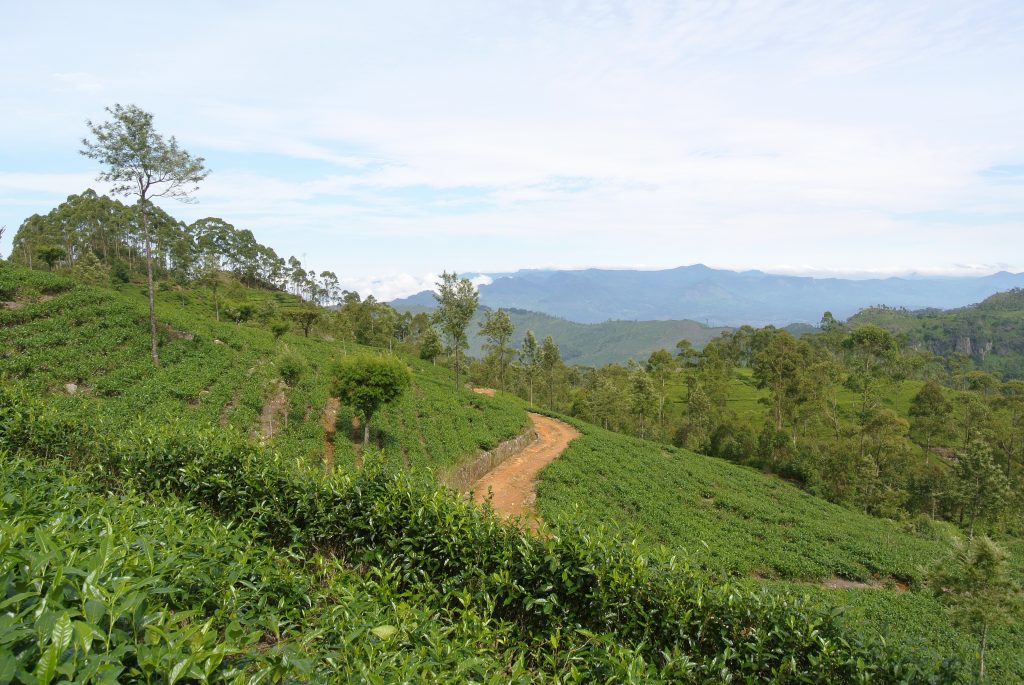
Ruhuna is the old name for the south of the island. Its tea grows below 600 m, mostly in the wet western part of the Southern Province, and the first estates opened around 1900. Ruhuna is known for full-flavoured black tea, and for the long leaves and “tips” its factories produce.
Visit: Handunugoda Tea Estate near Ahangama, a half-day from the south-coast beaches, or the tea town of Deniyaya on the edge of Sinharaja.
How to see more than one region
Most hill-country routes cross three regions without trying. The drive or train from Kandy climbs through Kandy and Dimbula country to Nuwara Eliya, then drops into Uva at Haputale and Ella. The Pekoe Trail, about 300 km in 22 stages from the Ceylon Tea Museum to Pedro Estate, walks the whole way through them.
One factory visit is usually enough, since every factory follows the same method; our guide to which tea factory to visit compares the main ones. Buying tea? Look at where it was grown, because the district shapes the taste as much as the grade does.
Frequently asked questions (FAQs)
How many tea regions are there in Sri Lanka?
Seven, according to the Sri Lanka Tea Board: Nuwara Eliya, Dimbula, Uda Pussellawa, Uva, Kandy, Sabaragamuwa and Ruhuna.
Which Sri Lankan tea region is the highest?
Nuwara Eliya, which has the highest average elevation. Its tea is the palest Ceylon tea, golden and delicately fragrant.
What is the difference between high-grown and low-grown Ceylon tea?
High-grown teas from the cool hills, such as Nuwara Eliya and Dimbula, are lighter and more fragrant. Low-grown teas from Sabaragamuwa and Ruhuna, below about 600 m, are darker and stronger.
When is the best time for Uva tea?
The Tea Board’s quality season for Uva runs from July to September. Tea is picked all year round.
Where can I visit a tea estate near the south coast?
Handunugoda Tea Estate near Ahangama, in the low-grown Ruhuna district, runs tours with a tasting.
Header photo: Asantha Abeysooriya / Unsplash.