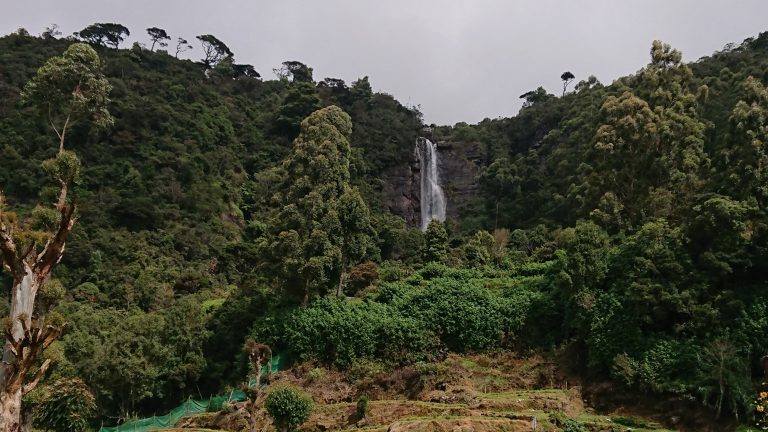
Lover’s Leap Falls is a single thin waterfall that drops down a dark cliff on the lower slopes of Pidurutalagala, Sri Lanka’s highest mountain, just above Nuwara Eliya. You reach it on foot from the Pedro tea estate side of town, and the reward is as much the view back over Nuwara Eliya as the fall itself.
Is it worth visiting?
Go if you are spending a couple of days in Nuwara Eliya and want a short, steep walk that ends at a waterfall with the whole town spread out below you.
Think twice if you are coming in a long dry spell and expecting a roaring torrent, because the stream now runs strongly mainly in the rainy months and can shrink to a thin thread.
The waterfall
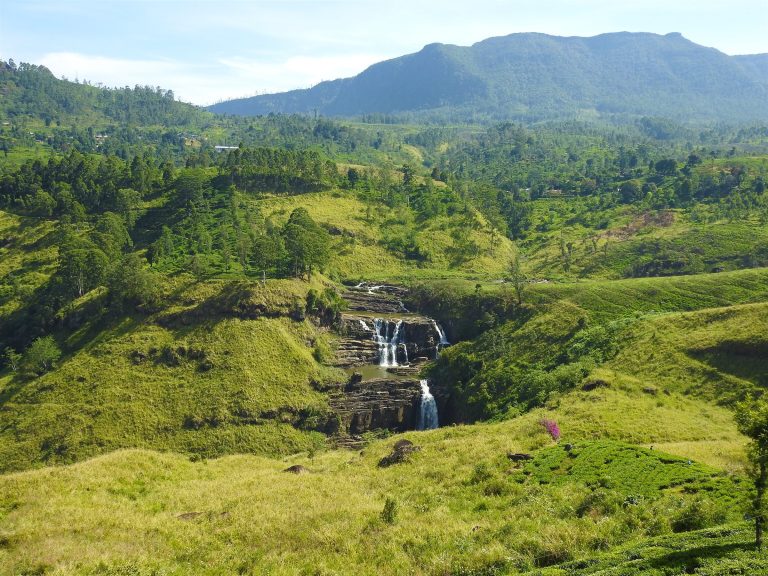
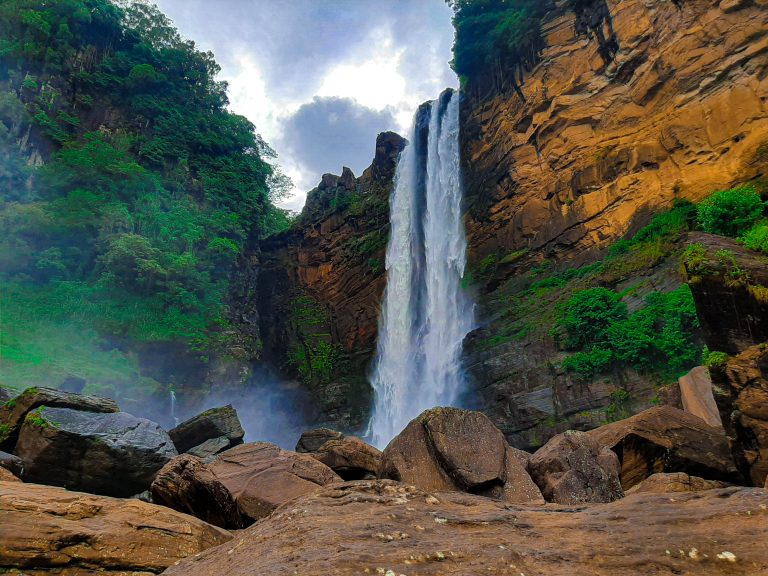
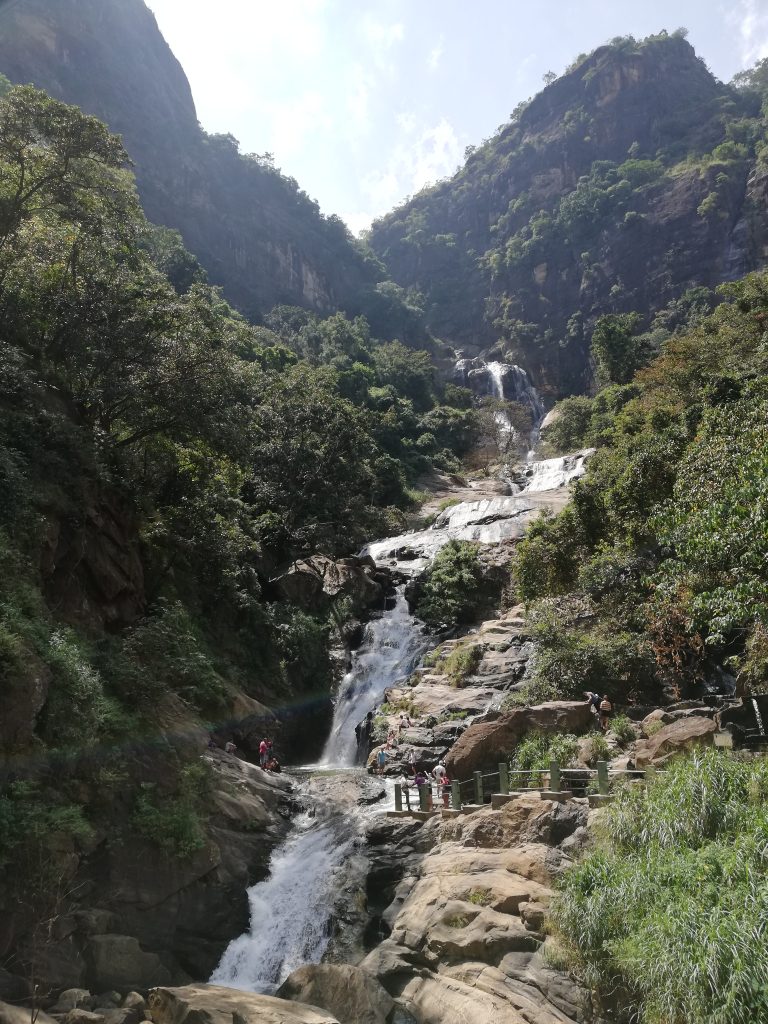
The stream starts high on Pidurutalagala and comes over a cleft in a layered rock face, falling in one narrow ribbon before breaking up among boulders. From below, it looks like a white line drawn down the cliff, framed by forest and, lower down, by vegetable terraces.
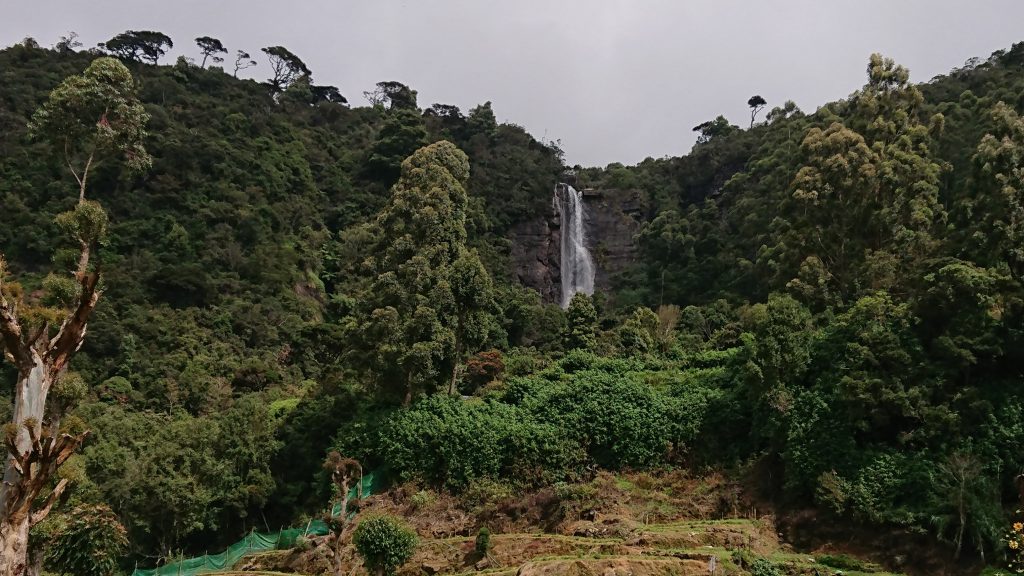
The fall matters to more than visitors. Water from it helps to supply Nuwara Eliya town, and walkers have noticed a painted notice on the rocks asking people not to throw rubbish into the stream. Please don’t leave anything behind.
Why the flow has dropped
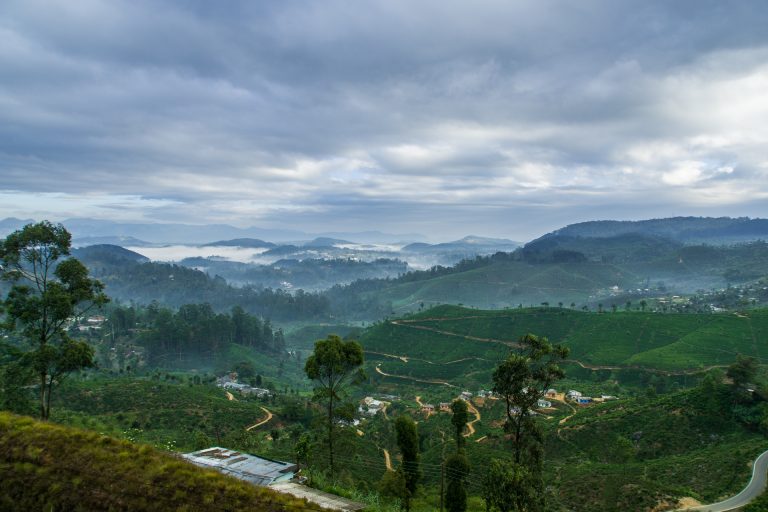
Lover’s Leap used to run all year. In August 2025 the Daily Mirror reported that it now swells mainly during the monsoon rains, and that environmentalists blame two things: illegal tapping of the stream to water vegetable plots, and the clearing of forest higher up the slopes. The paper said the same was happening at Glenfall, another of the town’s waterfalls. You can see the pressure for yourself on the way up, where cultivated terraces climb right to the edge of the trees.
Where the name comes from
There are two stories, and the Daily Mirror gave both in 2025. In the one most people tell, a prince and a village girl fell in love, were forbidden to marry and leapt together from the top of the fall. Sceptics point out that no king ever ruled from Nuwara Eliya, and tell instead of an Englishman whose companion slipped from a boulder into the fall; he died trying to save her.
The walk up
The usual approach starts off the road east of town that passes Pedro Tea Estate. Recent visitors describe a narrow tarred lane that climbs steeply for a few hundred metres, then a gravel footpath of roughly 250 m through tea and vegetable plots to the foot of the fall. It is a short walk, but almost all of it is uphill, and the final stretch near the rocks is the steepest.
Tuk-tuks can take you part of the way up the lane. Visitors report that some drivers ask several thousand rupees for the bumpy round trip, though, so it is often better value to walk and save the tuk-tuk for getting back to town. Either way, agree the price before you set off.
Close to the falls, visitors pass a small Hindu shrine marked with a trident, where local people leave offerings. Walk past quietly and keep your camera down if anyone is praying.
Above the fall
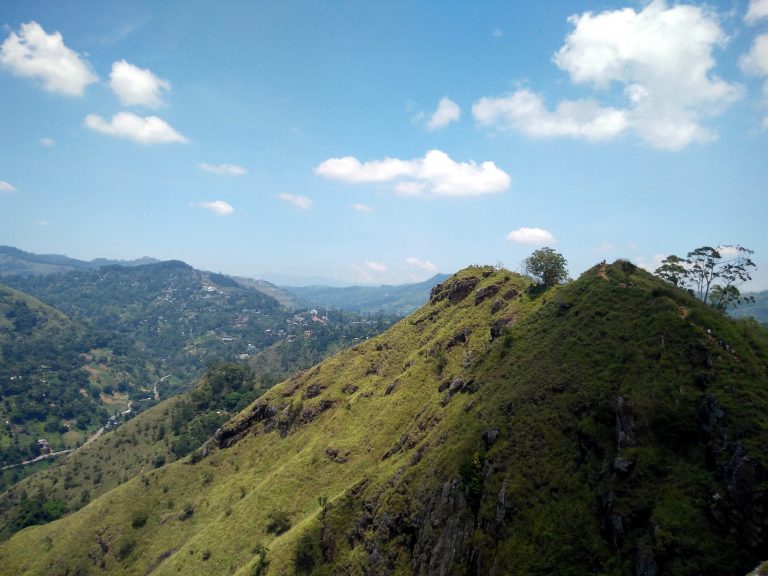
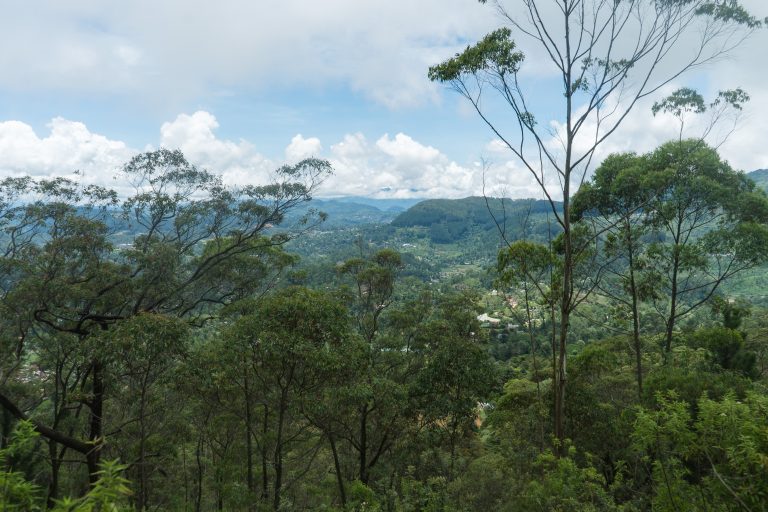
A rough path scrambles up beside the rock to the top of the cascade, and this is where most people linger. From the flat rocks you look straight down over the rooftops of Nuwara Eliya to the hills beyond. It is a good place for a flask of tea; the climb up is the hard part, not the view.
Treat the top with care. The rock is smooth and often wet, and the drop beside the fall is sheer. Stay well back from the lip, keep children close and don’t wade across the stream above the fall. Shoes with grip matter more here than anywhere else on the walk. The tea and vegetable paths are known for leeches after rain, so long trousers tucked into socks help.
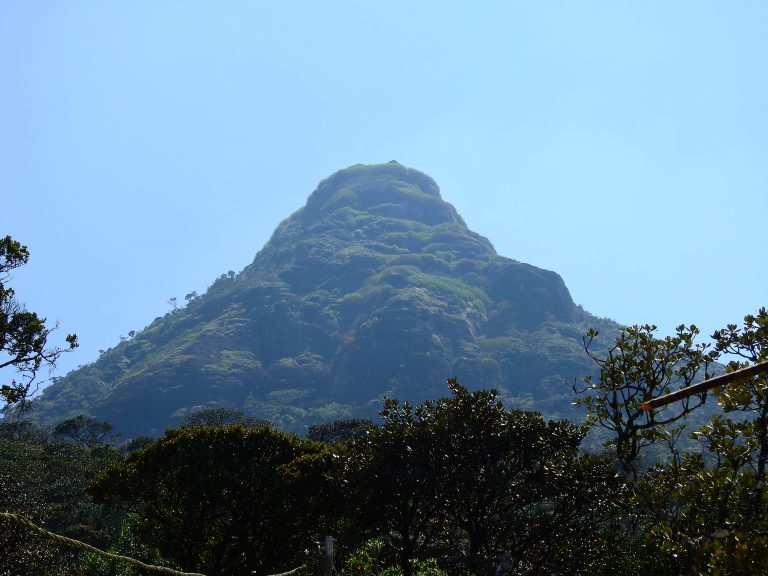
Pidurutalagala itself rises behind the fall, but don’t plan on carrying on up. Its summit is a high-security military and communications zone that is closed to the public.
When to go
There is a trade-off. The fall looks its best during and just after the rains, which is also when the path is muddiest and the cloud is most likely to hide the view from the top. The Sri Lanka Tea Board gives February to April as the region’s dry season, which brings the clearest views but often a thinner fall. Whatever the month, mornings are usually brighter before cloud builds over the hills, and the rocks are easier to walk on when it hasn’t just rained.
Tickets and getting there
No official ticket or opening times for Lover’s Leap are published, and visitors report no entrance fee. It is an open hillside rather than a managed site.
Most people come from Nuwara Eliya by tuk-tuk or on foot via the Pedro road; our guide to getting around Sri Lanka covers tuk-tuk fares and drivers. The nearest railway station is Nanu Oya, on the line to Badulla; see the travel update at the top of this page for which trains are running, and our Sri Lanka train travel guide for how to book.
Lover’s Leap pairs naturally with the Pedro factory tour in the same morning, and with Hakgala Botanic Gardens on the Badulla road if you have a car for the day.
Frequently asked questions (FAQs)
Where is Lover’s Leap waterfall?
On the lower slopes of Pidurutalagala just above Nuwara Eliya, reached from the road that passes Pedro Tea Estate.
How long is the walk to Lover’s Leap?
It is short but steep: visitors describe a few hundred metres of steep lane, then a footpath of roughly 250 m to the foot of the fall. The scramble to the top of the fall is extra.
Is there an entrance fee for Lover’s Leap?
No official ticket is published, and visitors report no entrance fee. If you take a tuk-tuk up the lane, agree the fare first.
Why is it called Lover’s Leap?
Local legend says a prince and a village girl whose love was forbidden jumped together from the top of the fall. Another version tells of an Englishman who fell to his death trying to save his companion.
When does Lover’s Leap have the most water?
During and just after the monsoon rains. In dry spells the flow can drop to a thin stream.
Can you climb to the top of Pidurutalagala from Lover’s Leap?
No. The summit is a high-security zone that is closed to the public, so the top of the waterfall is as far as walkers can go.
Header photo: Alexey Komarov / Wikimedia Commons, CC BY 3.0.