Maduru Oya National Park is big, wild and not set up for easy tourism. It covers 58,850 hectares of dry-zone forest, grassland and reservoirs in the east of the island, between Polonnaruwa and Mahiyangana. It was created to protect the water sources of the Mahaweli irrigation scheme. It also gave displaced wildlife, especially elephants, somewhere to go. Recent visitors (2025–26) describe thin crowds and basic facilities.
That is the appeal and the catch. Want guaranteed sightings, an easy day trip by bus or the set-up of Yala? This isn’t the park for you. But if you would rather watch elephants at a quiet reservoir edge, it is worth the effort of organising transport.
Five reservoirs and a refuge
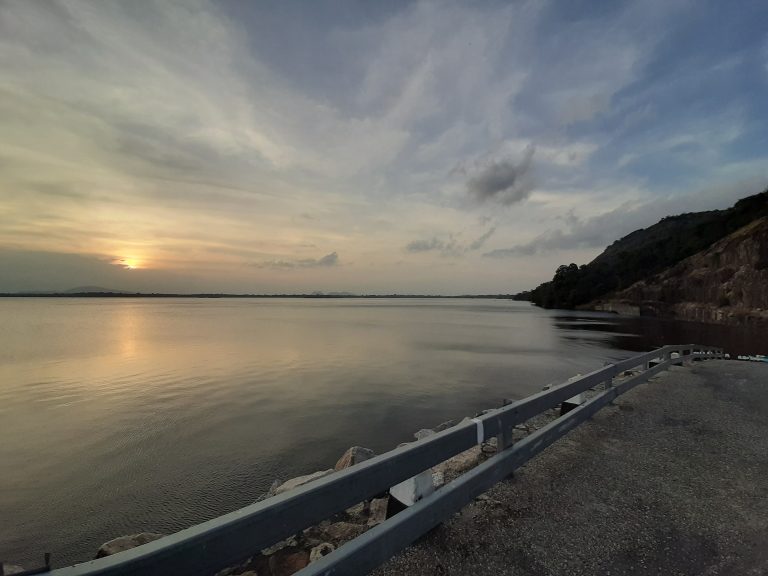
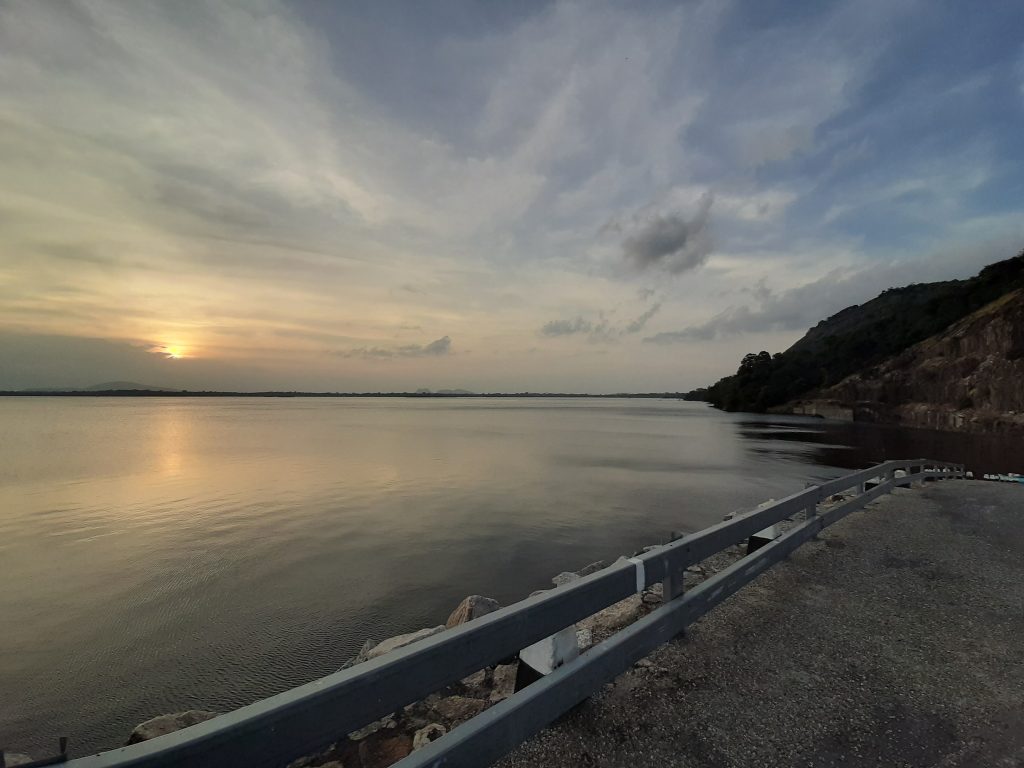
Maduru Oya was declared a national park on 9 November 1983, the fifth in Sri Lanka, under the Accelerated Mahaweli Development Programme. Its job is to protect the catchments of five reservoirs: Maduru Oya, Ulhitiya, Ratkinda, NDK and Henanigala. Water covers more than 15 per cent of the park, and much of the wildlife watching happens along the shores.
Most of the park is tropical dry mixed evergreen forest, with grassland and a teak plantation in the north-east. An 8 km line of rocky hills runs through the south-west. It spreads across three districts, Polonnaruwa, Ampara and Badulla, and three provinces, North Central, Eastern and Uva.
Wildlife and people
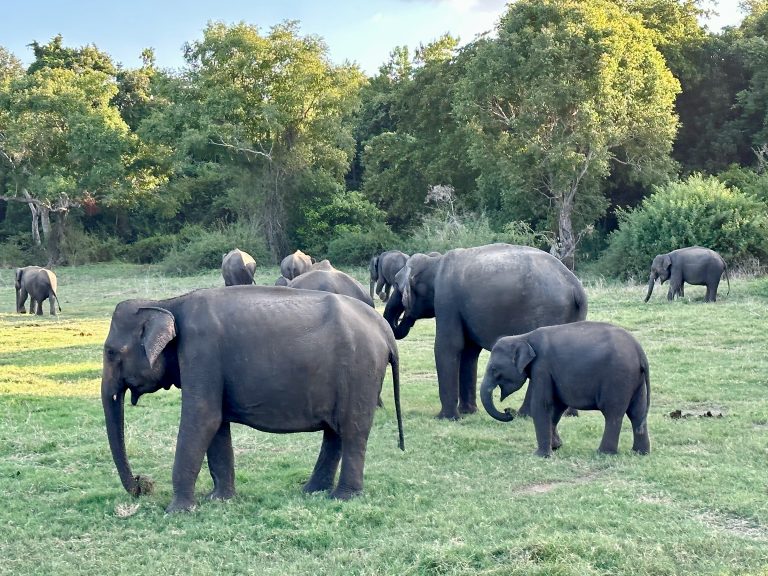
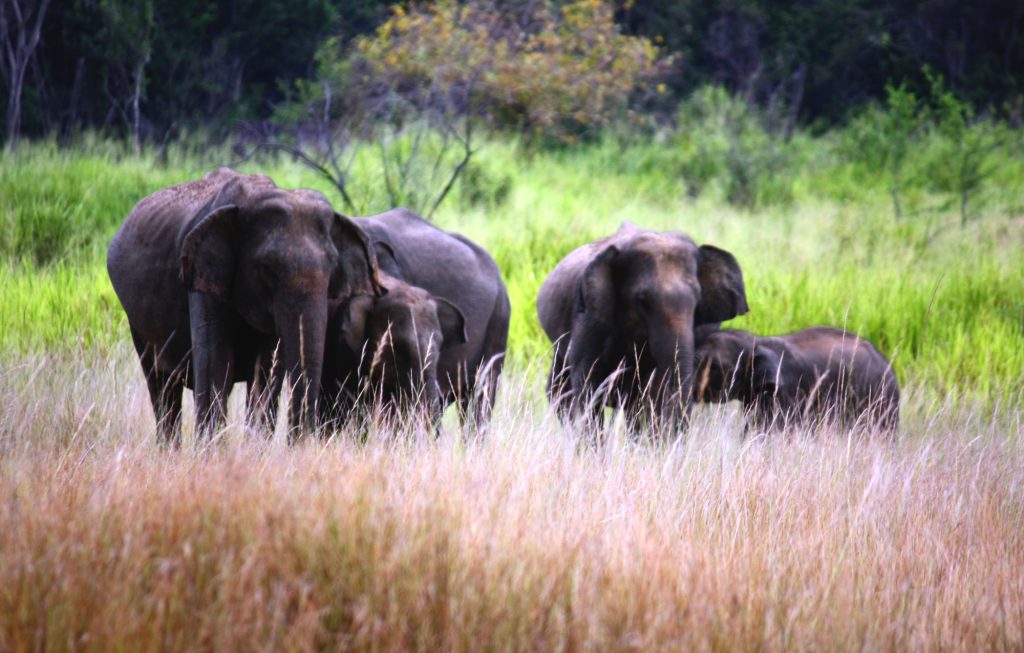
Elephants are the main reason people come, and the park was set up partly as a refuge for them. Sightings are never certain, so treat each one as a bonus.
Other animals recorded here include sloth bear, leopard, water buffalo, spotted deer, sambar, toque macaque, mugger crocodile and monitor lizards. Among the birds are the endemic Sri Lanka junglefowl and red-faced malkoha, with painted storks and white-bellied sea eagles around the water.
The reservoirs are part of the experience; recent visitors report boat trips from the Maduru Oya dam area.
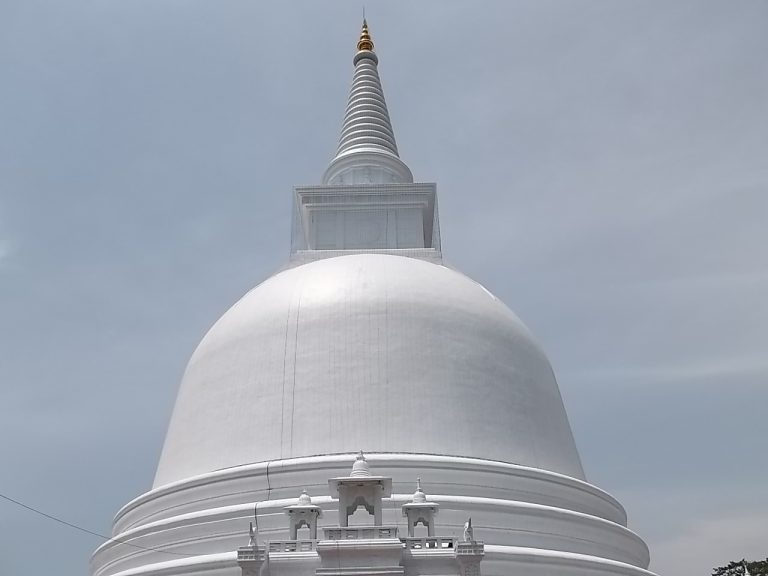
The Vedda. Vedda families live at Henanigala, resettled under the Mahaweli project. The Vedda community at Dambana, near Mahiyangana, has kept parts of a traditional way of life. Our Mahiyangana Raja Maha Vihara guide covers visiting Dambana respectfully. The park also holds Buddhist ruins at Henanigala and Kudawila, and an ancient sluice by the Maduru Oya bund.
Permits, jeeps and entrances
Every national park visitor needs a permit from the Department of Wildlife Conservation and pays the prescribed fee. The rules are on the DWC website. No current official fee for Maduru Oya is published. Ask your operator for the full price, including jeep, driver and tracker. Recent visitors (2025–26) report paying in cash and a confusing check-in. Bring enough rupees.
Operators run jeep safaris of about three hours, usually early morning or late afternoon. Visitors mention two entrances, at Henanigala and at Galkada, so confirm which one your driver is using. A hired jeep with a guide is the practical way to reach the better wildlife areas.
Trails get muddy after rain, and the heat and humidity are heavy. Bring water and food, because there is little to buy near the park.
Getting there
The park is about 288 km north-east of Colombo. The usual route runs through Kurunegala, Dambulla, Habarana, Polonnaruwa and Manampitiya. The park lies between the Polonnaruwa–Batticaloa road and the Mahiyangana–Padiyatalawa road, so you can come in from either side.
Public transport doesn’t reach the entrances, visitors report. Plan on a car, a tuk-tuk or an operator’s transfer from Polonnaruwa, Mahiyangana or a nearby guesthouse. Recent visitors prefer the drier months, roughly May to September, for wildlife and easier trails. They rate November and December poorly because of rain. Access can change after heavy rain or floods, so check with the DWC before you travel.
If you are planning a wildlife trip around the island, our Sri Lanka wildlife safari itinerary shows how the better-known parks fit together.
Frequently asked questions (FAQs)
Where is Maduru Oya National Park?
In the dry zone of eastern Sri Lanka, between Polonnaruwa and Mahiyangana, about 288 km north-east of Colombo. It spans the Polonnaruwa, Ampara and Badulla districts.
How big is Maduru Oya National Park?
It covers 58,850 hectares and was declared on 9 November 1983.
Can you see elephants at Maduru Oya?
Elephants live in the park, which was set up partly as a refuge for them, but sightings are never guaranteed.
Do you need a jeep to visit?
You need a DWC permit. Recent visitors report that a hired jeep with a driver is the practical way to see the park.
Header photo: Anton Croos / Wikimedia Commons, CC BY-SA 4.0.