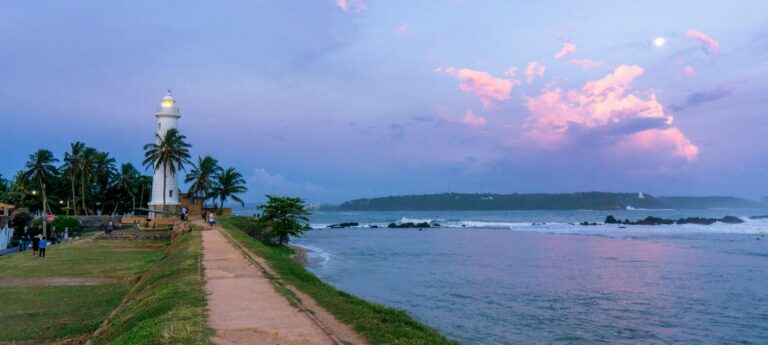
One of the best views of Galle comes not from the fort ramparts but from the Japanese Peace Pagoda. This white stupa stands on top of Rumassala, the wooded hill that closes off Galle’s bay on the Unawatuna side. From up here you look across the water to Galle Fort and the harbour, with the coast running away on either side. Monks of the Japanese Buddhist order Nipponzan Myohoji built it, and entry is reported to be free.
Give it half an hour, ideally first thing in the morning or in the last hour of daylight. It is a quiet modern shrine rather than an ancient temple, so the view and the calm are the reasons to come.
The pagoda
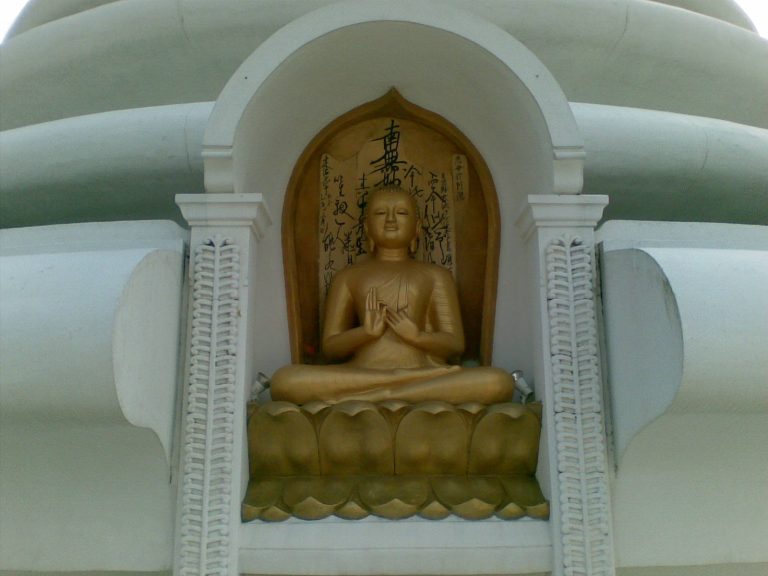
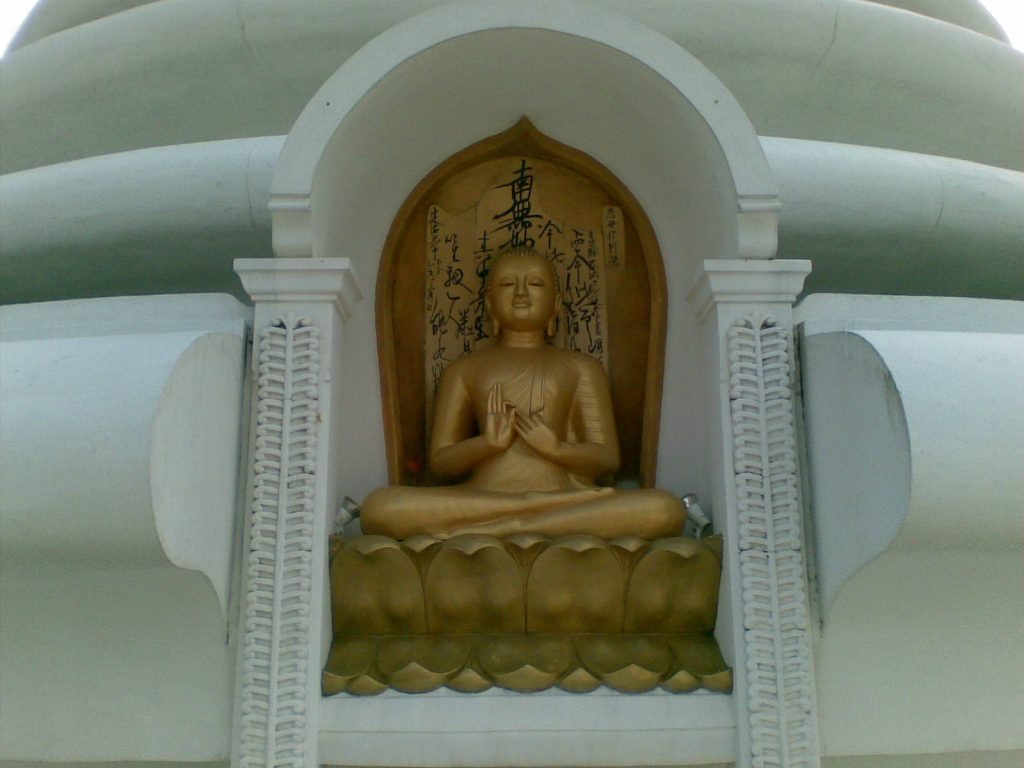
The stupa is a plain white dome on a wide circular walkway. Four gilded Buddha statues sit in niches around it. Local sources say they show four moments in the Buddha’s life: birth, enlightenment, the first sermon and death. Japanese calligraphy is written behind the figures, a reminder that this is a Japanese order’s shrine rather than a traditional Sri Lankan dagaba. You may hear it called the Japan Sama Chaithya locally, and it is visible from ships approaching Galle harbour.
Peace pagodas were the idea of the Japanese monk Nichidatsu Fujii, founder of Nipponzan Myohoji. Most of those built since the Second World War were raised under his guidance. Sri Lanka has several others, including at Bandarawela and Ampara.
Hanuman’s hill
Rumassala has its own legend. In the Ramayana, Hanuman carries a piece of the Himalaya and drops a fragment on the southern coast. Rumassala is said to be it, and the hill is still known for its unusual plants. Further along the hilltop, at the Sri Vivekaramaya temple, recent visitors (2025–26) report a large statue of Hanuman carrying the mountain.
Getting up there
Rumassala is a few kilometres from both Galle Fort and Unawatuna, and a narrow road climbs to the top.
- Tuk-tuk. The easiest way from Galle or Unawatuna. Agree the fare and the waiting time before you leave. Recent visitors say there may be few tuk-tuks at the top for the ride back.
- On foot. You can walk up from the Unawatuna end. The path is steep in places, so carry water and don’t start in the midday heat.
- As part of a loop. A path runs from the pagoda down through the trees to Jungle Beach, the small cove on the Galle side of the hill. You can combine the view with a swim and return to Unawatuna Beach by boat or on foot.
Visiting respectfully
This is an active place of worship. Recent visitors (2025–26) say you should cover your shoulders and knees, take off your shoes near the shrines and keep your voice down. A sarong may be lent if you arrive underdressed. There are no published opening hours, so go in daylight. Entry is reported to be free, with donations welcome.
Sunrise and late afternoon are cooler and give the best light. Sunset is the most popular time and can be busy. For peace, visitors suggest avoiding days when a ceremony is under way. In the south-west monsoon, roughly May to September, expect cloud and muddier paths.
Back down the hill, the Unawatuna guide covers the town, its swimming conditions and rip currents. Galle is a short ride along the coast road.
Frequently asked questions (FAQs)
Who built the Japanese Peace Pagoda at Rumassala?
Monks of the Japanese Buddhist order Nipponzan Myohoji, which has built peace pagodas around the world.
Is there an entry fee?
Recent visitors report that entry is free and donations are welcome.
How do I get to the Peace Pagoda from Unawatuna?
By tuk-tuk up the narrow road to the top, or on foot from the Unawatuna end. If you take a tuk-tuk, agree the fare and the return before you go.
What should I wear?
Cover your shoulders and knees, and take off your shoes near the shrines. Visitors say a sarong may be lent if you need one.
What is the best time to visit?
Early morning or late afternoon, when it is cooler and the light is good. Sunset is popular and can be busy.
Header photo: L Manju / Wikimedia Commons, CC BY-SA 4.0.