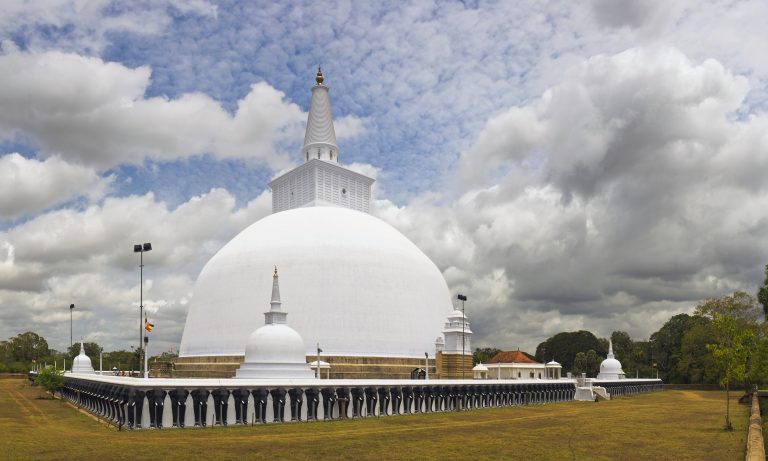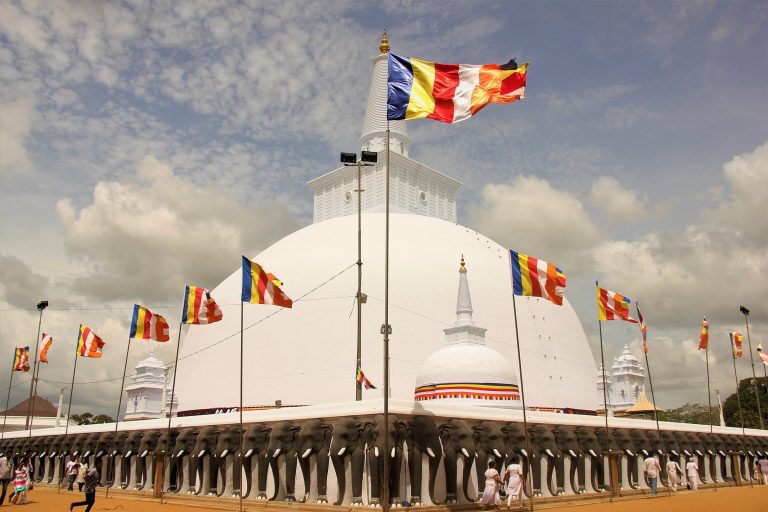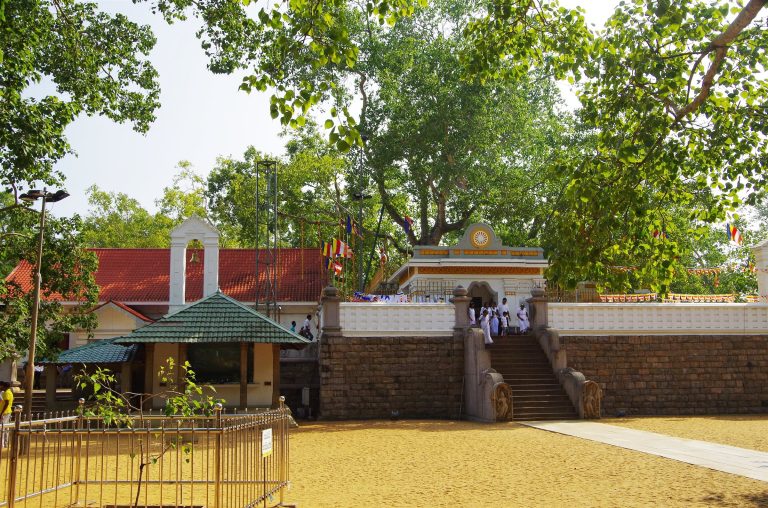

Most visitors to Anuradhapura see the great stupas one after another and move on. Abhayagiri rewards a slower pace. In the north of the Sacred City, around a huge brick stupa, lie the ruins of a monastery that for centuries drew monks from across the Buddhist world. You find rows of stone pillars, carved moonstones at the foot of the steps and a pair of stone bathing ponds. A short way off sits the Samadhi Buddha statue. It is the place in Anuradhapura where you get a feel for how a monastery actually worked.
Short of time? Start with the main monuments in our Sacred City guide, such as Sri Maha Bodhi and Ruwanwelisaya, and add Abhayagiri if there is time. With a full day, don’t skip it.
A monastery with its own ideas
Chronicles credit King Valagamba with founding Abhayagiri, and it grew into the great rival of the older Maha Vihara. The rivalry peaked under King Mahasena in the 3rd century AD. Some accounts say he took materials from Maha Vihara buildings for Abhayagiri.
Its monks had a reputation for an open outlook. The Chinese pilgrim Faxian came in the early 5th century. He found it a leading centre of Buddhism and reported about 5,000 monks living here. In the 7th century the traveller Xuanzang described monks studying both Hinayana and Mahayana teachings, and later centuries brought Vajrayana teaching too.
The end came in the 12th century, when King Parakramabahu I abolished the Abhayagiri fraternity. Anuradhapura had already been abandoned after the Chola invasion of 993. The buildings fell into ruin until they were rediscovered in the 1880s and excavated over the following decades.
What to see
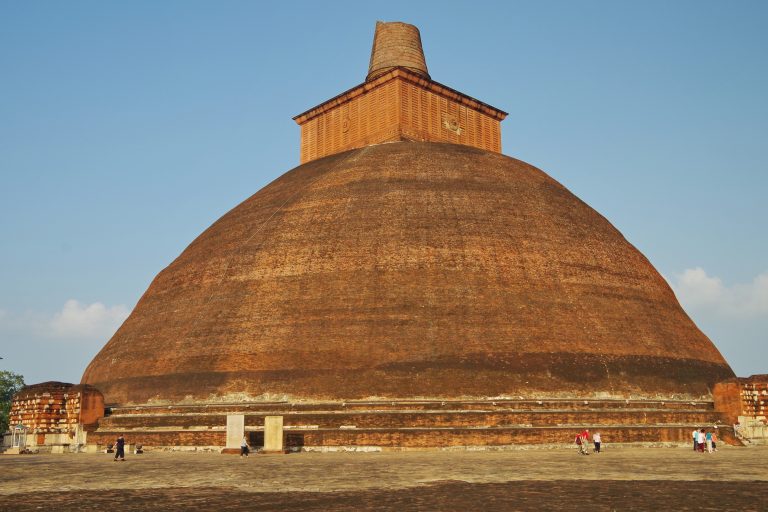
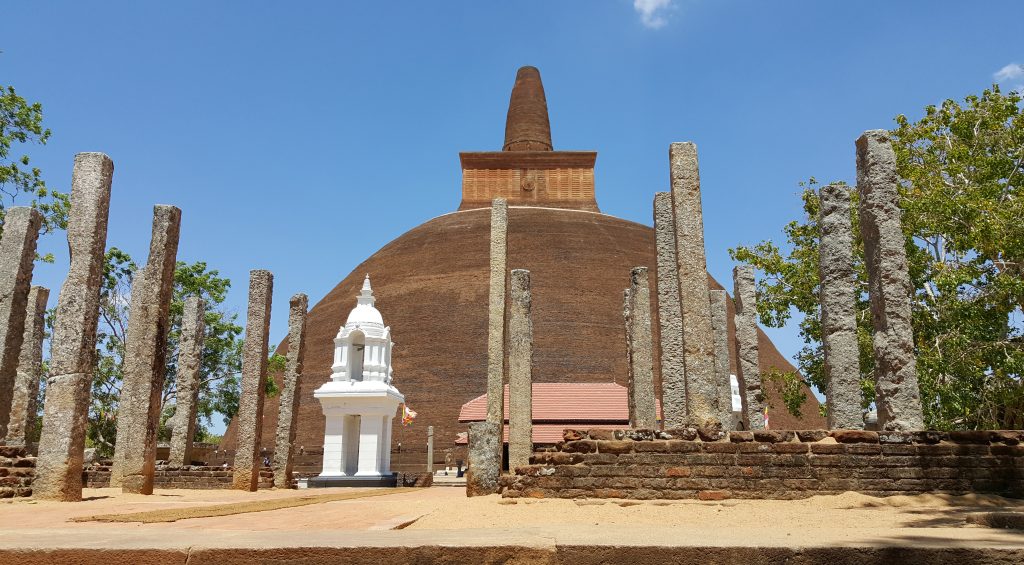
The stupa. A vast brick dome topped by a square railed box and a spire. The Central Cultural Fund (CCF) led a long restoration, and the stupa was unveiled again in 2015.
Pillars and moonstones. The monastery’s buildings stood on rows of granite pillars. Look down at the foot of the steps for the moonstones. These semicircular carved stones greet you at the entrance to a building.
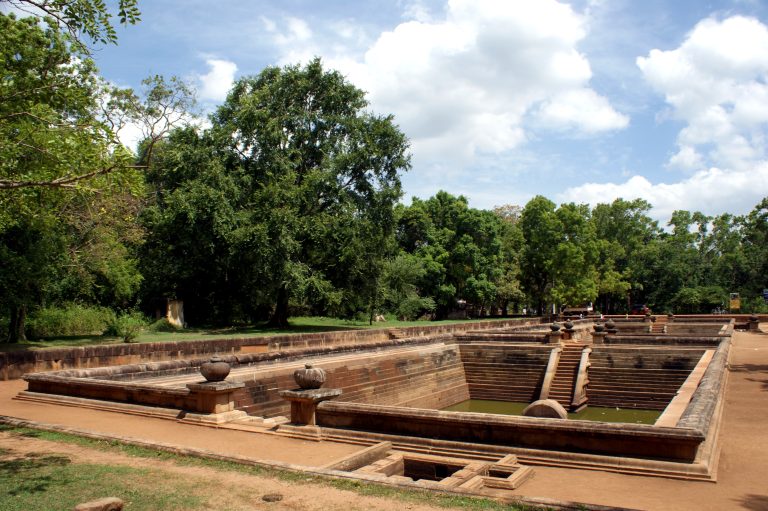
Kuttam Pokuna (the Twin Ponds). Two cut-stone bathing ponds on the eastern edge of the complex, used by the monks. The carved steps and stone pots are worth a slow look; the water is green and still.

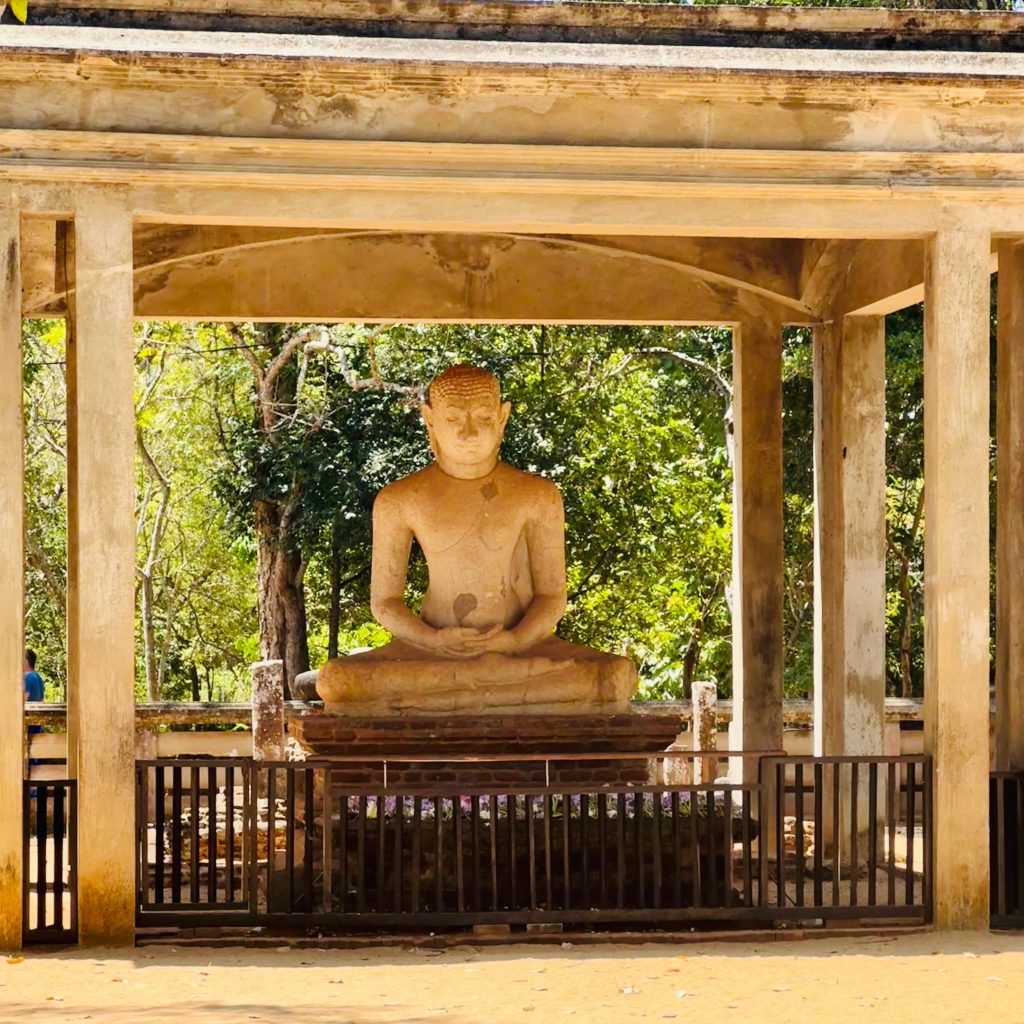
The Samadhi statue. A seated Buddha about 2.2 m (7 ft 3 in) high, in the meditation posture. It stands in Mahamevnawa Park, close to the monastery rather than inside it.
Tickets
Foreign visitors need the CCF ticket for Anuradhapura. The CCF price list (updated 14 October 2026) shows USD 30 for a full ticket and USD 15 for children aged 6 to 12. You pay in rupees at the CCF’s exchange rate. A ticket is valid for one entry on the day it is issued. The counters open from 7 am to 5 pm.
You can buy at the counter, or order online through the CCF eTicket service and collect the ticket at the counter with your receipt number. The CCF ticket page sets out the rules. Keep the ticket on you, because officers can ask to see it.
Getting round and visiting well
The monastery is in the northern part of the Sacred City, on flat ground. A tuk-tuk from the New Town is easiest, and a bicycle works if you don’t mind riding in the heat. Early morning and late afternoon are cooler and kinder to bare feet.
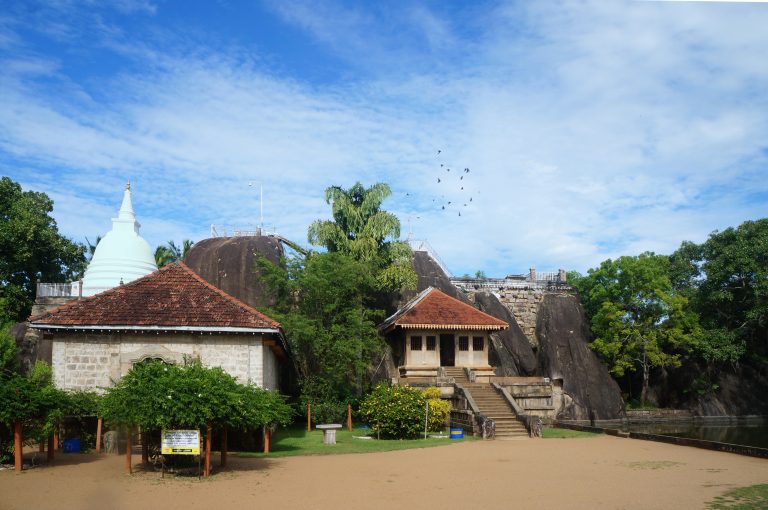
Take off your shoes and hat at the stupa and shrines, and cover your shoulders and knees. The stone gets very hot by midday, so carry socks. Our temple etiquette guide covers the rules and Poya days. To round off the day, the rock temple of Isurumuniya is in the south of the city, and Mihintale is close by.
Frequently asked questions (FAQs)
What is Abhayagiri Vihara?
A ruined Buddhist monastery in the north of the Sacred City of Anuradhapura, built around a huge brick stupa. It was one of the city’s great monastic centres for centuries.
How much is the ticket for Abhayagiri?
Foreign visitors use the CCF ticket for Anuradhapura: USD 30, or USD 15 for children aged 6 to 12 (price list updated 14 October 2026). It is valid for one entry on the day issued.
What are the Twin Ponds?
Kuttam Pokuna, two cut-stone bathing ponds on the eastern edge of the monastery, used by the monks.
Where is the Samadhi statue?
In Mahamevnawa Park, close to Abhayagiri. It is a seated Buddha about 2.2 m high.
Header photo: Nicolas Chadeville / Wikimedia Commons, CC BY 4.0.