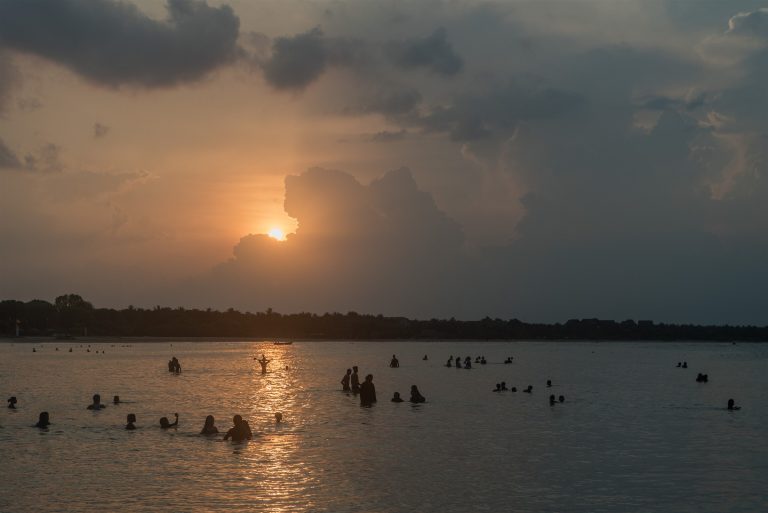
The east coast is where you go when the south-west is wet. From about May to September this side of the island is dry and the sea is usually calm, and three bases cover most of it: Trincomalee and its beach suburb Uppuveli, Nilaveli further north, and the shallow bay at Pasikuda, near Batticaloa.
Choose Trincomalee if you want a town with sights as well as a beach. Choose Nilaveli for a quieter, long beach with snorkelling trips to Pigeon Island from the sand. Choose Pasikuda for calm, shallow water and a resort holiday, especially with young children.
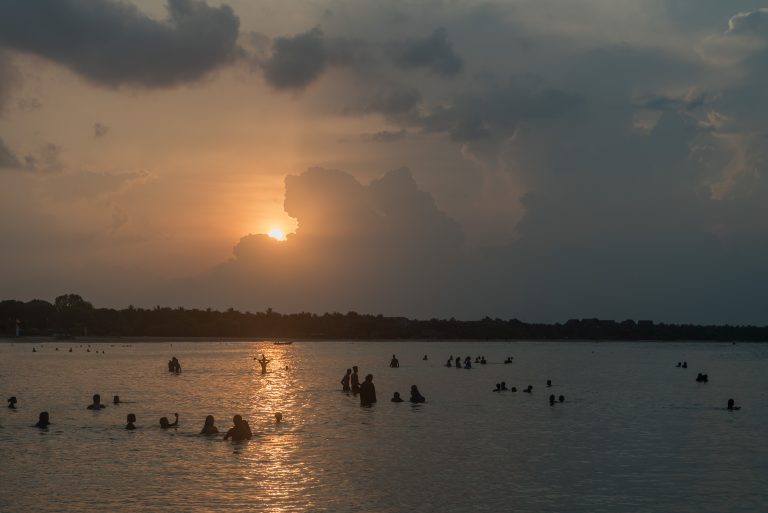
Trincomalee and Uppuveli: a beach with a town attached
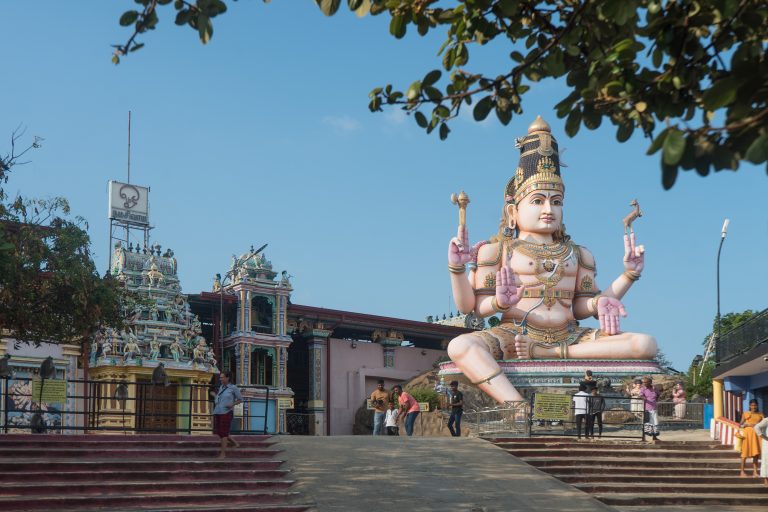
Trincomalee is a port city built around a natural harbour. On its rocky headland you’ll find Fort Frederick, still a military base but open along the approach road, and the Koneswaram Temple on Swami Rock, one of the five ancient shrines of Shiva in Sri Lanka. Uppuveli, on the northern edge of town, has plenty of places to stay close to all this.
It’s the best base if you get bored after two days on a sunbed. Whale-watching trips run from here too; our guide to whale watching from Trincomalee explains how to pick an operator. And Trincomalee is the end of the railway line from Colombo Fort, so you can arrive by train.
Nilaveli: long sand and Pigeon Island
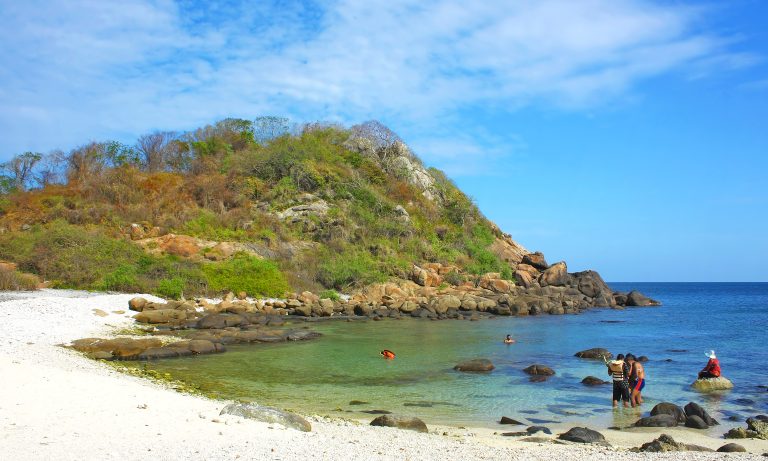
Nilaveli is north of Trincomalee along the Nilaveli Road. Sri Lanka Tourism describes its beach as one for people who want a quiet stay. The draw is Pigeon Island National Park, about 1 km offshore, reached by boat from the beach. More than 100 species of coral and 300 species of reef fish have been recorded there, and blacktip reef sharks and turtles are often seen.
Plan around the boats. Recent visitors (2025–26) report busy boat desks at weekends and in school holidays and suggest going early. You pay a Department of Wildlife Conservation permit on top of the boat fare, and the park closes when the sea is too rough, as it did at the start of the north-east monsoon in December 2023 and December 2025. There’s no station at Nilaveli; take a tuk-tuk from Trincomalee.
Pasikuda: the shallow bay
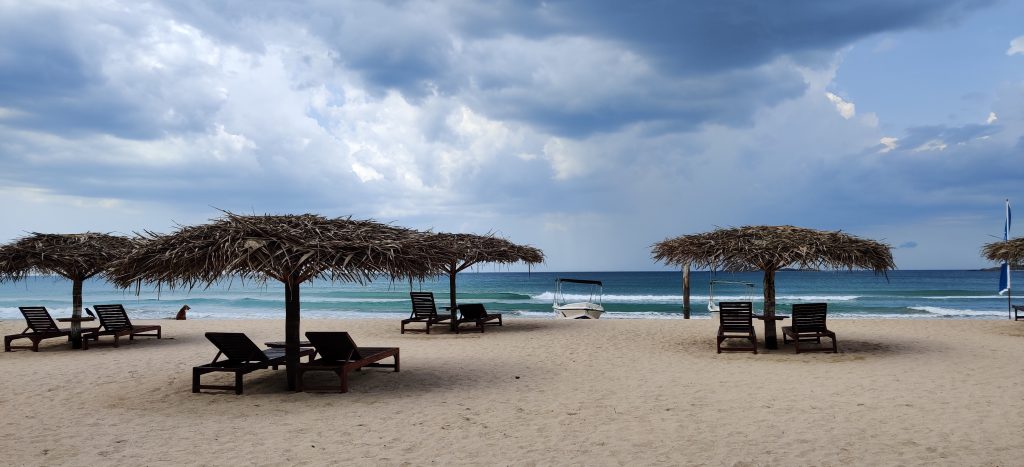
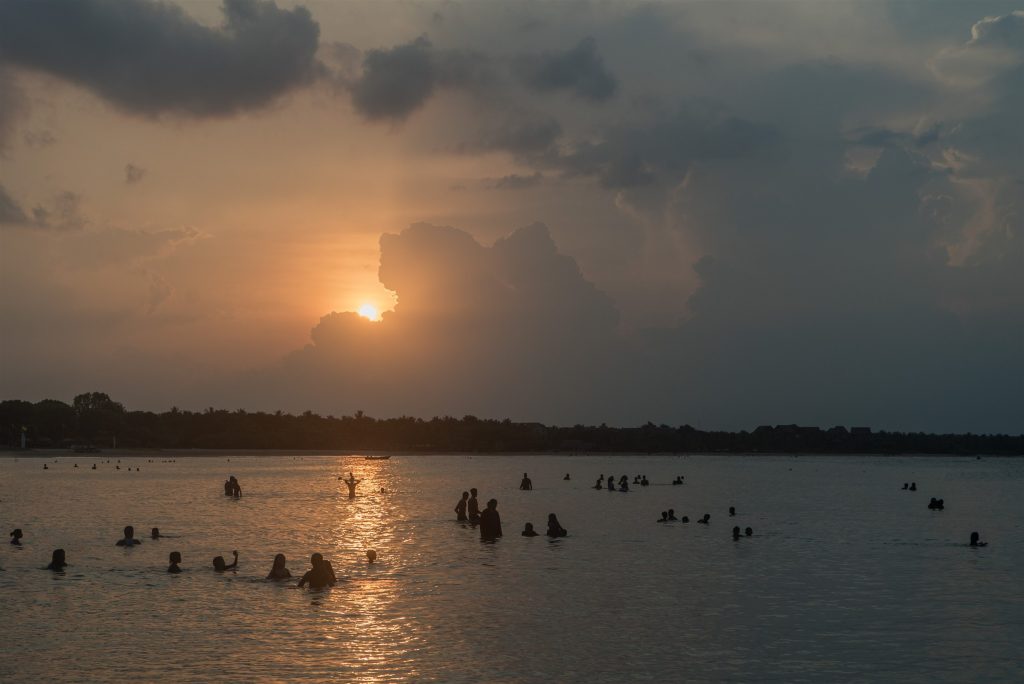
Pasikuda is a bay about 35 km north-west of Batticaloa, often described as having one of the longest stretches of shallow reef coastline in the world. You can wade a long way out, and currents are weaker than on most of Sri Lanka’s coast. It’s a bay for paddling, not for waves or lively snorkelling.
Since the war ended in 2009, hotels have been built along the bay, so it feels like a resort strip more than a town. Shallow water is still no babysitter: in September 2025 lifeguards rescued a seven-year-old from drowning off the beach. Neighbouring Kalkudah has its own long beach if you want a quieter stretch. The nearest station, Valaichchenai, is a few kilometres away on the Batticaloa line.
Side by side
- Things to do besides the beach: Trincomalee, with the fort, the temple, whale watching and Pigeon Island within reach.
- Snorkelling: Nilaveli, for Pigeon Island.
- Calm, shallow water for children: Pasikuda.
- Quiet: Nilaveli or Kalkudah. Recent visitors disagree about whether Nilaveli or Uppuveli is quieter, so choose by how far you want to be from town.
- Getting there by train: Trincomalee (end of the line), or Valaichchenai for Pasikuda. Both lines reopened to passengers in early 2026 after Cyclone Ditwah.
When to go, and when not to
All three share the same calendar. The middle of the year is the dry season on the east coast, and several travel guides give May to September as the best window for Pasikuda. Most of the rain falls from about October to January, with the inter-monsoon storms and then the north-east monsoon, when the sea turns rough and boat trips stop. Recent visitors at Nilaveli report choppy, murky water from November.
If you can only travel in December or January, the south-west coast is the better bet; our guide to the monsoon months explains the split. For a full route, see our east coast itinerary.
Frequently asked questions (FAQs)
Which is better, Trincomalee or Nilaveli?
Trincomalee and Uppuveli if you want sights and places to eat nearby; Nilaveli for a quieter beach and boats to Pigeon Island from the sand.
Is Pasikuda good for families?
Yes. The bay is shallow and the currents are weaker than on much of the coast, but watch children closely: lifeguards rescued a child there in September 2025.
When is the best time to visit the east coast?
The middle of the year, roughly May to September. Most rain falls from about October to January.
Can I visit Pigeon Island from Trincomalee?
Yes. Boats leave from Nilaveli beach, a tuk-tuk ride north of Trincomalee. You need a park permit on top of the boat fare.
Is there a train to Nilaveli or Pasikuda?
Not directly. Take the train to Trincomalee for Nilaveli, or to Valaichchenai for Pasikuda, then a tuk-tuk.
Header photo: Vishnu / Wikimedia Commons, CC BY-SA 4.0.