
You can fly a drone in Sri Lanka as a visitor, but not on a whim. Every flight needs approval from the Civil Aviation Authority of Sri Lanka (CAASL) before you take off. Many of the places people most want to film also need a separate permission, or don’t allow drones at all. That goes for Sigiriya and the national parks, among others. This guide sets out how the approval works, where you can’t fly and what has happened to people who skipped the paperwork.
Is bringing a drone right for you?
Go if you’re happy to apply well before you travel and name your locations, dates and times in advance. You’ll also need to fly mostly over open countryside or coast that the zone map allows. Planned that way, a drone can work on a Sri Lanka trip.
Think twice if you picture spontaneous shots of the Temple of the Tooth, the ancient cities or a leopard on a jeep track. Those are exactly the places that need extra approval, and the ones where people have faced arrest. Recent visitors (2025–26) report that the application asks for every location with dates and times. They also find the process slow and uncertain, and some gave up and left the drone at home. If you’re travelling light and moving every day, a camera on a gimbal may be the easier choice.
The short version
- Apply to CAASL through its Drone Flight Approval Portal before you fly. The Ministry of Defence says it issues security clearance only for applications CAASL forwards from that portal.
- Check the CAASL drone zone map for every place you want to fly.
- Archaeological sites and wildlife sanctuaries need a separate approval from the authority in charge, as well as CAASL’s.
- Fly no higher than 120 metres (400 ft) above the ground, keep the drone in sight, stay away from crowds and don’t fly after dark.
- Drones over 250 g need third-party insurance.
- Flying without approval is an offence, and police can confiscate the drone.
How a visitor gets approval
CAASL’s drone page separates two situations. Importing a drone to keep in Sri Lanka involves clearances from the Ministry of Defence, CAASL, the telecoms regulator and the Import and Export Control Department. A visiting tourist bringing a drone for temporary use doesn’t follow that import process. Instead, you request flying approval through CAASL’s online portal.
The portal works in three steps. First, check the zone map. Then fill in the application with your own and your drone’s details. Finally, upload the documents and wait for CAASL’s decision. You need to create an account to apply. For a leisure flight, the Ministry of Defence’s instructions for drone operators ask for the completed application and a copy of your passport’s photo page. Your full name must match your passport exactly. You also need the address or GPS coordinates of each place you plan to fly.
Get the approval before you land. The Deputy Minister of Ports and Civil Aviation told The Sunday Morning in January 2026 that you can’t bring a drone through the airport without prior permission. So keep a copy of your approval with the drone.
Allow plenty of time. The Ministry of Defence processes clearances only between 8.30 am and 4.15 pm on weekdays, not on government holidays. It also warns that approvals from other agencies add more time. CAASL’s own paper application form, still offered on its website, says it replies with an online payment link and its decision within 10 working days. There is a fee, paid through that link; CAASL’s drone page doesn’t list the amount.
Read your approval when it arrives. It covers the places, dates and times you applied for. Any conditions attached to it apply on top of the general rules below.
Registration, pilot tests and insurance
The detailed rules are in CAASL’s Implementing Standard SLCAIS 053. CAASL published its second edition on 1 March 2025, and it came into force in stages during 2025. Among other things, it says:
- Registering the drone: most classes of drone must be registered with CAASL. Drones in the lightest class (250 g or less) must be too if they carry a camera or other sensor that captures data. The person flying must carry proof of registration.
- Registering the pilot: anyone flying a drone, other than a toy, must register with CAASL. For ordinary hobby flying that means an online training course and a theory test for a remote pilot certificate. The standard says visitors who aren’t resident in Sri Lanka follow the same rules.
- Insurance: drones over 250 g need third-party liability cover. CAASL’s drone page sets the minimum at Rs 100,000 ($300 · convert) for drones over 250 g and up to 900 g, and Rs 400,000 ($1,202 · convert) for drones over 900 g and up to 4 kg. Recent visitors (2025–26) report that the application asked them for proof of insurance. So check what your own policy covers before you apply.
If you’re unsure which of these applies to your drone, ask CAASL (drone@caa.lk) before you apply.
Is a drone under 250 g exempt?
Don’t assume so. In January 2026, The Morning quoted CAASL’s Director General as saying that toy drones under 250 g would not be regulated. The published standard, though, requires camera drones in the lightest class to be registered. It counts a drone as a toy only if its packaging marks it as suitable for children under 14. A small camera drone sold to adults isn’t a toy under that definition. If you plan to rely on an exemption, ask CAASL first.
Where you can’t fly
Check the zone map first
CAASL’s map shows four kinds of zone: restricted (no flying), altitude (a lower height limit), authorisation (permission needed) and warning (take care). CAASL says zone information can change, so check it again shortly before each flight. CAASL’s Director General has described the map as marking no-fly zones around airports, military installations, Parliament and sensitive religious and cultural sites. The Director General also said CAASL can update it at once during an emergency.
Restricted zones are off limits
The Ministry of Defence says no drone may fly in a restricted area on the map. An ordinary security clearance isn’t valid there. Anyone with a genuine need to fly in one has to ask the ministry for special clearance at least 14 days ahead.
Airports
The standard bans flying within an airport’s zone on the map without approval from that airport’s air traffic control.
Military and government sites
The UK government’s travel advice tells visitors not to fly drones near military bases, government buildings or vehicles used by VIPs.
Ancient sites and temples
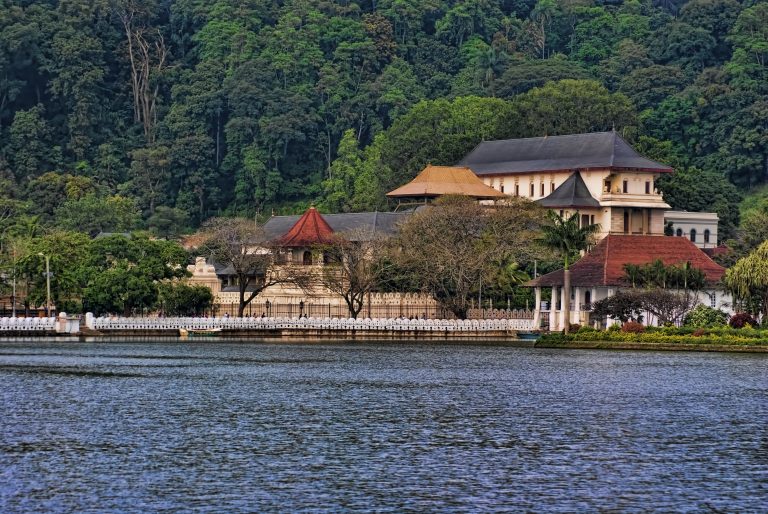
The Ministry of Defence says no drone may be flown over archaeological sites or wildlife sanctuaries without prior approval. You need an approval or no-objection letter from the government authority in charge. The Central Cultural Fund manages nearly 30 of the main archaeological sites, including Sigiriya, Anuradhapura and Polonnaruwa. It says filming with drones isn’t allowed without its prior written approval. The Temple of the Tooth in Kandy sits in a high-security zone. In 2023 an American tourist was arrested for flying a camera drone over it; a court released him and ordered the footage erased. In September 2025 a Chinese national was arrested after his drone flew over the temple. The Air Force brought the drone down with jamming equipment.

National parks and wildlife
The same approval rule covers wildlife sanctuaries. The Department of Wildlife Conservation (DWC) also acts against drones that disturb animals outside the parks. In August 2026 wildlife officers arrested a man whose drone was obstructing wild elephants crossing the Galgamuwa–Kasikota road, in the North Western Wildlife Region. He pleaded guilty at Mahawa Magistrate’s Court. The DWC said it would keep taking unauthorised drone operators and their equipment to court. Its officers also warned that disturbed elephants may chase the people watching them.
For behaviour at temples and in national parks more generally, see our responsible travel guide.
Rules once you’re in the air
These come from SLCAIS 053 and apply to every flight, whatever your approval says:
- Stay within 120 metres (400 ft) of the closest point of the ground, which in the hills isn’t always the spot you took off from.
- Keep the drone within your own line of sight.
- Keep a safe distance from people, and never fly over crowds.
- Don’t fly at night, in gusty wind, rain or thunder, or when visibility is poor.
- Don’t drop anything from the drone or carry cargo, and fly only one drone at a time.
- Don’t fly after drinking alcohol or taking drugs.
- Film only what you set out to film, and respect other people’s privacy.
- If your drone has an accident that injures someone or damages property, report it to the nearest police station at once. Then tell CAASL within 24 hours.
The Sri Lanka Air Force’s spokesman told The Sunday Morning in January 2026 that operators must also notify the Air Force at least two hours before a flight. Look for that condition in your approval and follow it.
What happens if you don’t
Breaking the standard is an offence under the Civil Aviation Act No. 14 of 2010. CAASL’s Director General said in January 2026 that police are usually the first to respond and can confiscate drones. CAASL may fine operators for minor breaches, and serious cases, such as entering restricted airspace or filming sensitive places, can go to court. The Temple of the Tooth cases show that being a visitor makes no difference.
The government said in January 2026 that it was reviewing the law on drones. So read CAASL’s drone page again shortly before you travel. For other entry questions, see our guide to arriving in Sri Lanka.
Frequently asked questions (FAQs)
Do I need a permit to fly a drone in Sri Lanka as a tourist?
Yes. Apply for flying approval through the Civil Aviation Authority of Sri Lanka’s online portal before you fly. Archaeological sites and wildlife sanctuaries also need approval from the authority in charge.
Can I fly a drone at Sigiriya?
Not without the Central Cultural Fund’s prior written approval, which it requires for drone filming at the sites it manages, as well as your CAASL approval.
Can I fly a drone in Sri Lankan national parks?
Not without prior approval from the authority in charge. Wildlife officers also act outside the parks: in August 2026 they arrested a drone operator for obstructing elephants crossing a road near Kasikota.
Are drones under 250 g exempt in Sri Lanka?
Don’t assume so. CAASL’s published standard requires camera drones in the lightest class to be registered. It counts as toys only drones sold as suitable for children under 14. Ask CAASL before relying on an exemption.
How high can you fly a drone in Sri Lanka?
No higher than 120 metres (400 ft) above the ground, with the drone in sight at all times, and not over crowds or after dark.
How long does drone approval take in Sri Lanka?
CAASL’s paper form says it replies within 10 working days, and the Ministry of Defence processes security clearances only on weekdays. Apply well before you travel.
Header photo: Rovin Shanila / Wikimedia Commons, CC BY-SA 4.0.
