
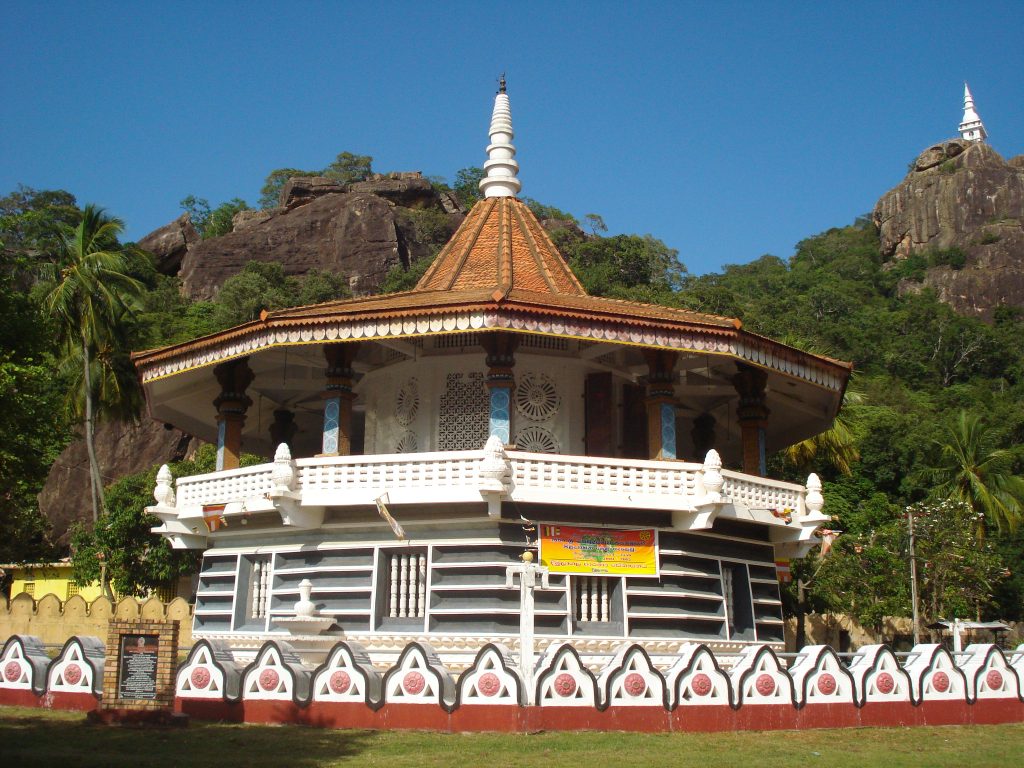

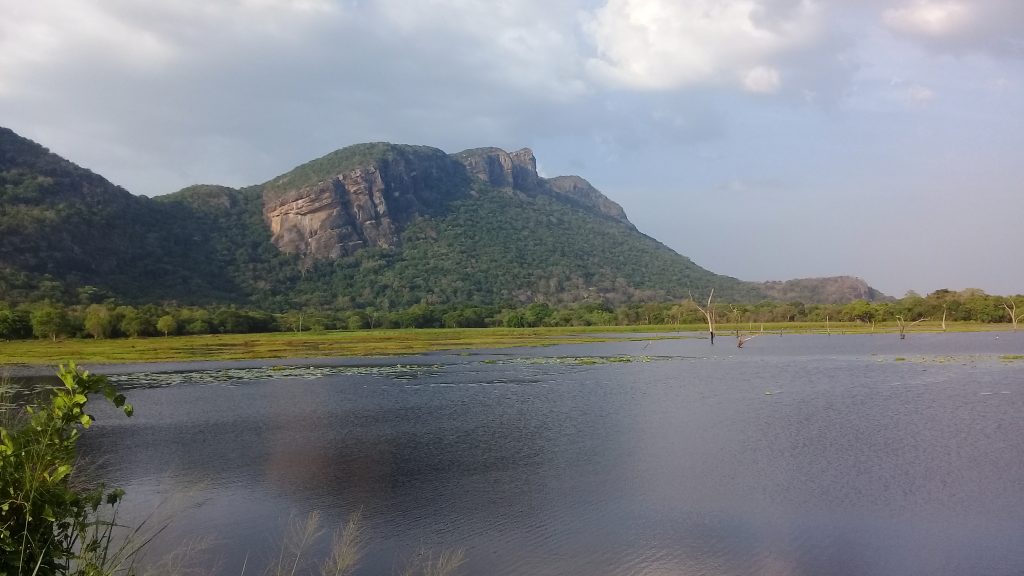
Dimbulagala Monastery is a forest hermitage built into and around a rock massif, 16 kilometres south-east of Polonnaruwa. The British called the rock Gunner’s Quoin. To Sri Lankans it has long been a monastic retreat, with caves cut into the rock and a working temple, the Dimbulagala Raja Maha Vihara, at its foot.
Is it worth visiting?
Go if you want a quieter alternative to the Ancient City of Polonnaruwa. This is a living forest hermitage rather than a roped-off ruin, with caves, old frescoes and a long climb to a view over the plains.
Think twice if you’re short on time or energy. The main sights are spread across the hillside and reached on foot, in the heat, with no shade on parts of the climb.
A monastery older than Polonnaruwa’s palaces
Tradition holds that Pandukabhaya, an early king of Anuradhapura, lived here for a short time in the 4th century BC. In its early centuries the site went by older names, Dhumarakkhapabbata or Udumbarapabbata.
Its importance peaked under the Polonnaruwa kings. A 12th-century inscription of Queen Sundaramahadevi records 500 monks living here. King Parakramabahu I also relied on the monk Dimbulagala Maha Kassapa Thera to help purify and renew the Buddhist order.
After the Polonnaruwa kingdom, the monastery was abandoned and the jungle took over much of the site. It only returned to active use in the 1950s. The monk Kithalagama Sri Seelalankara Thera led the revival and remained chief incumbent until his death in 1995.
What’s there to see
- The Raja Maha Vihara: the restored temple at the base of the rock. It’s the obvious starting point and still the working heart of Dimbulagala Monastery.
- Caves with Brahmi inscriptions: cut into the rock across the Dimbulagala range, where monks lived and meditated.
- Namal Pokuna: a complex about 2 kilometres before the main temple. A stone wall encloses the ruins of a chaitiya, a bodhigara and other monastery buildings, plus an old bathing pool.
- Pulligoda frescoes: a fragment of old temple painting showing five seated figures on lotus cushions, in a shallow cave. You reach it by a short climb off the unsealed road past the Dimbulagala tank. Scholars disagree on its age, with estimates from around the 4th to the 12th century.
- Akasa Chaithiya: a small stupa on the summit. From Namal Pokuna, a further climb takes you past more hermitage caves to reach it.
Planning a visit
No official information is published on opening hours, fees or facilities at Dimbulagala. There’s no visitor centre either, so bring your own water and allow time for the climb. The approach from the Polonnaruwa side runs on unsealed roads past a couple of village tanks.
Reaching the upper sites, Namal Pokuna and the summit, means walking uphill over rock in full sun. So early morning is the easiest time to go. Treat it as a half-day trip, combined with other sights around Polonnaruwa, rather than a quick stop.
Frequently asked questions (FAQs)
How far is Dimbulagala from Polonnaruwa?
About 16 kilometres south-east of the ancient city.
Is Dimbulagala the same as the Ancient City of Polonnaruwa?
No. Dimbulagala Monastery is a separate forest hermitage outside the old royal city. Monks used the rock as a retreat long before Polonnaruwa became the capital.
Why was Dimbulagala called Gunner’s Quoin?
That was the British colonial name for the rock. “Dimbulagala” and the earlier names Dhumarakkhapabbata and Udumbarapabbata are the Sri Lankan names for the same place.
What are the Pulligoda frescoes?
Fragments of old temple painting in a cave near Dimbulagala, showing five seated figures. Their age is disputed, with scholars dating them anywhere from the 4th to the 12th century.
Do you need a guide to visit Dimbulagala?
There’s no official requirement. However, the paths to Namal Pokuna and the summit cross rock and forest without signs. So go with someone who knows the site, or at least tell someone your plan.
Header photo: Astronomyinertia / Wikimedia Commons, CC BY-SA 3.0.

