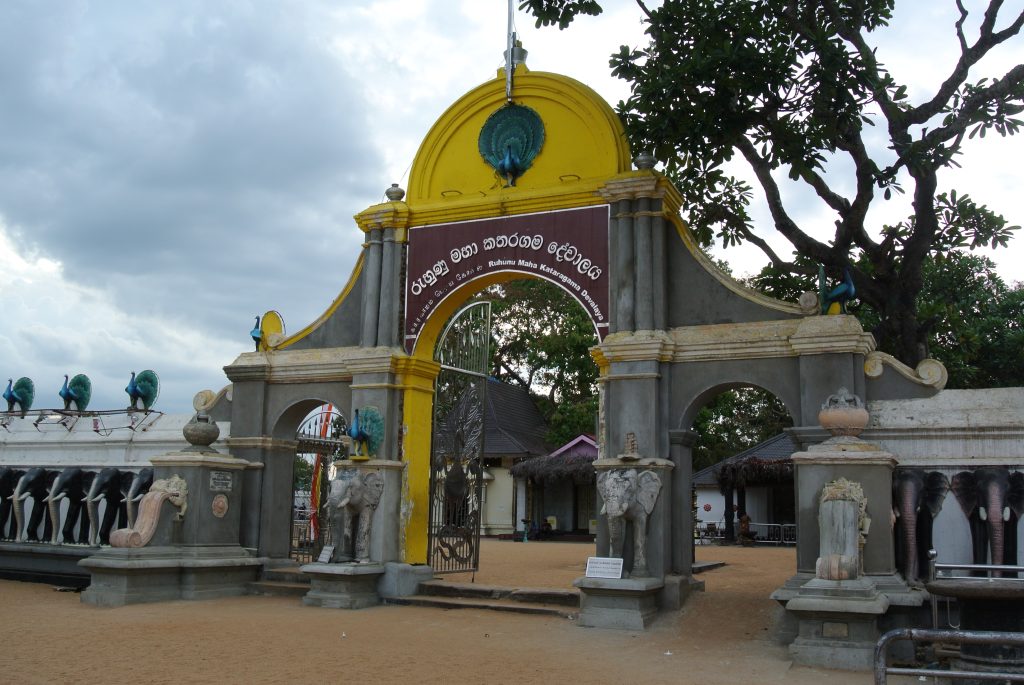
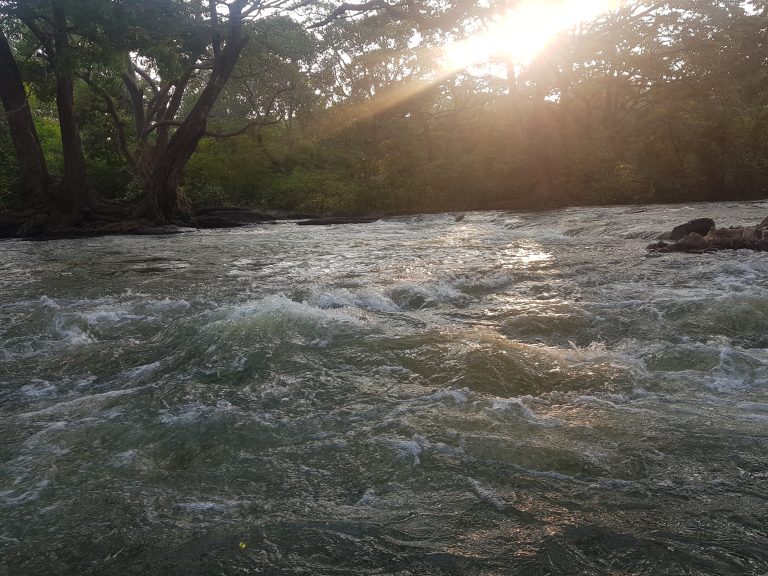
Kataragama is a pilgrimage town on the Menik Ganga in Monaragala District, in Sri Lanka’s Uva Province, a short drive inland from Tissamaharama. Buddhists, Hindus, Muslims and the indigenous Vedda people all worship here, at the Ruhunu Maha Kataragama Devalaya, the shrines around it and the great white stupa of Kiri Vehera.
Is Kataragama for you?
Go if you want to see one of the island’s great living pilgrimage sites at work: the evening puja, devotees in white carrying trays of fruit and flowers, and, in the festival season, nightly processions. It pairs naturally with a safari in Yala.
Think twice if you are after sights rather than atmosphere. The shrines are modest buildings, and Kataragama is a working sacred town, not a museum. During the Esala festival it is packed, and in 2024 alcohol sales in the area were stopped while it ran.
The sacred area
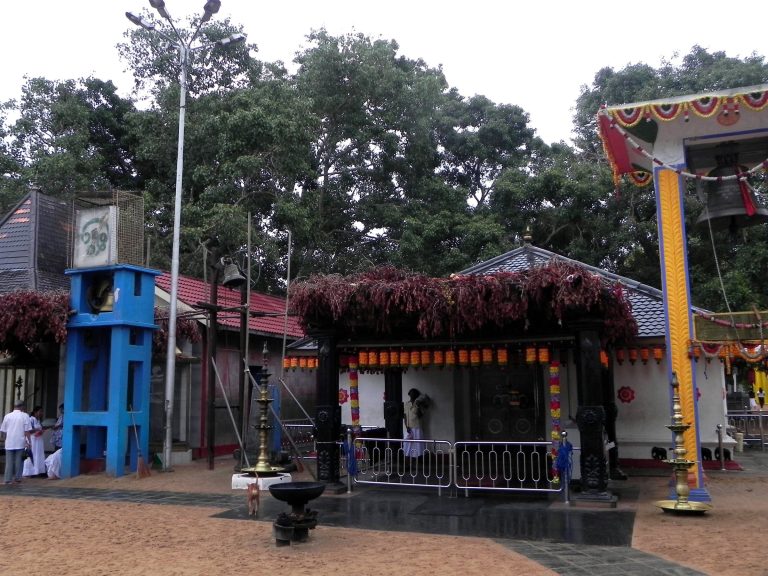
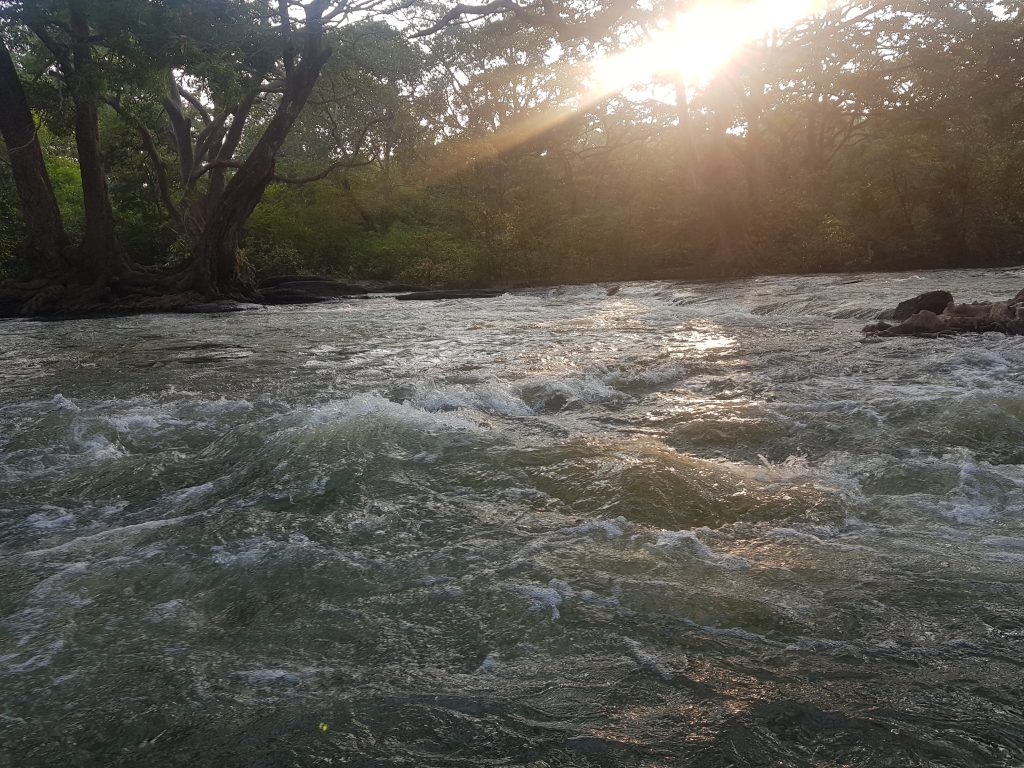
The heart of Kataragama is the sacred area on the bank of the Menik Ganga. Pilgrims traditionally bathe in the river before they go to the shrine, then walk up through the gateway of the Ruhunu Maha Kataragama Devalaya.
- The Maha Devalaya: the main shrine, dedicated to the god Kataragama. Hindus worship him as Skanda or Murugan, the god of war; Sinhalese Buddhists honour him as one of their four guardian deities.
- Valli Amma Devalaya: the shrine of Valli, the god’s consort, who in legend was raised by a Vedda chieftain. The nightly processions of the festival travel from the main shrine to here.
- The mosque and shrine: in an enclosure beside the Valli Amma Devalaya, visited by thousands of Muslim pilgrims every year.
- Shrines to other deities, including Ganesh and Teyvanai, the god’s first consort.
The devalaya publishes its weekday puja times on its official website: Monday to Friday at 4.30 am, 10.30 am and 6.30 pm, and on Saturday at 9 am and 6.30 pm. Recent visitors (2025–26) find the evening puja the most atmospheric, and report long queues at the inner gate, so arrive half an hour early. They also report vendors near the entrance selling trays of fruit and flowers to offer.
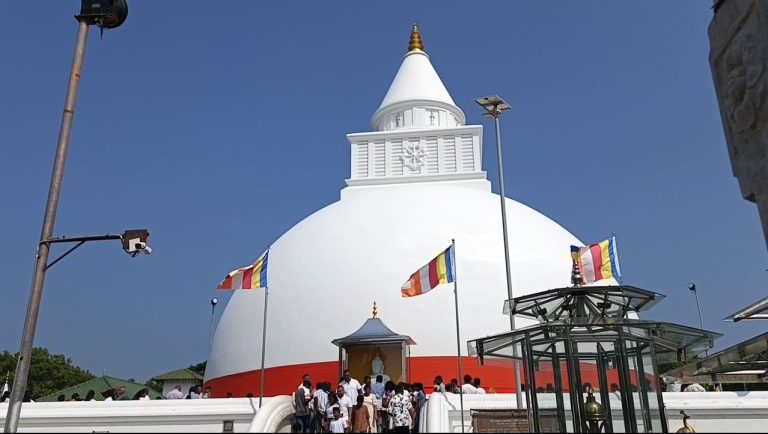
Kiri Vehera
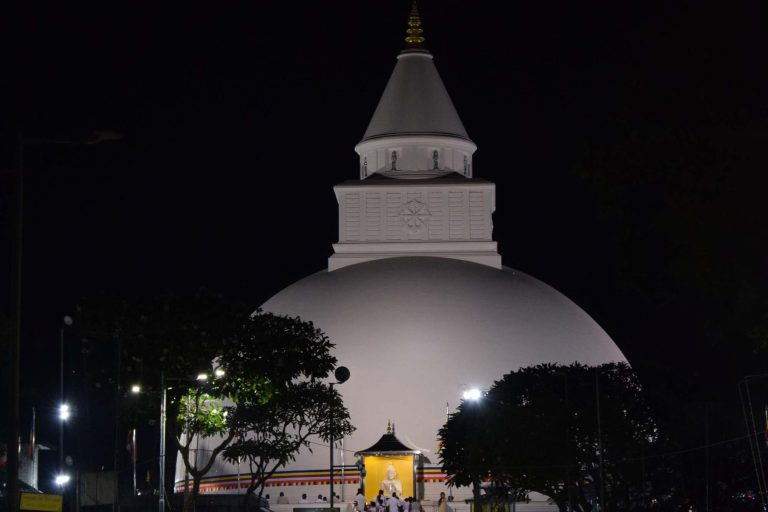
A broad avenue of trees leads about 800 m north from the Maha Devalaya to Kiri Vehera, the “milk-white” stupa. It is one of the Solosmasthana, the 16 most sacred Buddhist places of pilgrimage in Sri Lanka. Sources disagree on who built it and when, but all of them date it to the centuries BC. The walk there is pleasant in the cool of the morning or after the evening puja, when the stupa is lit up.

The Esala festival
Kataragama’s great festival is held each year in the month of Esala. For 15 nights a procession, the perahera, leaves the main shrine for the Valli Amma Devalaya; on the last night the Maha Perahera goes on to Kiri Vehera. The festival also includes fire-walking, where devotees cross a pit of red-hot coals, and ends with the water-cutting ceremony on the bank of the Menik Ganga, where the crowd bathes in the river.
The dates follow the moon, so they move from year to year. In 2025 the festival ran from 26 June to 11 July; in 2026 from 15 to 30 July. Check the dates on the devalaya’s website or in the Sri Lankan news before you plan a trip around it.
Many Tamil pilgrims arrive on foot. The Pada Yatra, a walking pilgrimage that starts in Jaffna, follows the east coast through Kumana and Yala to reach Kataragama in time for the festival.
Expect very large crowds and heavy traffic throughout the festival. In 2024 the Excise Department closed bars and liquor shops in the Kataragama area for 16 days while it ran, and hotels could not serve alcohol.
Dress and conduct
- Cover your shoulders and legs, and take off your shoes and hat before you enter. The UK government’s travel advice gives these rules for Buddhist temples such as Kiri Vehera; follow them at the devalaya too.
- Many pilgrims wear white. You don’t have to, but light, modest clothes fit in best.
- Treat Buddha images with respect: don’t pose for photos with your back to a statue.
- Ask before you photograph people at prayer, and follow any signs or instructions about cameras at the shrines.
- You walk barefoot inside, and recent visitors suggest socks and a small bag to carry your shoes.
Around Kataragama
- Sella Kataragama: a shrine to Ganesh on the Menik Ganga, where, in legend, Ganesh helped Skanda win Valli. There are several other shrines here.
- Vedahiti Kanda: the hill seen to the right as you approach the Maha Devalaya, believed to be the god’s abode and the site of the original shrine. The devalaya’s own guide gives the climb to the summit as about two hours.
- Yala National Park: Kataragama is close to the park, and many visitors combine a safari with the evening puja. See the travel update at the top of this page for the park’s current status.
Getting there
Kataragama is reached by road; there is no railway. Sri Lanka Tourism puts it 19 km inland from Tissamaharama, the usual base for Yala, so you can visit for the evening puja and sleep in either town. From the hill country, most travellers come down the A23 from Ella to Wellawaya, the same way as for Yala. Near Wellawaya, the rock-cut figures of Buduruwagala are a short detour on the road north.
Frequently asked questions (FAQs)
When is the Kataragama festival?
In the month of Esala, with dates set by the moon. In 2025 it ran from 26 June to 11 July and in 2026 from 15 to 30 July.
What are the puja times at Kataragama?
According to the devalaya’s website, Monday to Friday at 4.30 am, 10.30 am and 6.30 pm, and Saturday at 9 am and 6.30 pm.
What should I wear to Kataragama temple?
Clothes that cover your shoulders and legs; you will take off your shoes and hat before entering. Many pilgrims wear white.
Who worships at Kataragama?
Buddhists, Hindus, Muslims and the Vedda people. Hindus worship the god as Skanda or Murugan, and Buddhists honour him as a guardian deity of the island.
How far is Kataragama from Tissamaharama?
Sri Lanka Tourism gives the distance as 19 km, so it is easy to visit from Tissamaharama and combine with a Yala safari.
Header photo: Adbar / Wikimedia Commons, CC BY-SA 3.0.