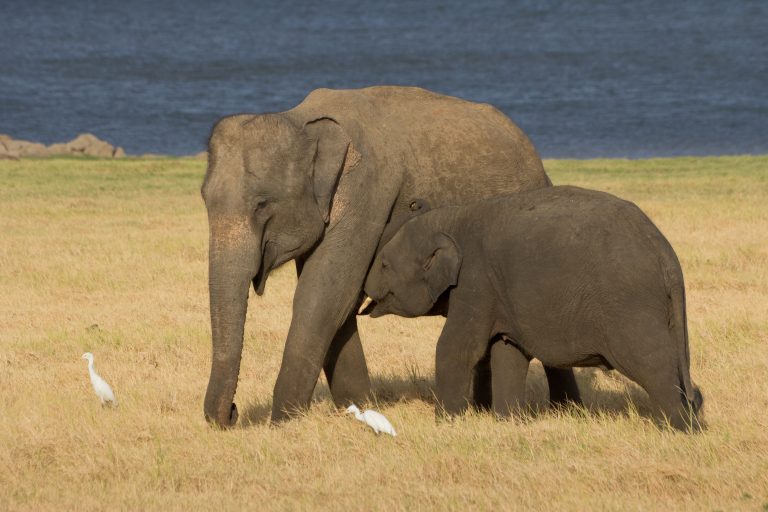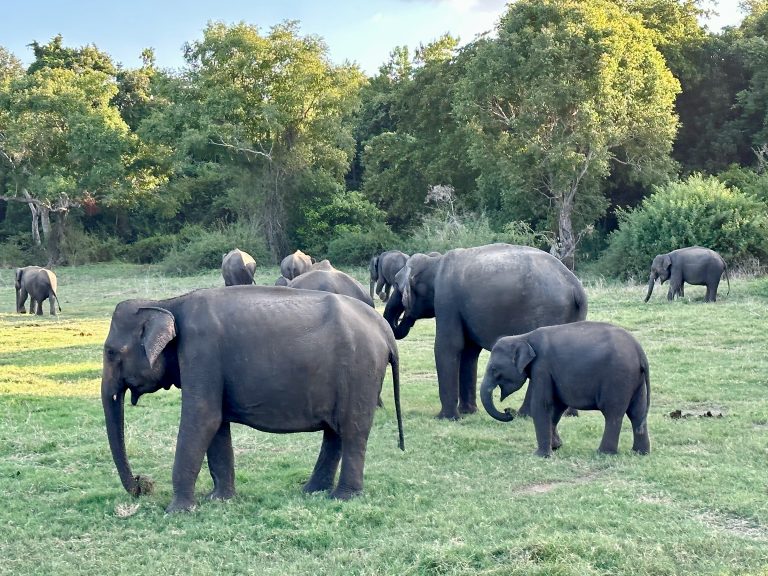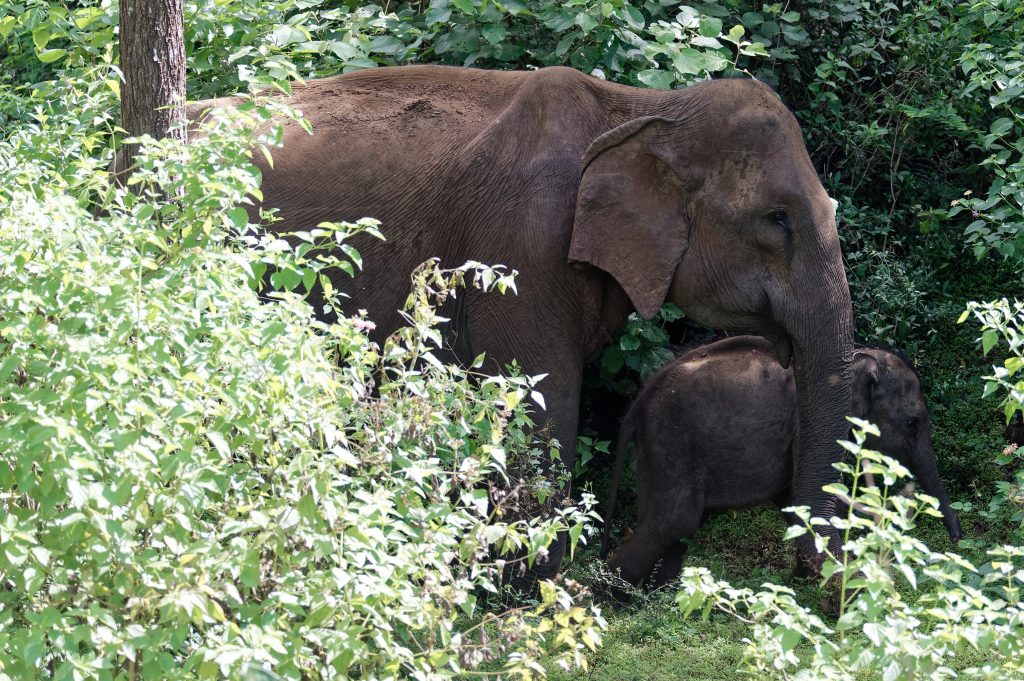

Hurulu Eco Park is a corner of the Hurulu Forest Reserve, just outside Habarana on the road to Trincomalee. The Forest Department opened it for jeep safaris, and people come for the wild elephants. Safari drivers often suggest it when the herds have left Minneriya and Kaudulla, or when those parks are flooded after rain.
Is it worth visiting?
Go if you are staying around Habarana or Sigiriya and want a half-day elephant safari, especially in the wetter months, when Minneriya’s tank is full and its herds have spread into the surrounding forests.
Think twice if you want the wide-open views of a tank bed, because Hurulu is more wooded than Minneriya and recent visitors (2025–26) report elephants scattered in smaller groups.
A forest reserve, not a national park
The Hurulu Forest Reserve is dry evergreen forest, and UNESCO named it a biosphere reserve in 1977. It belongs to the Forest Department, not the Department of Wildlife Conservation, which runs Minneriya and Kaudulla. The department opened one section as an eco park and kept the rest closed to visitors. As a result, you pay a Forest Department ticket at the gate instead of buying a wildlife permit.
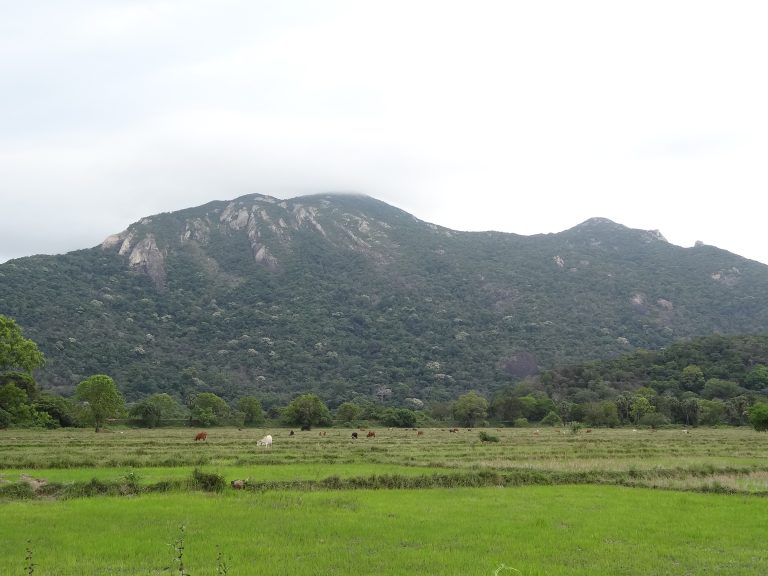
The park takes its name from Hurulu Wewa, the reservoir that some of its streams run into. Jeeps follow red dirt tracks through forest, scrub, patches of old teak plantation and open glades. Elephants are the main sight. However, the wider reserve also shelters leopards, Indian star tortoises, Sri Lanka junglefowl and the tiny rusty-spotted cat.

When to go: following the herds
The elephants here move between several protected forests as the seasons change. In 2021, Dr Sumith Pilapitiya, a former Director-General of Wildlife Conservation, described the usual pattern to the Sunday Times. The herds gather at Minneriya from about April to mid-October, while the tank is low and fresh grass grows on its bed. They then spend mid-October to early January at Kaudulla. Around January they reach Hurulu, and the cycle starts again.
Nature does not keep a timetable, though. In the same report, he said that dry-season water releases into Minneriya had been flooding the grass since 2018. In 2021, the herds stayed away. So ask a few safari drivers in Habarana the day before, because they know where the elephants have been feeding that week. Recent visitors report that drivers switch to Hurulu when Minneriya is flooded or quiet.
Safari practicalities
- Jeeps: you visit in a hired jeep with a driver. Hotels in Habarana, Sigiriya and Dambulla arrange them, and recent visitors also report jeeps for hire at the entrance.
- Timing: recent visitors (2025–26) report two sessions of about three hours, early morning and afternoon. Mornings tend to be quieter.
- Tickets: you pay the Forest Department’s entrance fee at the gate, plus a vehicle charge. No official fee list is published online. Recent visitors report about LKR 2,060 ($6.19 · convert) per foreign adult in 2025, on top of jeep hire. Carry your passport or a photo of it.
- The viewpoint: most safaris stop at a rocky hill with a shelter on top. It is a chance to stretch your legs and look out over the forest.
- After rain: the tracks turn muddy, so wear clothes you don’t mind getting dirty.
Staying safe around elephants
Hurulu is usually less crowded than the big national parks. Even so, recent visitors report that jeeps still bunch up around a large herd. Back in 2010, the Forest Department’s Conservator of Forests told the Sunday Times that some jeeps drove too close to elephants. The paper noted that this can count as obstructing wild animals under the Fauna and Flora Protection Ordinance. In November 2021, at least two people died when a safari truck overturned in the park while reversing away from a charging elephant.
So if your driver pushes in close or blocks an elephant’s path, ask them to back off. A good sighting is one where the herd carries on feeding and ignores you. Never feed elephants either. It teaches them to approach vehicles, and the Department of Wildlife Conservation has started legal action against people who feed them from cars.
Getting there
The entrance is on the A6, the Habarana–Trincomalee road. Coming from Habarana, cross the railway line; the park sign is on the left soon after, between the 116 and 117 km posts. It is a short tuk-tuk ride from Habarana junction, although most people arrive in their safari jeep.
Our Sri Lanka wildlife safari itinerary fits the elephant parks into a longer trip. If you are still deciding how to see elephants, Pinnawala or wild elephants? weighs a safari like this against the orphanage.
Frequently asked questions (FAQs)
Who runs Hurulu Eco Park?
The Forest Department. Hurulu is part of a forest reserve, not a national park, so you pay a Forest Department ticket at the gate.
Hurulu or Minneriya: which is better for elephants?
It depends on where the herds are. Minneriya is best from about April to mid-October, and the herds usually reach Hurulu around January. Ask drivers in Habarana where the elephants have been that week.
Where is the entrance to Hurulu Eco Park?
On the A6 Habarana–Trincomalee road, on the left just after the Habarana railway crossing, between the 116 and 117 km posts.
How long is a Hurulu safari?
Recent visitors report morning and afternoon safaris of about three hours each.
Is Hurulu a UNESCO site?
The Hurulu Forest Reserve has been a UNESCO biosphere reserve since 1977. The eco park is a section of it opened to visitors.
Header photo: Jakub Hałun / Wikimedia Commons, CC BY 4.0.