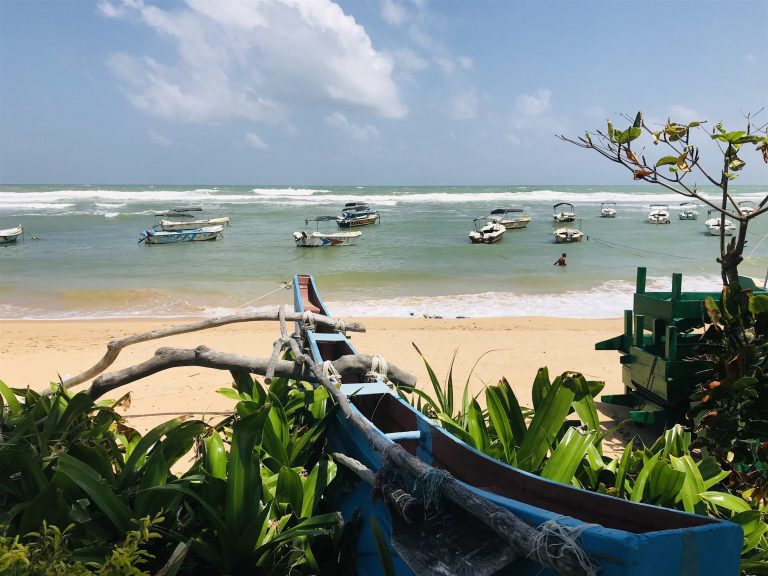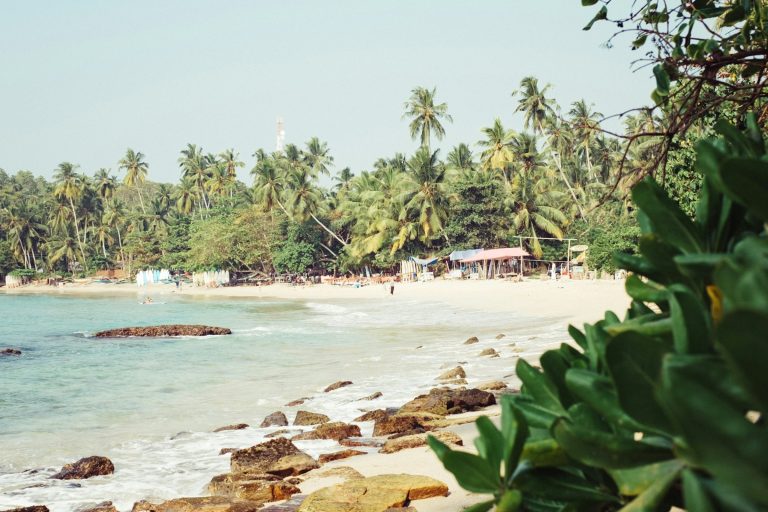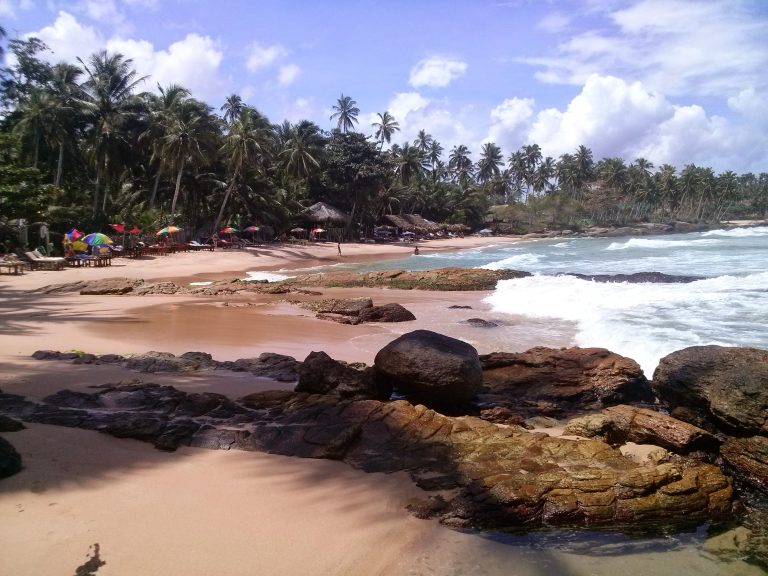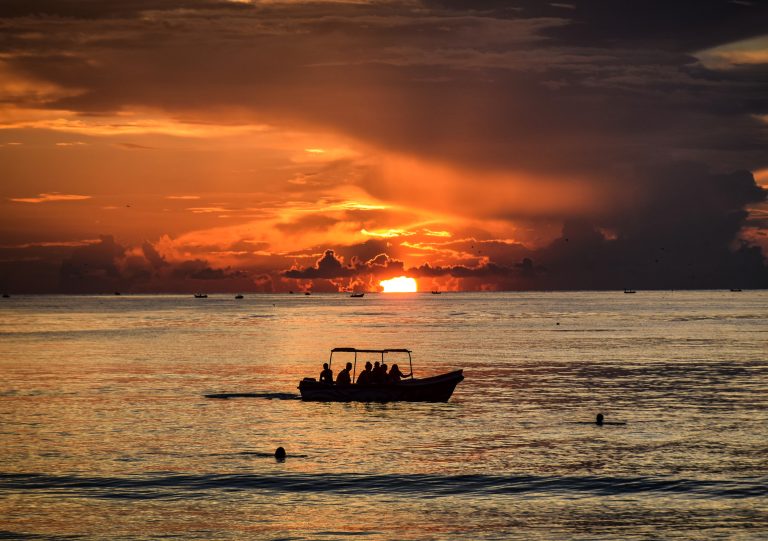
A week is the right length for Sri Lanka’s south coast. The coast road runs from Galle to Tangalle past one bay after another. In a week you can see the old fort town properly, and learn to surf or go whale watching. You can watch a turtle lay her eggs at night and still have whole days with nothing to do but swim. This south coast itinerary moves base twice, from Galle to the Mirissa–Weligama stretch and then to Tangalle. So you never spend long on the road.
It’s built for the south coast’s season, roughly November to April. Then, Sri Lanka Tourism says, the sea on the south-west coast is calm and the weather sunny.
Is this week right for you?
Go if you want a relaxed week by the sea with a bit of history, wildlife and water sports mixed in. It works as a whole holiday or as the end of a longer trip.
Think twice if you’re travelling between May and September. The south-west monsoon brings rain and rough seas to this coast. That’s when the east coast has its season instead, and our east coast itinerary covers it. And if lazy swimming is the point, read the safety notes. Several of these beaches have strong currents even in the good months.
The week at a glance
- Days 1–2: Galle Fort and Unawatuna (2 nights)
- Days 3–5: Mirissa or Weligama (3 nights), with Koggala on the way
- Days 6–7: Tangalle (2 nights), then home or onwards
Getting there
From the airport, an air-conditioned bus runs to the Makumbura Multimodal Centre in about 50 minutes. It’s the interchange for buses on the Southern Expressway, so change there for Galle. The airport’s official taxi counter has fixed fares to the south coast. Our Colombo airport to the south coast guide lists them. Starting in Colombo? The coastal railway from Colombo Fort runs beside the sea for much of the way to Galle.
Days 1 and 2: Galle Fort and Unawatuna
Stay inside Galle Fort, the walled old town that UNESCO lists, or at Unawatuna, about 5 km away. Recent visitors note that the fort quietens down once the day-trip coaches leave in the afternoon. That’s the best reason to sleep inside the walls.
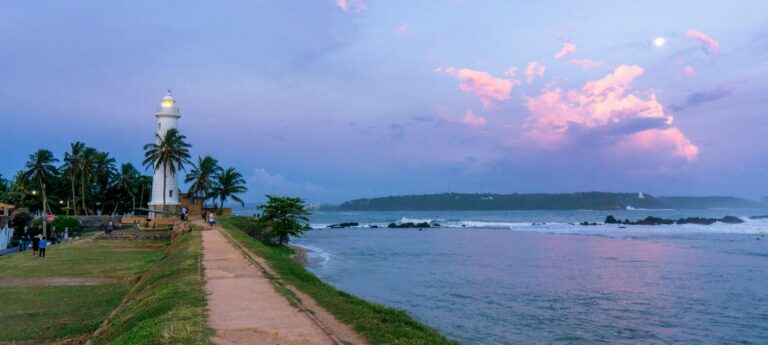
Walk the ramparts early or late. There’s almost no shade, and recent visitors describe midday on the walls as hard going. A loop takes around 45 minutes, by visitors’ accounts, though the streets inside will pull you off the route. Stop at the Black Fort, the oldest part of the fortifications, and the lighthouse on Point Utrecht Bastion. Be at Flag Rock for the sunset. Much of the outer edge has no railing, so stay back, especially with children. In the heat of the day, head for the bastion galleries, the National Maritime Museum and the shaded streets. Our Galle guide has hours and prices.
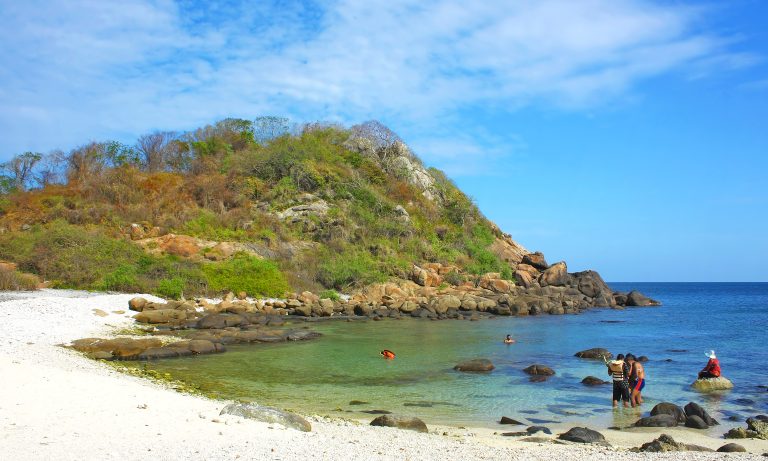
Spend Day 2 on the beach. Unawatuna Beach is a sheltered bay. Over the Rumassala headland, past the white Peace Pagoda, Jungle Beach is reached on foot or by boat. Ask lifeguards or locals about the sea before you swim.
Day 3: Koggala, then east
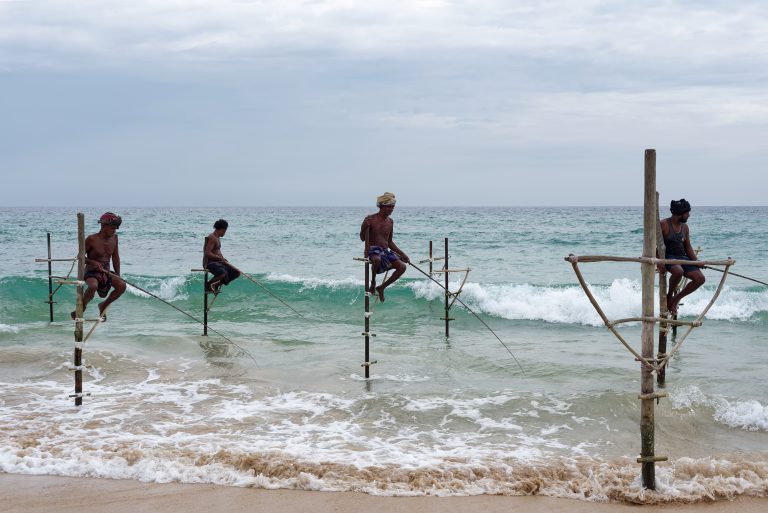
Leave early along the A2. At first light, from about 5 am, the stilt fishermen who still work the poles go out for a few hours. Look between Koggala and Ahangama. Later in the day, men pose on the stilts for paid photos, so agree any price first.
Then take a boat trip on Koggala Lake, a lagoon of mangrove islands; agree the route and price before you set off. Visit the Martin Wickramasinghe Folk Museum too, the writer’s birthplace. Its shady garden is full of fish traps, carts and masks from southern village life. It’s open daily from 9 am to 5 pm. Carry on to Mirissa or Weligama for three nights; Mirissa, Weligama or Hiriketiya helps you choose.

Days 4 and 5: whales, surf and a lazy day
Whale watching (November to April). Morning trips leave Mirissa’s fisheries harbour at around 6.30 am and last three to four hours, depending on the sea. Blue whales, Bryde’s whales, sperm whales and dolphins are among the species you may see. Sri Lanka Tourism warns that many boats crowd round the same animals and sightings are often brief. Choose an operator that briefs you on the rules, keeps its distance and doesn’t offer swimming with whales. Our whale watching from Mirissa guide explains how.
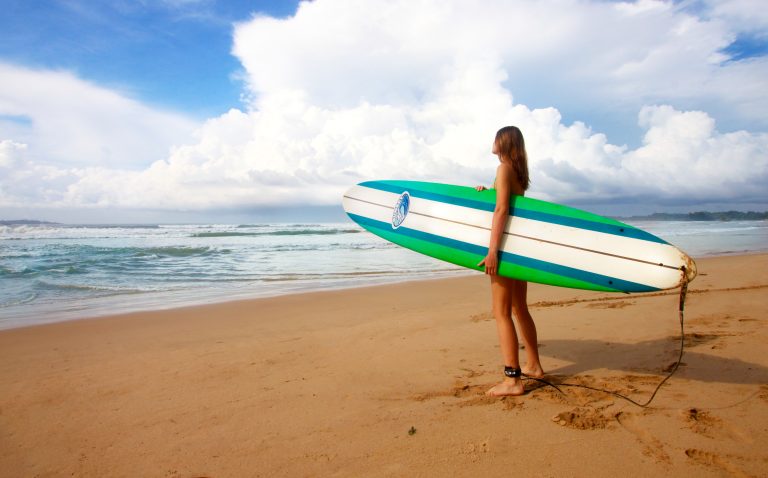
A surf lesson. Weligama’s main bay is a sandy beach break with small, slow waves, the usual place on this coast to learn. Agree the price, the length of the lesson and the number of students per instructor first. See learning to surf in Weligama.
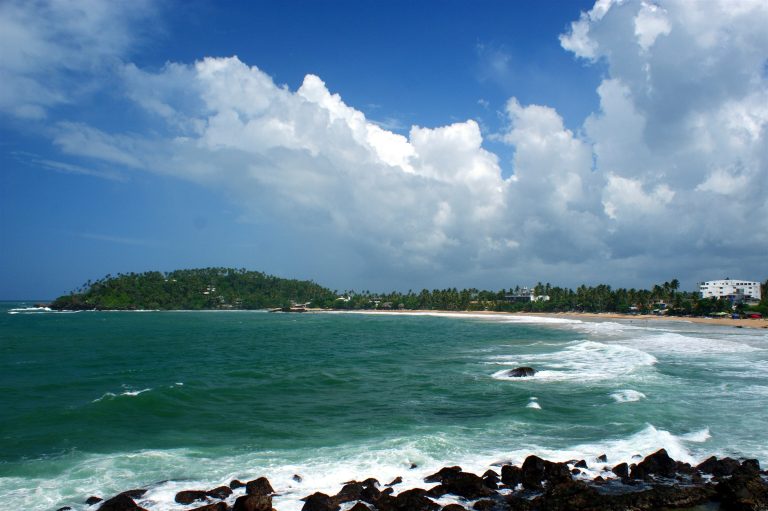
The rest. Mirissa Beach, Parrot Rock at low tide, and Coconut Tree Hill early, before it fills up from about 9 am. Keep one day for doing nothing at all.
Day 6: Tangalle, Mulkirigala and the turtles
Move east along the A2. On the way, stop at Dondra Head Lighthouse, the white tower at the southernmost point of the island. If the sea is rough, add the Hummanaya blowhole at Kudawella, past Dikwella. Settle into Tangalle, a fishing town with a string of quieter bays.
In the late afternoon, climb the terraces of Mulkirigala, a cave temple on a 205-metre rock inland. It has wall paintings and a large reclining Buddha. It’s a working temple: cover your legs and shoulders and take off your shoes at the shrines.
In the evening, the Rekawa turtle watch, east of Tangalle, begins at the visitor centre at 8.30 pm. It runs every night of the year, with no booking needed. Expect to wait, often one to two hours, before the guides lead you down to a nesting turtle. In its low season, October to January, one or two turtles a night is more usual. Some nights none come.
Day 7: home or onwards
From Tangalle, it’s back to Colombo or the airport along the coast road and the Southern Expressway. Or carry on. The road east leads past Hambantota to Tissamaharama for Yala, or north up to Ella and the hills. See Ella to the south coast, which covers the same road in reverse.
Swimming safely
The south coast is beautiful and the sea demands respect. People have drowned at Unawatuna, Mirissa, Weligama and Tangalle, some of them in the calm season. Swim where there are lifeguards, ask about conditions each day, never swim alone or at night, and heed red flags. Our swimming safety guide explains rip currents and what to do if one takes you.
Getting around
The coastal railway has stations at Unawatuna, Koggala, Weligama and Mirissa, and ends at Beliatta, inland from Tangalle. Buses run along the A2 between the towns, and tuk-tuks fill the gaps. Agree the fare first, or use a ride-hailing app where it works. A car with a driver makes Days 3 and 6 easier, with their stops along the way.
Frequently asked questions (FAQs)
Is a week enough for the south coast?
Yes. A week lets you see Galle Fort, go whale watching or learn to surf, and visit Mulkirigala and the Rekawa turtle watch. You still get lazy beach days.
When is the best time to visit the south coast?
About November to April, when Sri Lanka Tourism says the sea on the south-west coast is calm and the weather sunny. From May to September the south-west monsoon brings rain and rough seas.
Where should I stay on the south coast?
Split the week. Stay in Galle Fort or Unawatuna for history, Mirissa or Weligama for whales and surf, and Tangalle for quiet bays and the turtles.
Can you see turtles on the south coast?
Yes. The Rekawa turtle watch, east of Tangalle, runs every night of the year from 8.30 pm. The people who guard the nests guide it. Sightings aren’t guaranteed, especially from October to January.
Can I do the south coast by train?
Partly. The coastal railway serves Galle, Unawatuna, Koggala, Weligama and Mirissa, and ends at Beliatta, inland from Tangalle. Buses and tuk-tuks cover the rest.
Header photo: Francisco Anzola / Wikimedia Commons, CC BY 2.0.