
The Sacred City of Anuradhapura is the ruined ancient capital of Sri Lanka, in the North Central Province. It has been a UNESCO World Heritage Site since 1982, one of eight in Sri Lanka. It grew up around the Sri Maha Bodhi, a sacred fig tree, and its huge stupas and monastery ruins are still places of daily worship for Buddhists.
Is it worth visiting?
Go if Sri Lanka’s early history and Buddhism interest you and you want to see working pilgrimage sites side by side with archaeological ruins.
Think twice if you have only a couple of hours or struggle in the heat, because the sites cover a large area. At the temples, you also walk barefoot on sun-baked stone.
A short history
According to UNESCO, the sacred city grew up around a cutting from the Buddha’s fig tree. Sanghamitta, the founder of an order of Buddhist nuns, brought it to the island in the 3rd century BC. Anuradhapura then remained the island’s political and religious capital for many centuries, until it was abandoned after an invasion in 993. Jungle later hid much of it for many years.
What to see
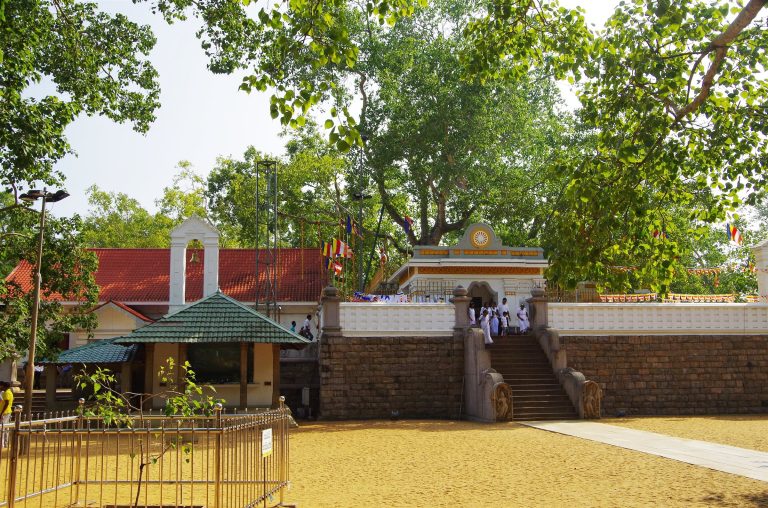
- Sri Maha Bodhi: the sacred fig tree, grown from a branch of the tree at Bodh Gaya in India under which, Buddhists believe, the Buddha attained enlightenment. King Devanampiya Tissa planted it, and pilgrims still make offerings here every day.
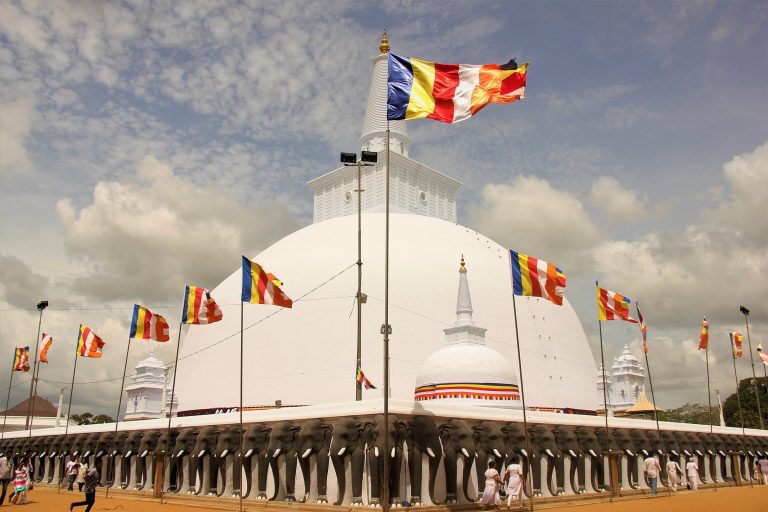
- Ruwanwelisaya: the great white stupa of the Maha Vihara monastery, between the Sri Maha Bodhi and Thuparamaya. King Dutugemunu began it in the 2nd century BC, and later his brother and successor, King Saddhatissa, completed it.
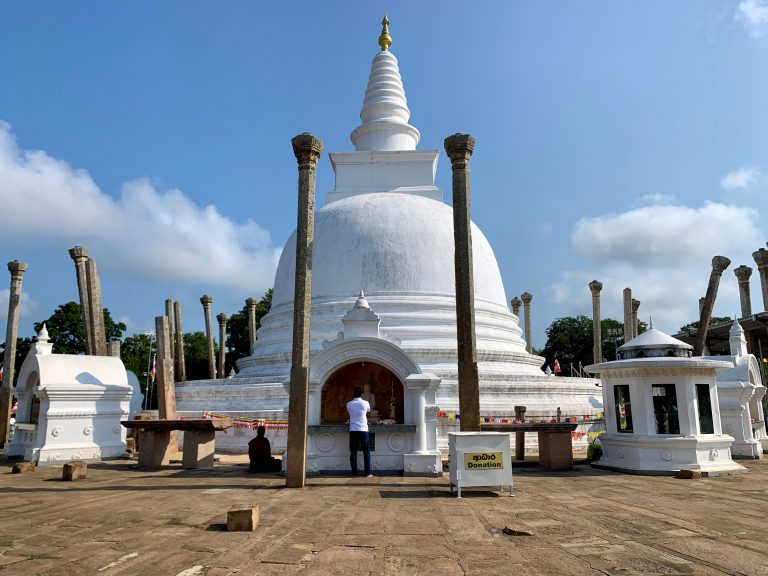
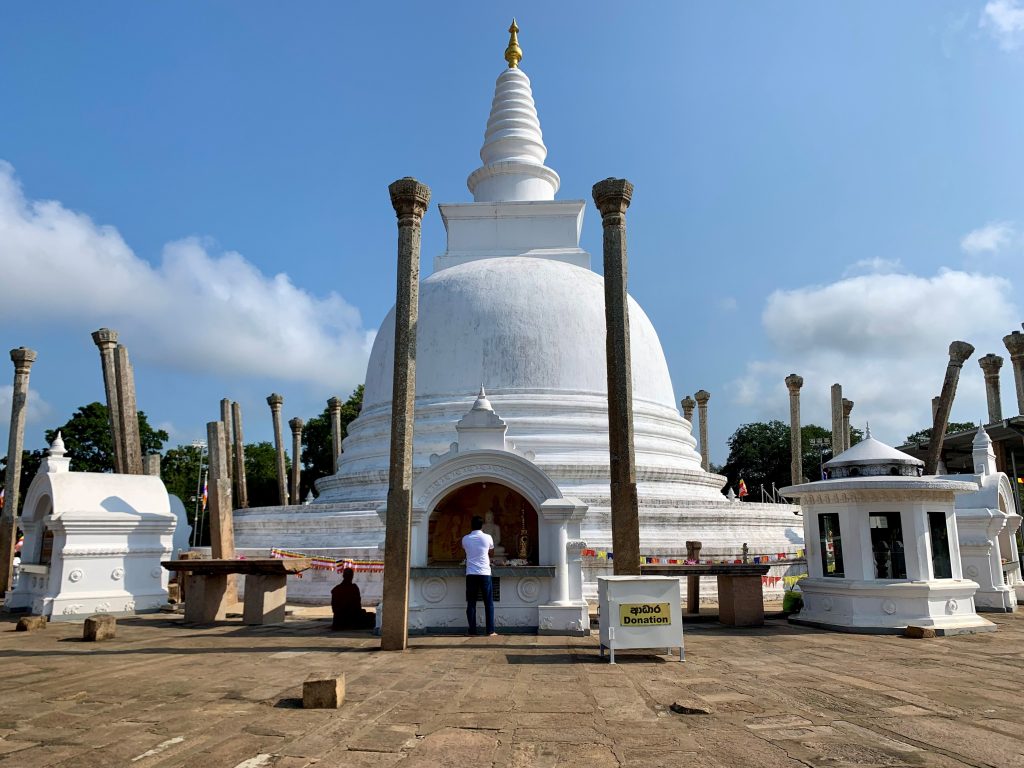
- Thuparamaya: by tradition the first stupa in Sri Lanka, which King Devanampiya Tissa built to hold the Buddha’s right collarbone relic. The stone pillars around it survive from a round shrine that once had a roof.
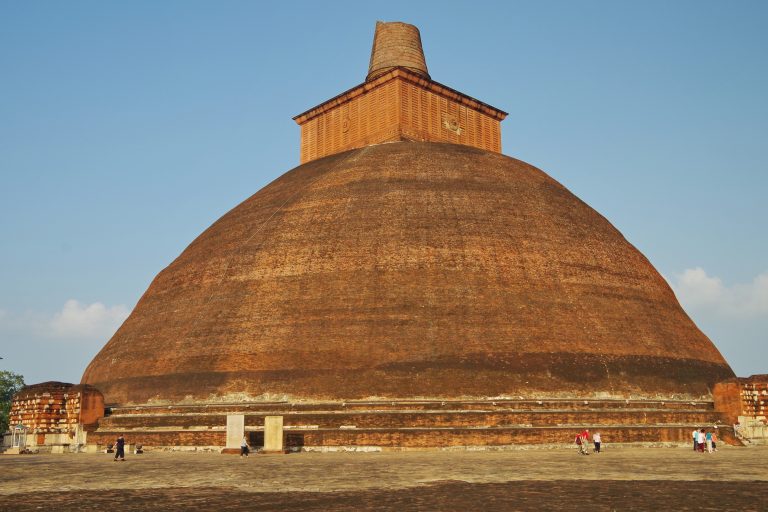
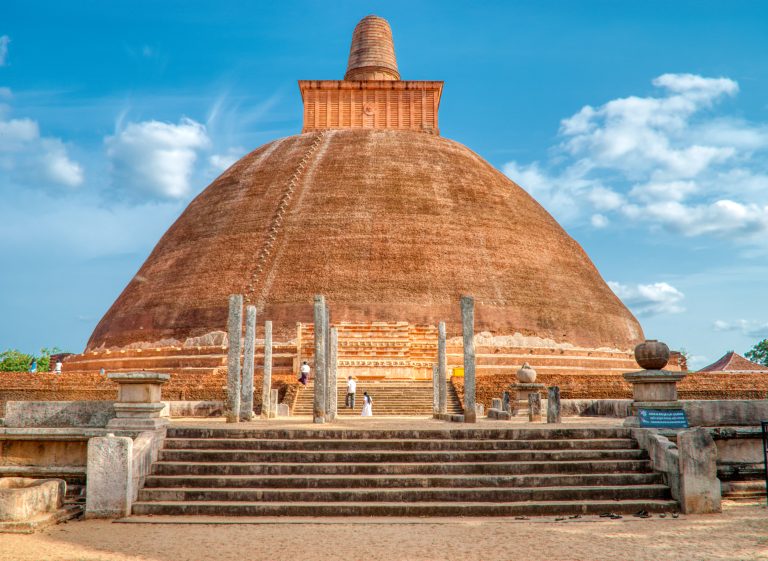
- Jetavanaramaya: the massive brick stupa of the Jetavana monastery, built by King Mahasena in the 3rd century AD.
- Abhayagiri: one of the city’s three great monasteries, whose stupa King Valagamba (Vattagamani Abhaya) founded in the 1st century BC. The wider monastery area also includes the Twin Ponds and the Samadhi Buddha statue.
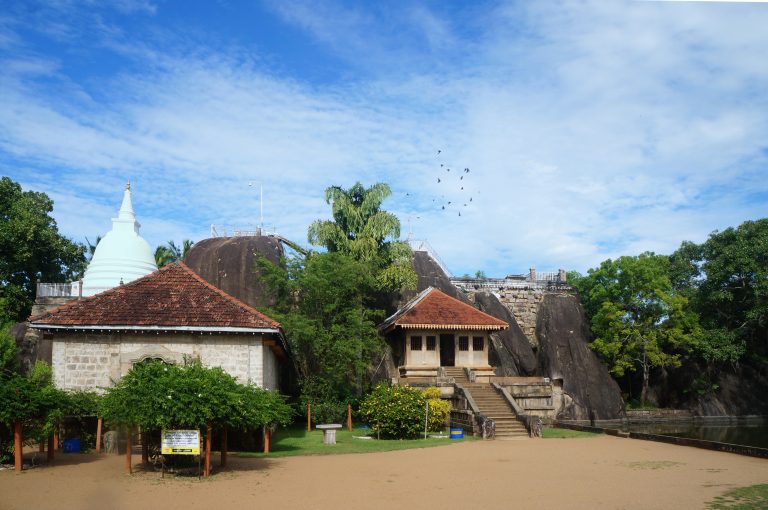
- Isurumuniya: a rock temple by the Tissa Wewa reservoir, known for its stone carvings, including the “Isurumuniya Lovers” and a pond with carved bathing elephants.
Tickets
Foreign visitors need a Central Cultural Fund (CCF) ticket for the archaeological sites. The CCF’s ticket price list, last updated on 24 September 2026, gives Anuradhapura as USD 30 for a full ticket. A half ticket (children aged 6 to 12) costs USD 15, and both prices include 18% VAT. You pay in rupees at the CCF’s exchange rate, which at that date meant LKR 10,020 ($30 · convert) and LKR 5,010 ($15 · convert).
- Where to buy: at the CCF ticket counters at the site, open 7 am to 5 pm. Or order online through the CCF eTicket service, then collect the ticket at the counter with your order receipt number. An online order is valid for 90 days.
- Validity: a ticket is valid for a single entry on its day of issue, and CCF officers can ask to see it. Drone filming needs the CCF’s prior written approval.
- Reduced tickets: the CCF issues relief tickets to tourists from SAARC countries and some residence-visa holders. Students with a valid Green Card or International Student Card qualify too, so bring your passport.
- Temples: recent visitors (2026) report that Isurumuniya, a working temple, charges its own small fee.

What to wear and how to behave
- Cover up: at Buddhist temples, cover your shoulders and legs, and take off your shoes and hat, as the UK government’s travel advice explains.
- Photos: do not pose for photos in front of or beside a Buddha statue, because disrespecting Buddhist images is a serious offence in Sri Lanka.
- Heat underfoot: recent visitors (2025–26) recommend early mornings or late afternoons, when the stone is cooler. They also suggest wearing white or light-coloured clothes, as many pilgrims do.
Getting there and around
- By train: Anuradhapura is on the Northern Line from Colombo Fort. After Cyclone Ditwah, trains north of Mahawa stopped for repairs in early 2026. Services on the restored line then resumed in April 2026. You can book reserved seats with Sri Lanka Railways.
- Getting around: the sites are far apart, so recent visitors (2026) report getting around by bicycle or tuk-tuk. Choosing between the two ancient capitals? See Anuradhapura or Polonnaruwa. Our 2 days in Anuradhapura plan adds Mihintale at dawn.
- Poson: Poson Poya, the June full moon, marks the arrival of Buddhism (29 June in 2026). Large numbers of pilgrims then come to Anuradhapura and nearby Mihintale, and Sri Lanka Railways runs extra trains. See Sri Lanka in June for the rest of the month.
Frequently asked questions (FAQs)
How much is the ticket for Anuradhapura?
The Central Cultural Fund’s price list (updated 24 September 2026) gives USD 30 for a full ticket. A half ticket (children aged 6 to 12) is USD 15, and you pay in rupees at the CCF’s exchange rate. Buy it at the site counters, open 7 am to 5 pm, or order it online.
What should I wear at the Sri Maha Bodhi and the stupas?
Cover your shoulders and legs, and take off your shoes and hat at temples. Many pilgrims also wear white.
Can I get to Anuradhapura by train?
Yes. Services on the Northern Line from Colombo Fort resumed in April 2026 after repairs following Cyclone Ditwah.
When is Anuradhapura busiest?
Around Poson Poya, the June full moon, when large numbers of pilgrims visit Anuradhapura and Mihintale.
Header photo: KennyOMG / Wikimedia Commons, CC BY-SA 4.0.